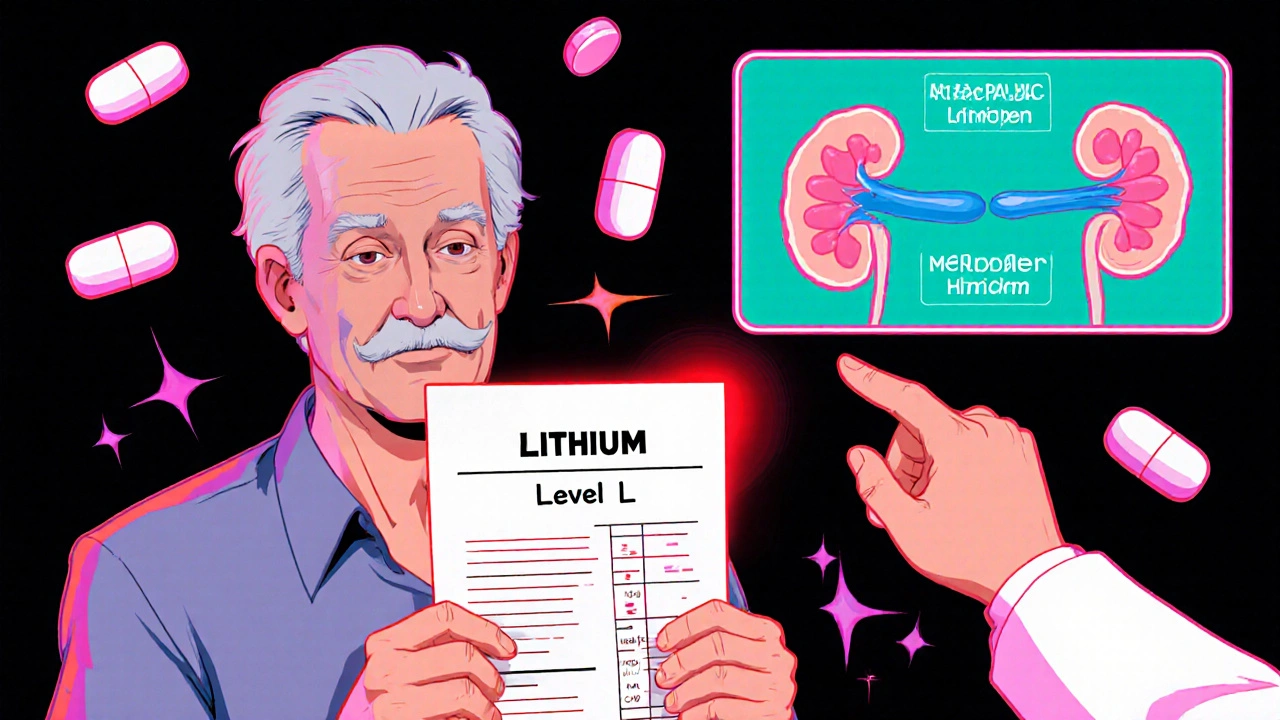
Lithium Monitoring: What You Need to Know About Blood Tests and Safety
When you're taking lithium, a mood-stabilizing medication used primarily for bipolar disorder. Also known as lithium carbonate, it helps prevent manic and depressive episodes—but only if your blood levels stay in the right range. Too little, and it won’t work. Too much, and it can hurt your kidneys, thyroid, or even cause life-threatening toxicity. That’s why lithium monitoring, the regular testing of lithium levels in your blood isn’t optional—it’s the backbone of safe treatment.
Doctors don’t just check lithium levels once and call it done. They track them over time because your body changes. Weight gain, dehydration, salt intake, kidney function, and even other medications can shift how much lithium stays in your system. A level of 0.6 to 1.2 mEq/L is usually the target zone. Below 0.6, you might still have mood swings. Above 1.5, you’re in danger zone territory. Symptoms like hand tremors, confusion, nausea, or frequent urination aren’t just annoyances—they’re red flags. lithium toxicity, a medical emergency caused by excessive lithium in the blood can lead to seizures, kidney failure, or coma if ignored.
People on lithium also need regular checks for their thyroid, an organ that regulates metabolism and is often affected by long-term lithium use and kidneys, the filters that remove lithium from your body. Thyroid problems can cause fatigue, weight gain, or depression—symptoms that look like your bipolar disorder is flaring up. Kidney damage might not show symptoms until it’s advanced, which is why urine tests and creatinine levels matter just as much as blood lithium numbers.
You won’t find a one-size-fits-all plan. Some people get tested every 3 months once stable. Others need monthly checks, especially when starting or changing doses. If you’re sick, sweating a lot, or on diuretics, your doctor might ask for a test sooner. Skipping a test because you feel fine is one of the most common mistakes—and it’s risky. Lithium doesn’t make you feel high or buzzed. It just steadies your mood. That’s why you can’t rely on how you feel. You need the numbers.
The posts below cover real-world cases where lithium monitoring made the difference between safety and crisis. You’ll find guides on what blood test results mean, how to talk to your doctor about side effects, why some people need more frequent checks, and how other medications can interfere. Whether you’re new to lithium or have been on it for years, this collection gives you the facts you need to stay in control—and out of the hospital.