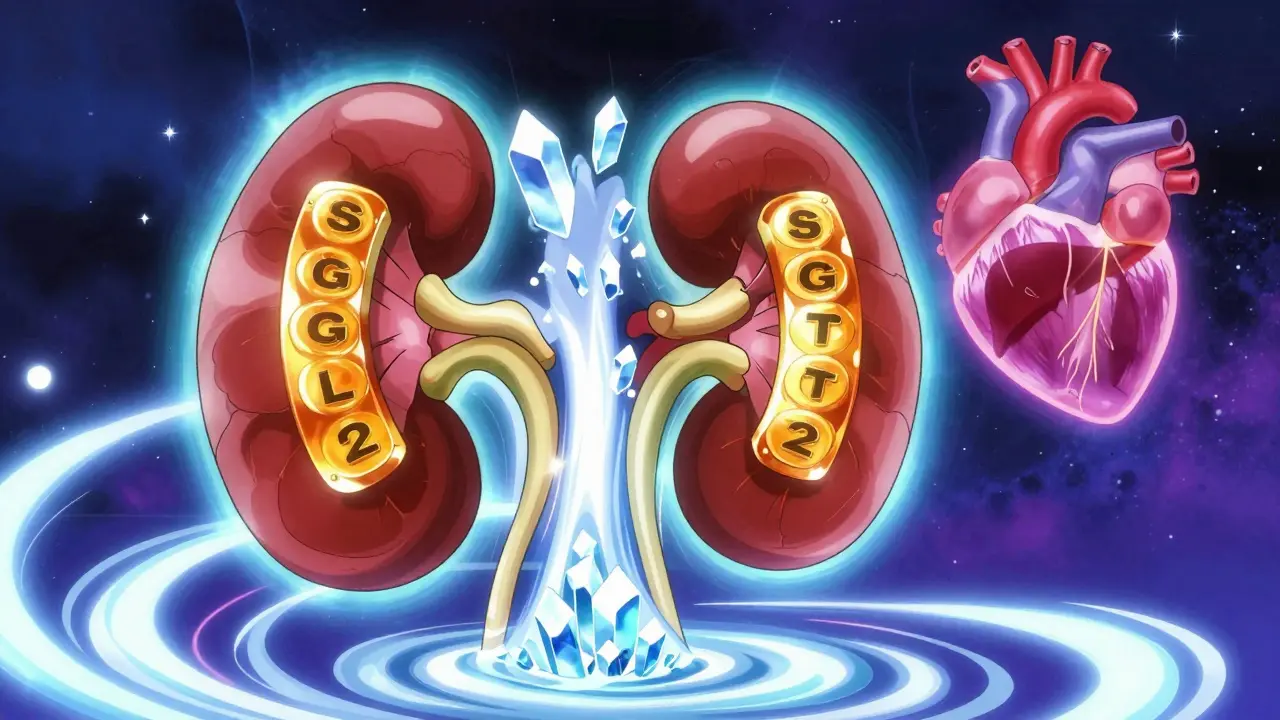
SGLT2 inhibitors have changed how doctors treat type 2 diabetes. These pills don’t just lower blood sugar-they protect your heart and kidneys. But they’re not without risks. If you’re considering one, you need to know what they can do, what they can’t, and who should avoid them.
How SGLT2 Inhibitors Work
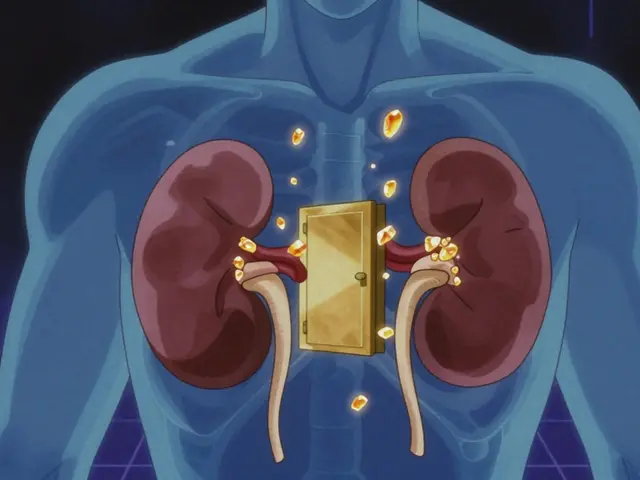
Unlike most diabetes drugs that push insulin or make cells more sensitive to it, SGLT2 inhibitors work in your kidneys. They block a protein called SGLT2 that normally reabsorbs glucose back into your blood. When it’s blocked, extra sugar leaves your body through urine-about 40 to 100 grams a day. That’s like throwing out 10-25 teaspoons of sugar daily.
This mechanism means you lose weight naturally. Most people drop 2-3 kg (4-7 lbs) in the first few months. Blood pressure also tends to fall by 3-5 mmHg. And because these drugs don’t trigger insulin release, they rarely cause low blood sugar-unless you’re also taking insulin or sulfonylureas.
The four main drugs in this class are:
- Canagliflozin (Invokana)
- Dapagliflozin (Farxiga)
- Empagliflozin (Jardiance)
- Ertugliflozin (Steglatro)
All are taken once daily, with or without food. Doses vary: dapagliflozin comes in 5 mg or 10 mg; empagliflozin in 10 mg or 25 mg. Your doctor picks the dose based on your kidney function, age, and other conditions.
Big Benefits: Heart, Kidneys, and More
When these drugs first came out, everyone expected them to be just another way to lower A1c. But the real surprise came from large clinical trials-studies involving over 60,000 people with type 2 diabetes.
Empagliflozin (in the EMPA-REG OUTCOME trial) cut the risk of dying from heart disease by 38% and hospitalization for heart failure by 35%. Canagliflozin (CANVAS Program) reduced heart attacks and strokes by 14%. Dapagliflozin (DECLARE-TIMI 58) lowered heart failure hospitalizations by 17%.
But the biggest win? Kidney protection. The CREDENCE trial showed canagliflozin reduced the risk of kidney failure, doubling of creatinine, or kidney-related death by 30%. The DAPA-CKD and EMPA-KIDNEY trials later proved that dapagliflozin and empagliflozin work even in people without diabetes who have chronic kidney disease.
These aren’t small gains. For someone with heart failure and type 2 diabetes, taking empagliflozin means you’re 1 in 21 likely to avoid a hospital stay or death from heart problems within 16 months. That’s better than most other heart drugs.
Because of this, the American Diabetes Association now recommends SGLT2 inhibitors as first-line treatment for patients with heart failure, heart disease, or kidney disease-even before metformin, in some cases.
Real Patient Experiences
One man in his late 50s with type 2 diabetes and heart failure switched from metformin to empagliflozin. His ejection fraction-how well his heart pumps-jumped from 28% to 42% in 18 months. He hasn’t been hospitalized since.
Another woman, 62, took dapagliflozin for six months. Her A1c dropped from 8.1% to 6.6%. But she had recurring yeast infections. She stopped the drug. "It worked too well for my blood sugar," she said, "but not for my comfort."
On Reddit, someone shared: "Lost 15 pounds in three months on dapagliflozin. My A1c went from 8.2 to 6.8. Didn’t change my diet."
But cost is a real barrier. A 30-day supply of Jardiance costs around $640 out of pocket. Most insurance covers it, and manufacturer programs can drop that to $10-25 monthly. Still, if you’re uninsured or underinsured, this drug can be out of reach.

The Risks You Can’t Ignore
For all the good these drugs do, they come with real downsides.
Genital yeast infections are the most common. About 6-11% of users get them-far higher than with placebo. Women get vaginal yeast infections. Men get balanitis. They’re treatable with antifungals, but they’re annoying enough that many people quit the drug.
Urinary tract infections are also more common, though less so than yeast infections. If you get frequent UTIs, this might not be the right choice.
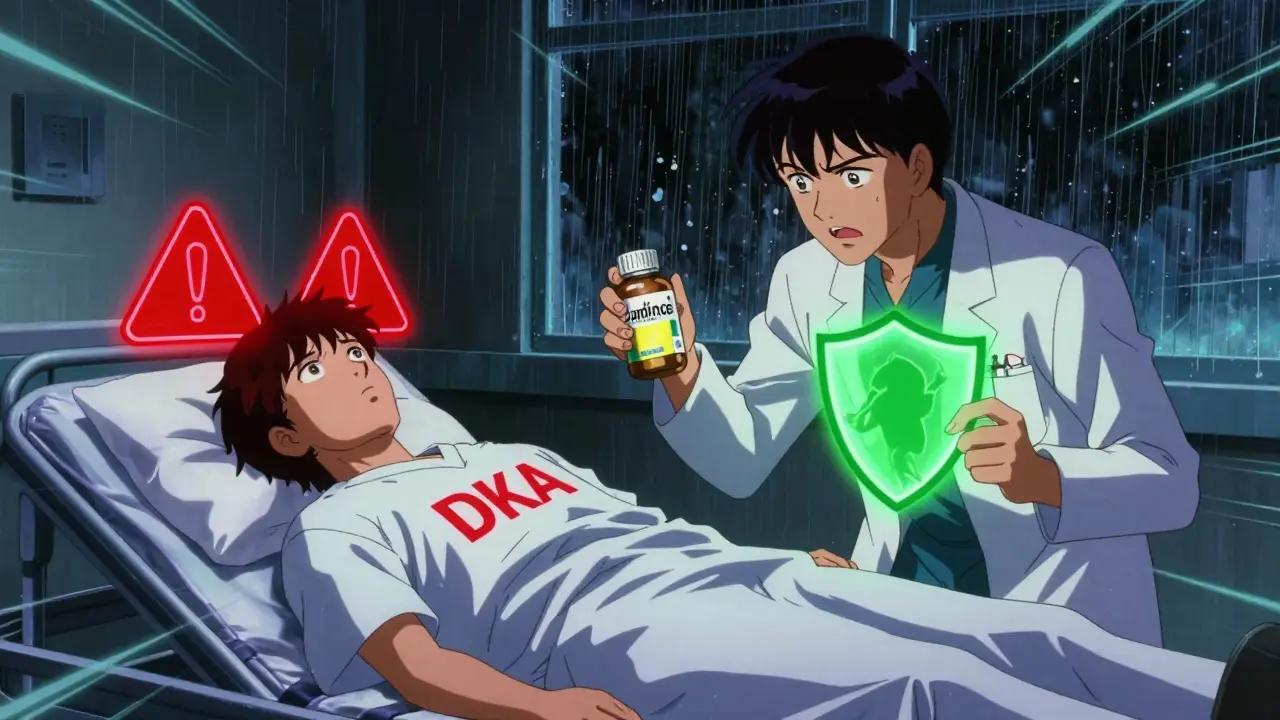
The most serious risk is diabetic ketoacidosis (DKA). This is rare-only 0.1-0.3% of users-but it can happen even when blood sugar isn’t high. This is called euglycemic DKA. It’s dangerous because it’s hard to spot. Symptoms: nausea, vomiting, stomach pain, fatigue, confusion. If you’re sick, having surgery, or cutting carbs drastically, your doctor may tell you to stop the drug for a few days.
Volume depletion is another concern. These drugs make you pee more. That can lead to dizziness, low blood pressure, or even acute kidney injury-especially in older adults or people on diuretics. Your doctor should check your kidney function before starting and every few months after.
Canagliflozin carries a warning for lower limb amputations. In the CANVAS trial, the risk doubled compared to placebo. It’s still rare-about 1 in 100 people over 3 years-but if you have poor circulation or foot ulcers, your doctor may avoid it.
And there’s Fournier’s gangrene, a life-threatening genital infection. The FDA added a black box warning in 2018. Only 0.002% of users get it, but it’s deadly if not caught fast.
Who Should Avoid SGLT2 Inhibitors?
These drugs aren’t for everyone.
- Type 1 diabetes: They increase DKA risk and aren’t approved for this group.
- eGFR below 30: If your kidneys are too damaged, the drug won’t work and could make things worse.
- Severe kidney disease: Dose adjustments are needed if eGFR is below 60. Some doctors stop it below 45.
- History of recurrent genital infections: If you’ve had three or more yeast infections in a year, this drug may cause more trouble than help.
- Low blood pressure or dehydration risk: Elderly patients, those on diuretics, or people with heart failure need close monitoring.
- Planning surgery: Most doctors stop SGLT2 inhibitors 3-4 days before any procedure to prevent DKA.
How Do They Compare to Other Diabetes Drugs?
Compared to DPP-4 inhibitors (like sitagliptin), SGLT2 inhibitors are far better for heart failure. They reduce hospitalizations by 31%.
Compared to GLP-1 receptor agonists (like semaglutide), they’re slightly less effective at preventing heart attacks but better at preventing heart failure. GLP-1 drugs are better for weight loss-some people lose 10-15% of body weight. SGLT2 inhibitors typically lead to 3-6% loss.
They’re cheaper than GLP-1 drugs, but still expensive. And unlike metformin, they’re not first-choice for healthy, young patients with no heart or kidney issues. The benefit is too small to justify the cost and side effects.
For someone with heart failure and diabetes? SGLT2 inhibitors are often the best choice. For someone with just high blood sugar and no other risks? Metformin is still the go-to.
What You Need to Do If You’re on One
If you’re taking an SGLT2 inhibitor:
- Drink plenty of water-especially in hot weather or when exercising.
- Check for signs of infection: itching, redness, pain in the genital area.
- Know the symptoms of DKA: nausea, vomiting, abdominal pain, fruity breath, confusion.
- Don’t stop the drug suddenly unless your doctor says so.
- Get your kidney function checked every 3-6 months.
- Stop the drug if you’re sick with vomiting, fever, or diarrhea-call your doctor.
- Ask about patient assistance programs if cost is an issue.
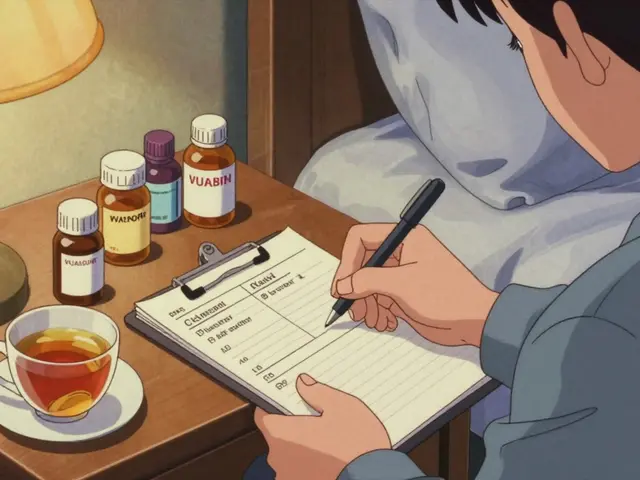
Keep a log of your weight, blood pressure, and any side effects. Bring it to your next appointment. Small changes matter.
The Bottom Line
SGLT2 inhibitors are powerful tools. They’ve turned diabetes care from just managing blood sugar to protecting your heart and kidneys. For the right person-someone with heart failure, kidney disease, or high cardiovascular risk-they’re life-changing.
But they’re not magic pills. They come with real risks. Genital infections, dehydration, and rare but deadly conditions like DKA and Fournier’s gangrene can’t be ignored. And cost remains a barrier for many.
If you have type 2 diabetes and heart or kidney problems, talk to your doctor about whether one of these drugs makes sense for you. If you’re young, healthy, and just need to lower your A1c, metformin or lifestyle changes might still be better.
These drugs aren’t for everyone. But for the right person, they might be the best thing that’s happened to their health in years.
Can SGLT2 inhibitors cause low blood sugar?
SGLT2 inhibitors alone rarely cause low blood sugar because they don’t increase insulin. But if you’re also taking insulin, sulfonylureas, or meglitinides, your risk goes up. Always check your blood sugar if you feel dizzy, shaky, or sweaty.
Do I need to stop SGLT2 inhibitors before surgery?
Yes. Most doctors recommend stopping SGLT2 inhibitors 3-4 days before any surgery or major procedure. This reduces the risk of euglycemic diabetic ketoacidosis, which can happen even if your blood sugar looks normal.
Are there generic versions of SGLT2 inhibitors?
No, not yet. All four main SGLT2 inhibitors-Jardiance, Farxiga, Invokana, and Steglatro-are still under patent protection. Generics are expected to arrive between 2027 and 2029. Until then, patient assistance programs can help reduce costs.
Can I take SGLT2 inhibitors if I don’t have diabetes?
Yes. In 2023, the FDA approved dapagliflozin for chronic kidney disease even in people without diabetes. Empagliflozin is also approved for heart failure regardless of diabetes status. These drugs are now used for organ protection, not just blood sugar control.
How long does it take to see results from SGLT2 inhibitors?
Blood sugar usually drops within 1-2 weeks. Weight loss and blood pressure improvements show up in 4-8 weeks. Heart and kidney benefits take months to years to become clear, which is why long-term studies are so important.
What should I do if I get a yeast infection while on SGLT2 inhibitors?
Treat it like any other yeast infection-with over-the-counter antifungal creams or oral fluconazole. If it comes back more than twice in six months, talk to your doctor. You may need to switch medications. Don’t ignore recurring infections-they’re a sign this drug might not be right for you.





12 Comments
Solomon Ahonsi
Feb 3 2026These drugs are just fancy diuretics with a marketing team. I’ve seen patients go from fine to fungal hell because some pharma rep told their doc it’s ‘cardioprotective.’ Meanwhile, their A1c dropped half a point and they’re now buying antifungal cream like it’s toilet paper.
George Firican
Feb 4 2026It’s fascinating how medicine has shifted from treating symptoms to treating statistical probabilities. We’re no longer just managing diabetes-we’re optimizing for survival curves, kidney function trajectories, and cardiac event reductions. But at what cost to individual experience? One woman’s recurring yeast infection isn’t just a side effect-it’s a lived reality that doesn’t show up in hazard ratios. The data tells us these drugs save lives. But the human story? That’s often buried under p-values and confidence intervals.
Matt W
Feb 4 2026My mom’s on Jardiance. Lost 12 lbs, BP’s down, no more hospital visits for heart stuff. But yeah, she got a yeast infection so bad she cried. Told her to just use Monistat and drink water. She’s fine now. Don’t let the scary stuff scare you off-just stay aware.
Anthony Massirman
Feb 6 2026Cost is the real villain here. $600 a month? That’s not medicine, that’s a luxury tax on being sick.
Brett MacDonald
Feb 6 2026so like… if u dont have diabetes but have heart failure u can still take these? wild. so its not really a diabetes drug anymore? its like… a heart kidney potion? cool
Sandeep Kumar
Feb 7 2026USA spending billions on these drugs while our hospitals collapse. We need real solutions not pharma magic pills. India treats diabetes with diet and exercise. You guys need to wake up
Gary Mitts
Feb 8 2026So let me get this straight-you’re telling me I can lose weight and protect my heart by peeing out sugar? That’s the new ‘eat less, move more’? Genius.
clarissa sulio
Feb 9 2026I’m a nurse. I’ve seen too many patients stop these meds because of yeast infections and then get readmitted for heart failure. It’s a trade-off. Don’t dismiss the side effects-but don’t dismiss the life-saving potential either. Talk to your doctor. Don’t Google it.
Bridget Molokomme
Feb 10 2026Oh so now we’re prescribing drugs to make people pee out their diabetes like it’s a bad habit? Next they’ll make us sweat out our cholesterol
Vatsal Srivastava
Feb 10 2026Why are we even talking about this? Metformin works fine for 90% of people. These are just expensive placebos for the rich who want to feel like they’re doing something advanced. Also ketoacidosis? That’s just a fancy way to say your body is crying for help
Brittany Marioni
Feb 12 2026For anyone considering this-please, PLEASE talk to your doctor about your personal risk factors. If you’ve had recurrent infections, ask about alternatives. If you’re on diuretics, make sure your electrolytes are checked. If you’re worried about cost, ask about patient assistance programs-they exist and they’re lifesavers. You’re not alone in this.
Monica Slypig
Feb 13 2026So I read this whole thing and honestly it sounds like a scam. You mean to tell me I can just take a pill and my kidneys will magically be saved? No way. This is just Big Pharma trying to sell more pills. And the fact that they're still patented? Pathetic. We need generics yesterday