
Salt Substitute Safety Checker
This tool helps you determine if potassium-based salt substitutes are safe for you based on your medications and health conditions. If you're on ACE inhibitors or ARBs and have kidney issues, potassium-based salt substitutes can cause dangerously high potassium levels.
Safety Assessment
Key recommendations
- ✓ Avoid potassium-based salt substitutes
- ✓ Consult your doctor
- ✓ Get your potassium level checked
Many people switch to salt substitutes thinking they’re making a healthier choice-especially if they’re on blood pressure medication. But for those taking ACE inhibitors or ARBs, this swap can be dangerous. It’s not just a minor concern. It can land you in the hospital-or worse.
What’s in those salt substitutes?
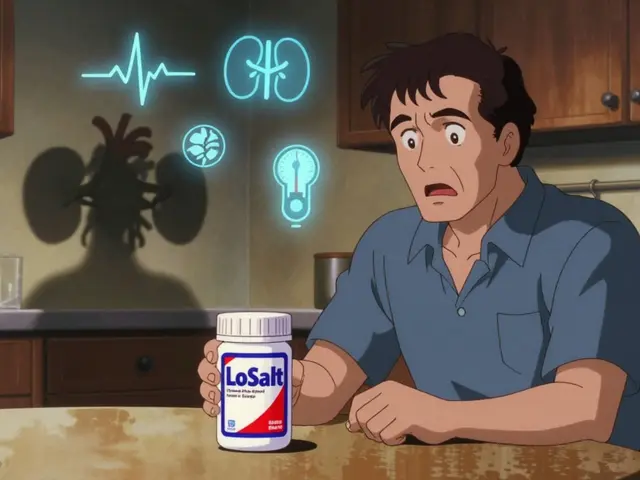
Most salt substitutes replace some or all of the sodium chloride with potassium chloride. Products like LoSalt, NoSalt, and Heart Salt can contain up to 66% potassium chloride. That sounds harmless until you realize your body doesn’t get rid of extra potassium the same way it handles sodium. Your kidneys filter it out, but if they’re not working well-or if your medication slows down that process-potassium builds up. Fast.Why ACE inhibitors and ARBs are the problem
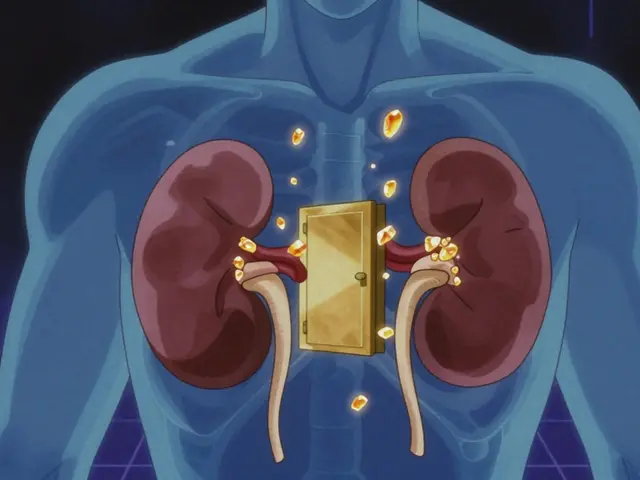
ACE inhibitors and ARBs are common drugs for high blood pressure, heart failure, and kidney protection in diabetics. They work by relaxing blood vessels and reducing fluid retention. But here’s the catch: they also reduce a hormone called aldosterone. Aldosterone tells your kidneys to push potassium out of your body. Less aldosterone? Less potassium gets flushed. Now add a salt substitute loaded with potassium, and you’ve created a perfect storm. A 2004 case report in the Journal of the Royal Society of Medicine described a 72-year-old man who went into cardiac arrest after using LoSalt while taking nabumetone and having mild kidney issues. His potassium level hit 7.8 mmol/L. Normal is 3.5 to 5.0. Above 6.5? Risk of sudden heart rhythm problems skyrockets. He didn’t survive.Who’s at highest risk?
You’re in danger if you have:- Chronic kidney disease (CKD), especially stage 3 or higher (eGFR below 60)
- Diabetes with kidney involvement
- Age over 65
- Already high potassium levels (above 4.5 mmol/L)

What does the science say about safety?
The 2025 JAMA Network study of 21,000 people showed that using a salt substitute with 25% potassium chloride lowered stroke risk by 14%. That’s huge. But here’s the fine print: those participants had normal kidney function. The study didn’t include people with CKD or those on ACE inhibitors or ARBs. Dr. Sarah Anderer, lead author of that study, says potassium substitutes are safe for most people. But Dr. Mark S. Segal, a nephrologist, warns: “Don’t apply those results to patients with advanced kidney disease.” They’re not contradicting each other-they’re talking about different groups. The American Diabetes Association is even clearer: people with diabetes and kidney problems face a “disproportionately high” risk of hyperkalemia when combining salt substitutes with these medications.Real people, real consequences
Reddit threads and drug review sites are full of stories that don’t make it into medical journals. One user on r/kidney_stones wrote: “Woke up in the ER with potassium at 6.3 after using ‘Heart Salt’ for three weeks while on lisinopril.” Another, Martha from Michigan, said she felt “severe muscle weakness and irregular heartbeat” after switching to potassium salt while on losartan. On Amazon, 7% of reviews from users who self-identified as having kidney conditions mentioned their doctor told them to stop immediately after blood tests showed high potassium. These aren’t rare outliers. They’re predictable outcomes.What about herbs and spices?
You don’t need potassium chloride to cut sodium. Herbs, spices, garlic, lemon juice, vinegar, and no-salt seasoning blends like Mrs. Dash can reduce sodium intake by 40-50%-without touching potassium levels. They’re safe, cheap, and don’t carry the metallic aftertaste that turns some people off potassium salt (a complaint in 28% of Amazon reviews). And here’s the kicker: many people think “no added salt” means “no sodium.” It doesn’t. Processed foods still have tons of sodium. The real win? Cook from scratch. Use fresh ingredients. Flavor with herbs. That’s how you lower sodium without risking potassium overload.
What should you do?
If you’re on an ACE inhibitor or ARB:- Check your salt substitute label. If it says “potassium chloride,” stop using it.
- Ask your doctor for a simple blood test to check your potassium level.
- If your eGFR is below 60, avoid potassium substitutes entirely.
- If your potassium is already above 4.5 mmol/L, don’t use them-even if your kidneys seem fine.
- Replace salt substitutes with herbs, spices, or reduced-sodium broths.
Why aren’t these warnings clearer?
Only 3 out of 12 major salt substitute brands in the U.S. warn about interactions with ACE inhibitors or ARBs. The FDA doesn’t require it. Canada did-starting January 1, 2024. Their labels now say: “Contraindicated in patients taking ACE inhibitors.” In the U.S., the Salt Substitute Council has voluntary labeling standards. But only six companies follow them, and audits happen only quarterly. That’s not safety. That’s luck. The FDA proposed new rules in May 2024 to fix this. Final regulations are expected in mid-2026. Until then, you have to protect yourself.What’s next?
New products are coming. NutraTech Solutions is testing a slow-release potassium formulation that might lower blood pressure without spiking serum levels. Results won’t be ready until late 2026. But right now, the safest path is simple: if you’re on an ACE inhibitor or ARB, don’t use potassium-based salt substitutes. Period. There are better, safer ways to cut sodium. Your heart and kidneys will thank you.Can I use salt substitutes if I have high blood pressure but no kidney disease?
If your kidney function is normal (eGFR above 90) and you’re not on ACE inhibitors or ARBs, potassium-based salt substitutes are generally safe and may even lower your stroke risk. But always check your potassium level before starting, and avoid them if you’re on any medication that affects potassium, like spironolactone or NSAIDs.
What are the signs of high potassium?
Symptoms can be subtle or sudden. You might feel muscle weakness, tingling, nausea, irregular heartbeat, or chest pain. In severe cases, it can cause cardiac arrest without warning. If you’re on ACE inhibitors or ARBs and start feeling off after switching salt brands, get your potassium checked immediately.
Is there a safe amount of potassium salt I can use?
There’s no safe amount if you’re on ACE inhibitors or ARBs and have reduced kidney function. Even small amounts can push your potassium into dangerous territory. For most people in this group, the answer is zero. Use herbs and spices instead.
Do all salt substitutes contain potassium chloride?
No. Some are made with magnesium chloride or other minerals, but most popular brands (like LoSalt, NoSalt, and Lite Salt) use potassium chloride. Always read the ingredients. If it says “potassium chloride,” it’s not safe if you’re on these medications.
How often should I get my potassium checked if I’m on an ACE inhibitor or ARB?
Your doctor should check your potassium within 1-2 weeks after starting the medication, then every 3-6 months. If you start using any salt substitute-even a little-get tested right away. Many cases of dangerous hyperkalemia happen within weeks of starting these products.





14 Comments
Solomon Ahonsi
Feb 2 2026This is the dumbest thing I’ve read all week. People are dying because they used a salt substitute? Newsflash: your kidneys aren’t magic. If you’re on blood pressure meds and don’t know what’s in your pantry, that’s on you. Stop blaming the product and start reading labels. I’ve been using LoSalt for 5 years and my potassium’s fine. Stop scaremongering.
George Firican
Feb 4 2026The real tragedy here isn’t the potassium-it’s the systemic failure of public health communication. We’ve turned dietary choices into a minefield of hidden risks while corporations profit from ambiguity. The FDA’s inaction isn’t negligence; it’s a reflection of how deeply we’ve outsourced personal health responsibility to profit-driven institutions. A 72-year-old man dies because a label didn’t say ‘danger’-but the label was never meant to save lives, only to sell product. We need mandatory, standardized warnings, not voluntary guidelines that exist only on paper. This isn’t about salt substitutes. It’s about whether we value human life enough to regulate it.
Matt W
Feb 4 2026I’m a nurse and I’ve seen this happen. A guy came in with a potassium of 6.9 after switching to ‘healthy’ salt because his wife bought it at Costco. He didn’t even know he was on an ARB-he thought it was just for his ‘mild hypertension.’ We had to shock him twice. If you’re on these meds, don’t guess. Get tested. Talk to your pharmacist. This isn’t hype-it’s real. Please don’t be the next story.
Anthony Massirman
Feb 4 2026Just don’t use it. Done.
Eli Kiseop
Feb 6 2026so if i have normal kidneys but take losartan im still at risk even if i use a tiny bit of potassium salt like once a week
larry keenan
Feb 6 2026It is imperative to note that the pharmacodynamic interaction between angiotensin-converting enzyme inhibitors and dietary potassium chloride results in a significant attenuation of renal potassium excretion, thereby predisposing individuals to hyperkalemia. The clinical implications are well-documented in peer-reviewed nephrological literature, particularly in populations with comorbid chronic kidney disease or diabetes. The absence of mandatory labeling represents a critical gap in pharmacovigilance and public safety infrastructure.
Akhona Myeki
Feb 6 2026In South Africa, we have been warning about this since 2018. The FDA? Still asleep. You Americans think your regulations are world-class? This is why your life expectancy is falling. We have mandatory labels. We have public health campaigns. You have Amazon reviews and hope. Pathetic.
Chinmoy Kumar
Feb 7 2026i had no idea about this i use nosalt every day and im on ramipril my kidney test was normal last month should i stop now or wait for next test
Sandeep Kumar
Feb 8 2026Stop being weak. If you can’t handle potassium you shouldn’t be eating food. Real men use sea salt and suffer the consequences. This is why America is soft. Potassium isn’t poison. Your doctor is just scared of lawsuits.
Gary Mitts
Feb 9 2026So let me get this straight… I’m supposed to trust a 2025 JAMA study that excludes my exact group… but not trust my doctor who’s been treating me for 10 years? Cool. Got it.
Murarikar Satishwar
Feb 10 2026This is exactly why we need better patient education. I used to work in a dialysis center and saw so many patients switch to salt substitutes because they thought it was ‘heart-healthy.’ No one told them. No one checked. We need mandatory counseling when these meds are prescribed-not just a pamphlet you throw away. Talk to your pharmacist. Ask your nurse. Don’t assume. Knowledge saves lives.
Bob Hynes
Feb 10 2026My grandpa died from this. He used LoSalt because his daughter said it was ‘better for his heart.’ He never knew he had stage 3 CKD. The hospital called me at 3 a.m. He didn’t even make it to the OR. I don’t care what the FDA says-this needs to be on every damn package. Like cigarette warnings. Like ‘alcohol kills.’ This isn’t a suggestion. It’s a funeral waiting to happen.
Vatsal Srivastava
Feb 12 2026Actually potassium is essential and this whole fear is overblown. People who can't metabolize potassium should be on dialysis not blaming salt. The real issue is doctors overprescribing ARBs to everyone. If you're healthy and eating whole foods you don't need these drugs anyway. This is just another medical scam to sell more tests.
Brittany Marioni
Feb 13 2026Please, please, please-if you’re reading this and you’re on an ACE inhibitor or ARB, don’t wait for symptoms. Don’t assume your kidneys are fine because you feel okay. Get your potassium checked. Write it down. Set a reminder. Call your doctor. This is not a ‘maybe.’ This is a ‘do it now.’ Your heart doesn’t care how healthy you think you are. It only cares about the numbers. And right now, you might be one salt substitute away from a crisis. Please, please, please-don’t ignore this.