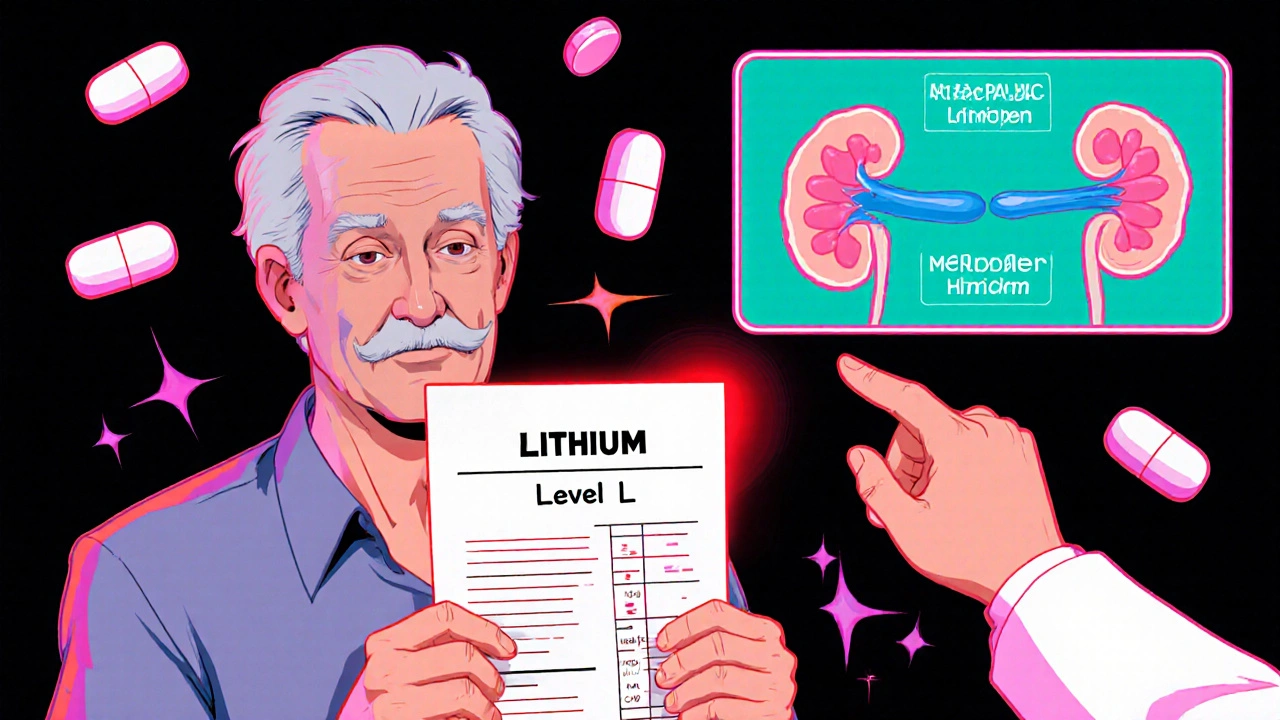
Lithium Drug Interactions: What You Need to Know Before Taking It
When you take lithium, a mood-stabilizing medication used primarily for bipolar disorder. Also known as lithium carbonate, it works by balancing brain chemicals—but it doesn’t take much to push it into dangerous territory. Lithium has a very narrow window between helping and harming. Too little, and it won’t work. Too much, and you risk serious toxicity. That’s why knowing lithium drug interactions isn’t optional—it’s life-saving.
Lithium is cleared by your kidneys, so anything that affects kidney function can change how much lithium stays in your body. Common painkillers like ibuprofen or naproxen can reduce kidney blood flow, causing lithium to build up. Even over-the-counter diuretics (water pills) can do the same. If you’re on a blood pressure med like lisinopril or hydrochlorothiazide, your lithium levels could spike without warning. That’s why doctors check your blood levels regularly—especially when you start or stop another drug. Your thyroid also gets affected. Lithium can slow down thyroid hormone production, leading to fatigue, weight gain, or depression that looks like your original condition. If you’re on lithium and feel unusually tired, ask for a thyroid test. It’s simple, cheap, and often overlooked.
Some antidepressants, especially SSRIs like fluoxetine or sertraline, can also raise lithium levels. It’s not always obvious—your doctor might think they’re helping your mood, but they could be pushing your lithium into the danger zone. Even salt intake matters. If you suddenly eat way less salt—like on a new diet—your body holds onto more lithium. On the flip side, drinking too much water or sweating heavily can drop lithium levels, making your treatment less effective. It’s not just about other drugs. It’s about your whole body’s balance.
You’ll find posts here that dig into how lithium plays with other meds, what blood tests you need, and how to spot early signs of trouble. Some cover what happens when lithium meets common OTC meds. Others explain why your thyroid or kidney numbers matter more than you think. No fluff. No guesswork. Just what you need to know to stay safe while taking lithium.