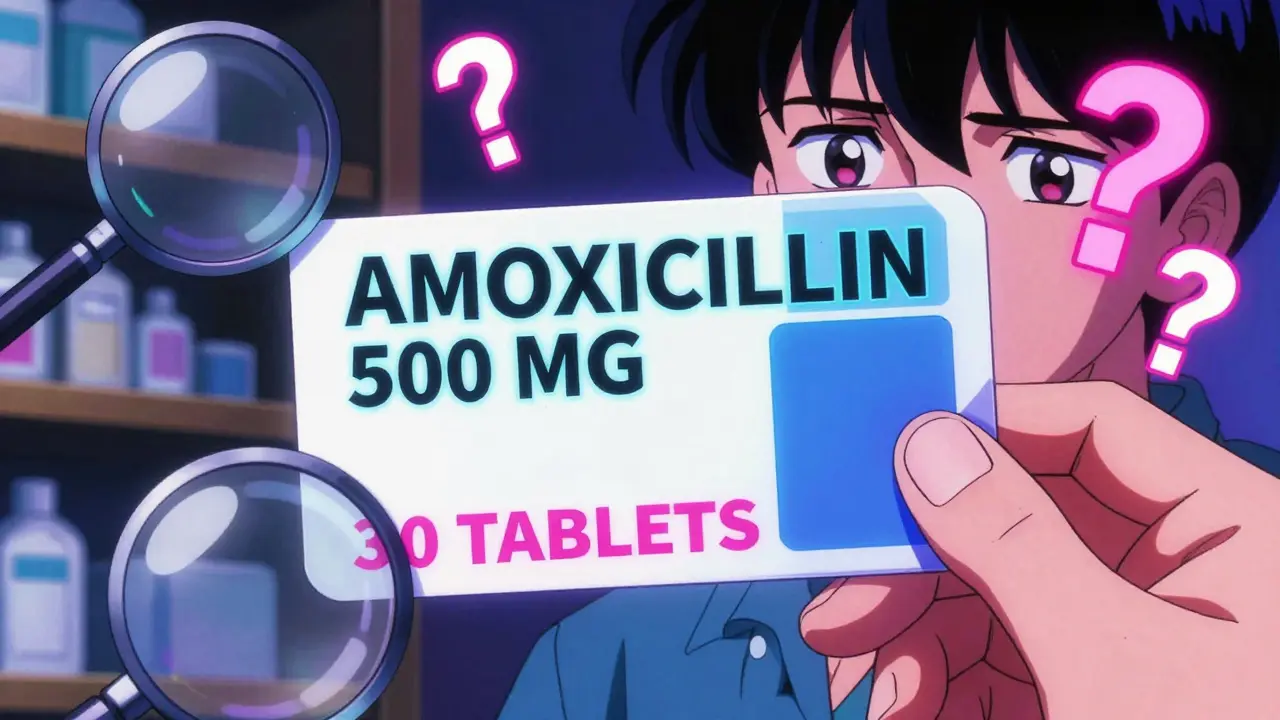
Every time you pick up a prescription, you’re holding a safety checkpoint - one that could prevent a life-threatening mistake. The numbers on that small paper label aren’t just details. They’re your last line of defense against getting the wrong dose. Too much? Too little? Wrong medicine? All of it starts with how well you read the medication strength and quantity on the label.
What Medication Strength Really Means
Medication strength tells you how much active drug is in each unit of your medicine. It’s not just a number - it’s the difference between healing and harm. For example, if your label says 500 mg, that means each tablet contains 500 milligrams of the drug. If it says 250 mg/5 mL, that’s a liquid, and every 5 milliliters you take contains 250 milligrams.
Confusing units can be deadly. A single decimal point error - reading 0.5 mg as 5 mg - can lead to a tenfold overdose. That’s why labels now avoid abbreviations like mcg (micrograms) or U (units). Instead, they spell out microgram and unit to prevent misreading. The FDA made this rule in 2014 after hundreds of cases where patients took 10 times their dose because they misread U as 0.
Here’s how strength appears on different types of meds:
- Tablets or capsules: AMOXICILLIN 500 MG - each pill has 500 mg
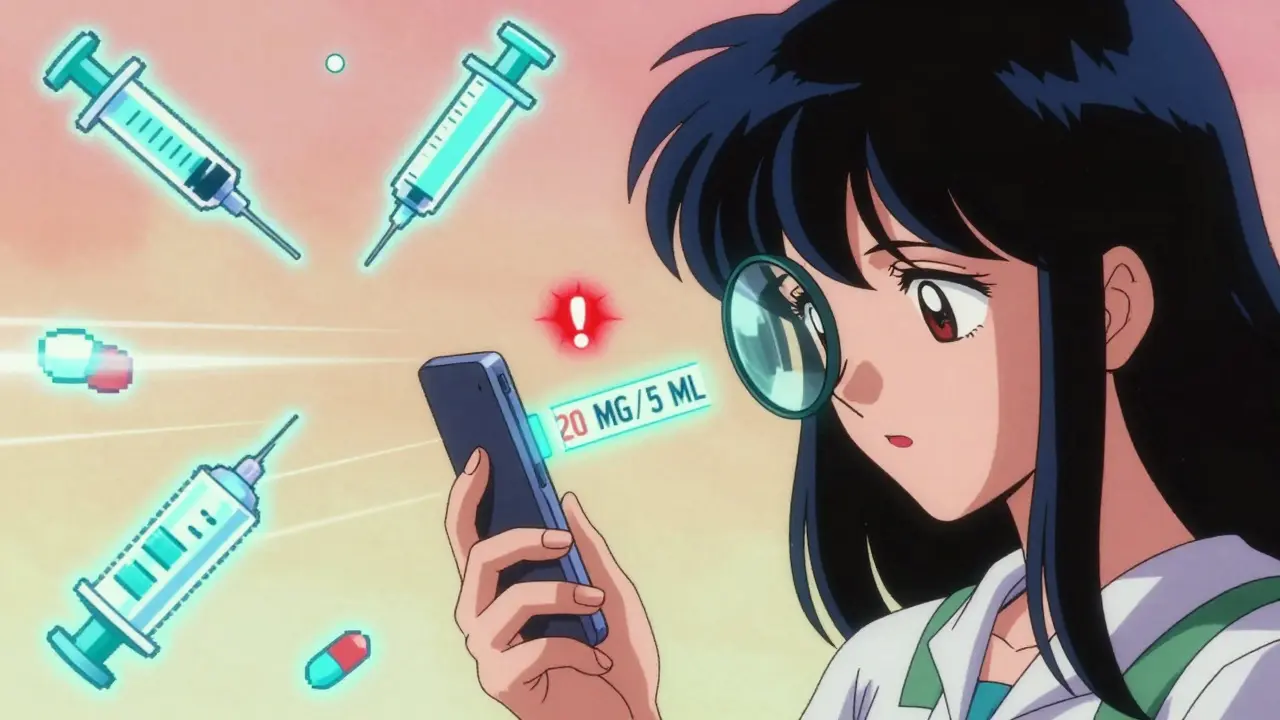
- Liquids: 20 MG/5 ML - every 5 mL spoonful has 20 mg
- Creams or ointments: HYDROCORTISONE 1% - 1 gram of cream contains 10 mg of the drug
- Injections: INSULIN 100 UNITS/ML - each milliliter has 100 units
Always double-check the unit. A label saying 5 mg is not the same as 5 mcg. One is a thousand times stronger. If you’re unsure, don’t guess - call the pharmacy.
Understanding Quantity: Total vs. Daily Dose
Quantity tells you how much the pharmacy gave you in total. But it doesn’t tell you how much to take each day. That’s where confusion happens.
Look at this example:
- Label says: 30 tablets - that’s the total amount you received
- Directions say: Take 1 tablet twice daily - that’s 2 per day
- So, 30 tablets will last you 15 days
Many people mix up the total quantity with the daily dose. One Reddit user shared how they thought their 120 mL bottle of liquid medicine was enough for a month - but the daily dose was 10 mL, meaning it would run out in 12 days. They didn’t realize until they ran out early and had to rush back to the pharmacy.
Always write down:
- Total quantity on the label
- How many times per day to take it
- How many days it should last
If the math doesn’t add up, ask. A pharmacist would rather answer a question than see you run out or take too much.
Where to Find Strength and Quantity on the Label
Pharmacies don’t put this info in random spots. There’s a system - even if it looks different between CVS, Walgreens, or your local independent pharmacy.
Strength is always next to the drug name - usually within half an inch. At CVS, it’s directly below the name. At Walgreens, it’s in parentheses right after. Kaiser Permanente labels even include a small box labeled Strength Verification with a QR code you can scan to hear the dose read aloud.
Quantity is usually near the bottom, under Dispense or Quantity. It will say something like:
- Dispense: 30 tablets
- Quantity: 120 mL
- Dispense: 30 g cream
Don’t skip the fine print. Some labels list the prescription number (Rx#) and the prescriber’s name. Match those to your doctor’s note. If the Rx# doesn’t match your record, something’s wrong.
Common Mistakes - And How to Avoid Them
People make the same errors over and over. Here are the top three - and how to stop them.
1. Misreading Decimal Points
One in seven strength errors comes from misreading decimals. 0.25 mg looks like 25 mg if you’re in a hurry or have poor eyesight. That’s a 100x overdose.
Fix: Use your phone’s magnifier app. Tap the screen to zoom in. Or ask the pharmacist for a large-print label - most chain pharmacies offer this for free.
2. Confusing mg with mcg
Micrograms (mcg) are tiny. One milligram equals 1,000 micrograms. Thyroid meds, blood thinners, and some vitamins are dosed in mcg. Mix them up, and you could end up in the ER.
Fix: Say it out loud: “microgram,” not “mick.” If the label says mcg, circle it. If it’s printed as ug (an old abbreviation), ask for clarification. That’s not allowed on U.S. labels anymore - if you see it, report it.
3. Assuming All Pills of the Same Name Are the Same
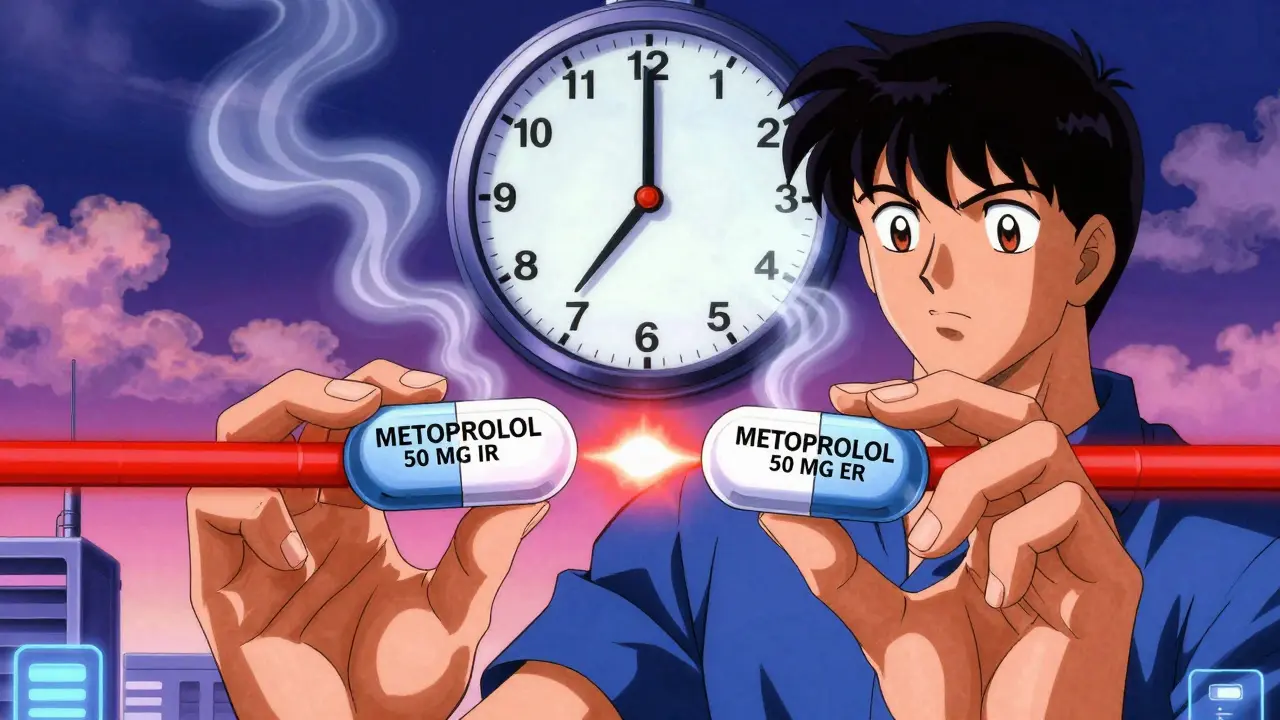
Two different brands of metoprolol might both say 50 mg, but one could be immediate-release, the other extended-release. They’re not interchangeable.
Fix: Check the pill imprint. Use a free app like Pill Identifier by WebMD. Take a photo of the pill and compare it to the one you’ve taken before. If it looks different, don’t take it until you confirm with the pharmacist.
Why This Matters - Real Stories
It’s not theoretical. People have died because they didn’t check.
A 72-year-old woman in Ohio took her blood pressure pill, which was labeled 10 mg, but she’d always taken 2.5 mg. The pharmacy filled it wrong. She didn’t notice until she felt dizzy. She ended up in the hospital. Her daughter later said, “I wish she’d checked the label like I taught her.”
On Reddit, a mom named u/MedSafetyMom posted: “I caught my son’s amoxicillin was labeled 500 mg/5 mL - but his prescription was for 250 mg/5 mL. If I hadn’t checked, he’d have gotten double the dose.” She took it back. The pharmacy apologized and changed their process.
According to the American Society of Health-System Pharmacists, 32.4% of medication errors happen with liquid medications because caregivers misread the concentration. That’s why it’s so important to understand the mg/mL ratio - not just the total volume.
What You Can Do Today
You don’t need a medical degree to protect yourself. Just follow this simple 4-step check every time you get a new prescription:
- Find the drug name and strength - right next to each other. Confirm the number and unit.
- Check the quantity - how many pills, mL, or grams you got.
- Compare to your prescription - does it match what your doctor wrote? If not, ask.
- Verify the pill shape and imprint - if it looks different, call the pharmacy. Don’t assume it’s fine.
Take 30 seconds. It’s worth it.
What’s Changing - And What’s Coming
Pharmacies are getting smarter. By 2026, high-alert medications (like insulin, blood thinners, or opioids) will have red borders around the strength on the label. Some are testing NFC chips - tap your phone to the bottle and get a voice reading of the dose, a video of how to take it, and a reminder when to refill.
But tech won’t replace you. The FDA says patient verification is still the most effective safety step. Even with AI checking labels, 28% of dosing errors are caught by patients themselves - according to Dr. Michael Cohen of the Institute for Safe Medication Practices.
That’s why learning to read your label isn’t just helpful - it’s essential.
What should I do if the medication strength on my label doesn’t match my doctor’s prescription?
Stop. Don’t take the medication. Call the pharmacy immediately. Ask them to verify the prescription with your doctor’s office. Most errors happen during filling - not prescribing. Pharmacies are required to double-check before dispensing, but mistakes still happen. Your verification is the final safety net. If they refuse to correct it, ask to speak to the pharmacist-in-charge or contact your state’s board of pharmacy.
Why do some labels say the brand name and others say the generic name?
In the U.S., pharmacies can list either the brand name (like Lipitor) or the generic name (like atorvastatin), depending on what the doctor wrote or what’s covered by your insurance. Generic drugs have the same strength and effect as brand names - just cheaper. Always check the strength and quantity, not the name. If you’re unsure whether the generic is right, ask the pharmacist to confirm it’s equivalent.
Can I ask for a larger font on my prescription label?
Yes. Under the Americans with Disabilities Act, pharmacies must provide accessible labels. You can request large-print labels, high-contrast labels (black text on yellow background), or even audio labels delivered via QR code. Most chain pharmacies like CVS, Walgreens, and Rite Aid offer this for free. Just ask at pickup.
How do I know if a liquid medication is too concentrated?
Check the concentration ratio - it’s always written as mg/mL or mcg/mL. For example, a common children’s antibiotic might be 250 mg/5 mL. That means each teaspoon (5 mL) has 250 mg. If you see 500 mg/5 mL, that’s twice as strong. Never assume the concentration is the same as a previous prescription. Always compare the ratio to your doctor’s order. If you’re unsure, ask the pharmacist to show you how to measure it with the syringe or cup they gave you.
What should I do if I think I’ve taken the wrong dose?
Call Poison Control at 1-800-222-1222 immediately. Do not wait for symptoms. Even small overdoses can be dangerous, especially with blood pressure, thyroid, or diabetes meds. If you’re unable to reach them, go to the nearest emergency room. Bring the medication bottle and label with you. If you’re unsure whether you took the wrong dose, it’s always better to get help - even if it turns out to be a false alarm.


12 Comments
christian ebongue
Dec 26 2025Read the label. Not the receipt. Not your memory. The label. Seriously. I once took my grandpa’s blood pressure pill because it looked like mine. He didn’t even notice until I started vibrating. Don’t be me.
Joanne Smith
Dec 28 2025They say ‘microgram’ now? Good. Because I used to think ‘mcg’ was a typo for ‘mg’ and nearly gave my cat a heart attack. She’s fine now, but I still flinch every time I see a tiny ‘c’ on a label. Also-why do pharmacies still print in Comic Sans? I’m not asking for Garamond, but maybe a font that doesn’t look like it was typed by a toddler on a keyboard covered in peanut butter?
Prasanthi Kontemukkala
Dec 29 2025As someone who helps elderly neighbors manage their meds, I can’t stress this enough: write it down. Total quantity. Daily dose. Days it should last. I keep a little notebook in my purse. One lady thought her 60-pill bottle was for a month-turns out she was taking 4 a day. We did the math together. She cried. I cried. Then we made tea and called the pharmacy. Small steps, big safety nets.
Matthew Ingersoll
Dec 29 2025The FDA’s ban on ‘U’ for units was one of the few sensible things they’ve done. I worked in a hospital pharmacy for 12 years. Saw three patients go into cardiac arrest because someone read ‘5U’ as ‘50’. That’s not negligence. That’s a systemic failure. And yet, here we are-still relying on humans to read tiny text on paper.
carissa projo
Dec 31 2025Medication labels are like poetry written by someone who hates you. They whisper secrets in half-legible fonts, hide the truth in parentheses, and assume you’re fluent in Latin, math, and pharmacy jargon. And yet-we’re supposed to trust them? I once stared at a bottle for ten minutes wondering if ‘100 U/mL’ meant ‘one hundred units per milliliter’ or ‘one hundred units per millimeter’. I called the pharmacy. They laughed. Then they apologized. Turns out, it was the former. But I still feel violated.
josue robert figueroa salazar
Jan 2 2026Why are we still doing this manually? Why not just have the bottle beep when you open it and say ‘DOSE: 5 MG. DON’T BE AN IDIOT.’? I swear, if I have to squint at another label, I’m moving to a country where medicine comes in gummy bears.
david jackson
Jan 2 2026Let me tell you about the time I nearly killed my niece. I was tired. It was 2 a.m. The label said 250 mg/5 mL. I thought, ‘That’s the same as the last bottle.’ Except it wasn’t. The last one was 125 mg/5 mL. I measured it out with the same syringe. I didn’t even realize until she started twitching. We rushed to the ER. They said she’d have been fine if I’d just paused for five seconds. Five seconds. That’s all it takes. Now I read every label like it’s a death sentence. Because it is. And I’m the one holding the pen.
Jody Kennedy
Jan 2 2026You guys are doing AMAZING just by reading this. Seriously. Taking 30 seconds to check your label? That’s superhero-level responsibility. I used to think this stuff was boring. Now I tell everyone: if you don’t check your meds, you’re not just being lazy-you’re betting your life on someone else’s eyes. And guess what? Their eyes might be tired too. Don’t let them win. Check. It. Again.
jesse chen
Jan 4 2026I just want to say-thank you. I’ve had two family members die from medication errors. One because the label said ‘0.5 mg’ but was actually ‘5 mg’. The other because they assumed ‘generic’ meant ‘identical’. I’ve spent years trying to get people to care. This post? This is the clearest, most urgent thing I’ve read in years. Please share this. With everyone. Even the ones who say ‘I’m fine, I’ve been taking this for years.’ They’re not fine. And they’re not safe.
Alex Ragen
Jan 4 2026It’s not the label that’s flawed-it’s the epistemological framework of modern pharmacology. We’ve outsourced agency to corporate entities whose incentive structures are fundamentally misaligned with human survival. The ‘strength’ on the label is a performative signifier, a linguistic artifact in a system that commodifies health. And yet, we cling to it as if it were sacred text. The real safety net? Not the label. Not the pharmacist. Not the FDA. It’s the individual’s capacity for radical skepticism. Question everything. Even this post.
Lori Anne Franklin
Jan 5 2026OMG I JUST REALIZED I’VE BEEN TAKING MY THYROID MED WRONG FOR 3 YEARS. I THOUGHT ‘50 MCG’ WAS ‘50 MG’ BECAUSE I THOUGHT ‘MCG’ WAS A TYPO. I’M SO STUPID. BUT I’M CALLING MY PHARMACY RIGHT NOW. THANK YOU FOR THIS POST. YOU SAVED ME. I’M CRYING. LITERALLY.
Ryan Cheng
Jan 5 2026For anyone still unsure: if the pill looks different from your last refill, if the liquid smells weird, if the numbers don’t add up-stop. Don’t take it. Call the pharmacy. If they’re dismissive, ask for the pharmacist-in-charge. If they still don’t help, call your state board of pharmacy. It’s your right. You’re not being difficult. You’re being smart. And if you’re reading this and you’re a pharmacist? Thank you. You’re the last line of defense. Please keep doing the work.