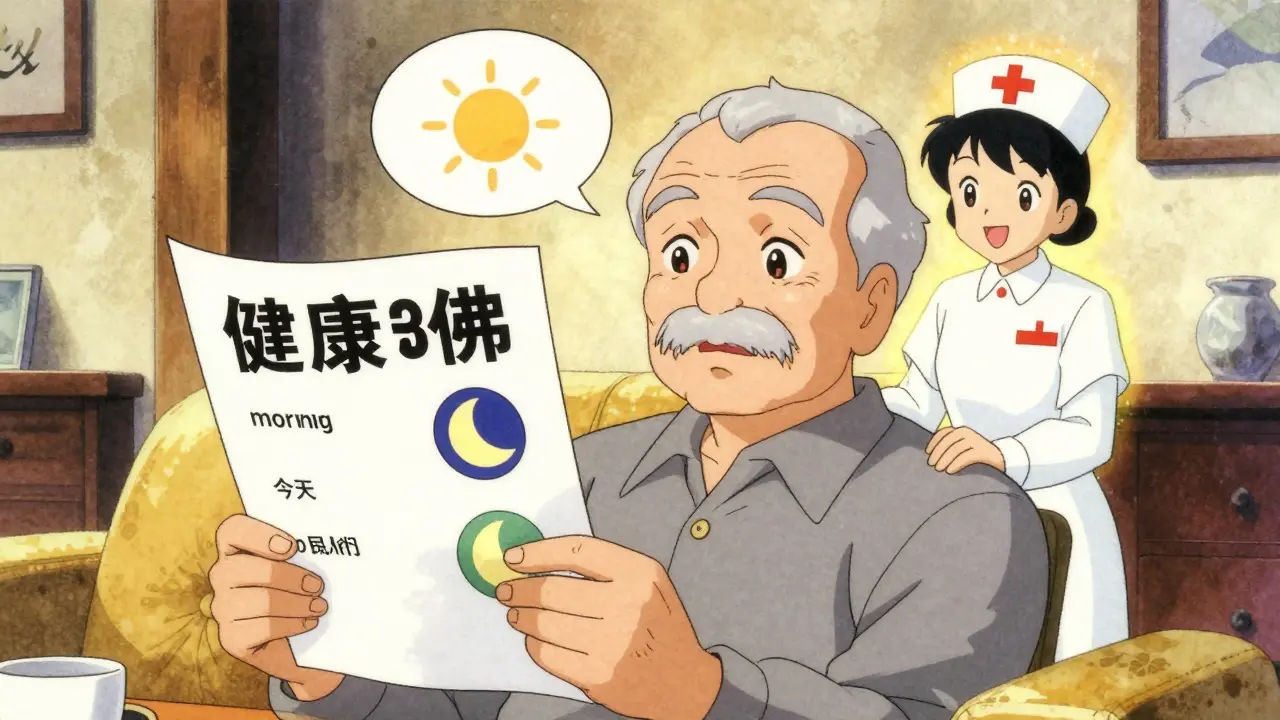
When you’re 70 or older, understanding your doctor’s instructions isn’t just about paying attention-it’s about having the right tools. Too many older adults leave the clinic confused about their medications, how to check their blood pressure, or what symptoms mean. This isn’t because they aren’t trying. It’s because most medical materials weren’t made for them.
Why Standard Medical Materials Don’t Work for Seniors
Most health brochures, websites, and handouts are written for people who read at a 7th or 8th grade level. But for adults over 65, that’s often too high. According to the CDC, 71% of seniors struggle with basic printed health materials. Eighty percent have trouble reading forms or charts. Nearly 7 out of 10 can’t make sense of numbers-like how many pills to take or when to refill a prescription. It’s not just about reading ability. Vision changes, hearing loss, memory lapses, and slower thinking all make it harder to absorb complex information. A 12-page booklet on diabetes management might look helpful, but if the font is 10-point, the text is dense, and there are no pictures, it’s useless. One study in the Journal of General Internal Medicine found that when materials were rewritten for a 3rd to 5th grade reading level, seniors understood the content 42% better. That’s not a small improvement. That’s the difference between managing your condition and ending up back in the hospital.What Makes a Good Senior Health Material?
Effective materials for older adults follow clear, proven rules-not guesswork. The National Institute on Aging and the CDC have laid out exactly what works.- Font size: 14-point or larger. Anything smaller is hard to read, even with glasses.
- Font type: Simple, sans-serif. Think Arial, Helvetica, or Verdana. Avoid fancy fonts like Times New Roman or script styles.
- Contrast: Dark text on bright white background. Gray text on light gray? Don’t do it. Seniors need high contrast to see clearly.
- Layout: One idea per page. No walls of text. Use short paragraphs, bullet points, and plenty of white space.
- Use pictures and icons. A drawing of a pill bottle with arrows showing morning, noon, and night is worth 100 words.
- Use real-life examples. Instead of saying “Take medication with food,” say “Take your pill with breakfast, like your toast and eggs.”
Teach-Back: The Secret Weapon
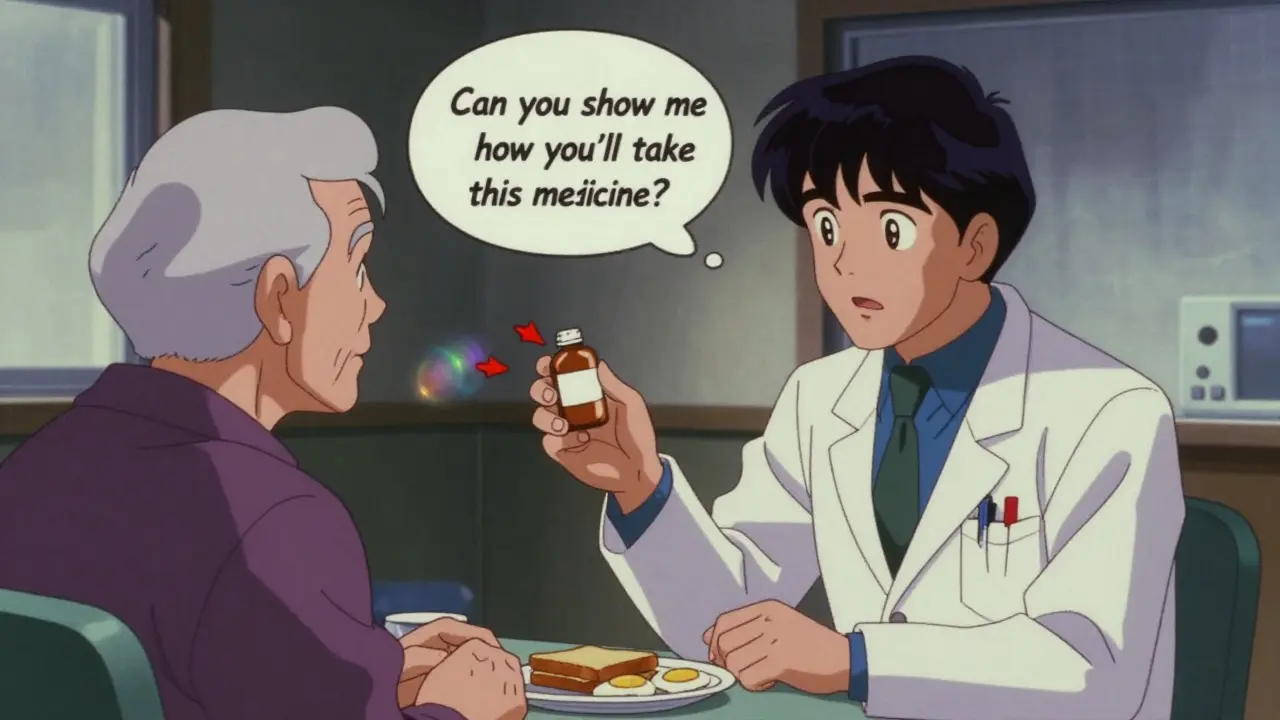
It’s not enough to hand someone a pamphlet. You have to make sure they understood it. That’s where “teach-back” comes in. Instead of asking, “Do you understand?”-which most people say yes to, even if they don’t-do this:- Explain the instruction clearly.
- Ask: “Can you tell me how you’ll take this medicine at home?”
- Listen. Don’t interrupt.
- If they get it wrong, re-explain using different words.
Where to Find Trusted Materials
You don’t have to create these from scratch. Several trusted organizations offer free, tested materials designed for older adults.- HealthinAging.org (run by the American Geriatrics Society) has over 200 easy-to-read guides on topics like high blood pressure, dementia, falls, and vaccines. They’ve been viewed more than 2.3 million times a year since 2020.
- MedlinePlus (from the NIH) has a special “Easy-to-Read Health Information” section with 217 resources, all checked using the Health Education Materials Assessment Tool (HEMAT).
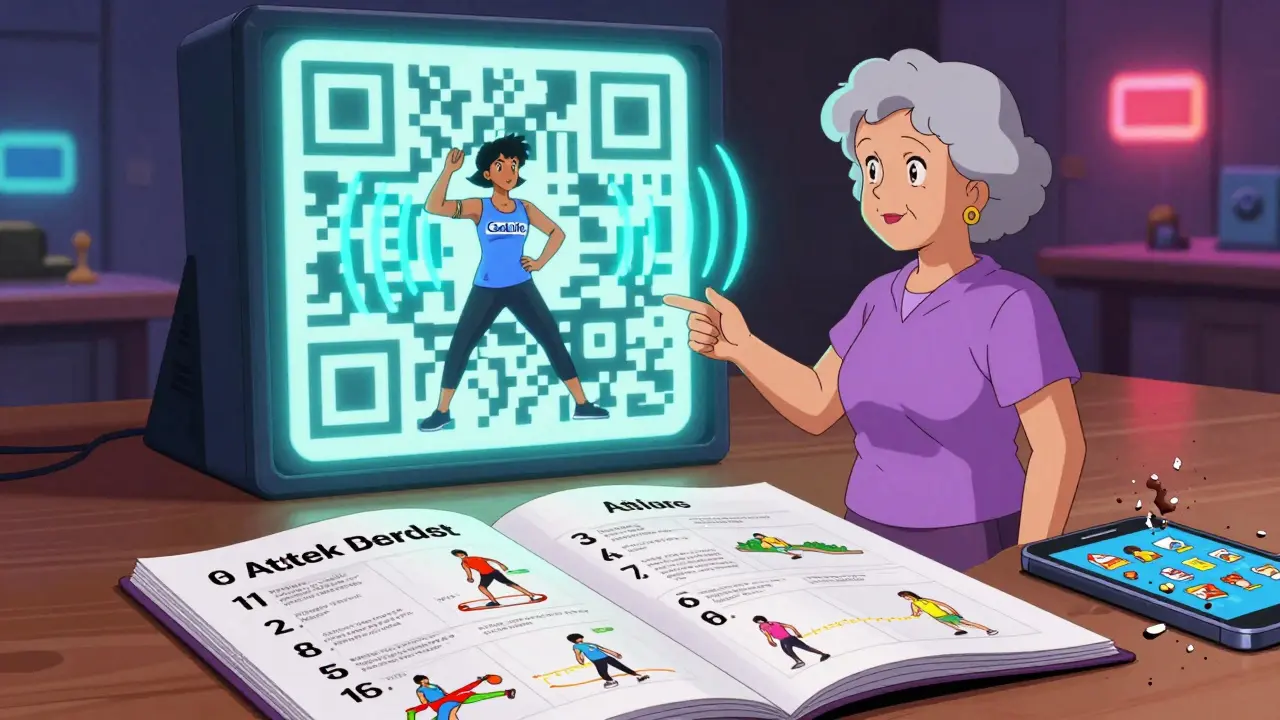
- National Institute on Aging (NIA) offers free print and video materials, including their updated Go4Life exercise program from January 2024, now with voice-guided instructions.
- CDC’s Healthy Aging Program provides downloadable fact sheets on topics like managing multiple medications and preventing falls.
What About Digital Tools?
More seniors are using telehealth. In 2023, 68% of Medicare patients had a virtual visit-up from just 17% in 2019. But that doesn’t mean paper materials are obsolete. In fact, digital and print should work together. Many older adults find apps and websites confusing. If you send a link to a website with tiny text and pop-up ads, you’re not helping-you’re adding stress. Better approach:- Give a printed summary of what was discussed in the video visit.
- Include a QR code that links to a simple, mobile-friendly page with the same info.
- Offer a phone number to call if they have questions-no chatbots, no forms to fill out.
Why This Matters: Real Results
This isn’t just about comfort. It’s about safety and cost. Seniors with low health literacy are:- 2.3 times more likely to say their health is poor
- 1.7 times more likely to have diabetes
- More likely to take the wrong dose or skip meds entirely
Barriers to Better Education
Even though the evidence is strong, most clinics still aren’t doing it right. A 2023 survey by the American Medical Association found that 78% of providers say they don’t have enough time to create or use better materials. Sixty-five percent of community clinics say they can’t afford to hire specialists to design them. And here’s the hidden problem: many seniors don’t ask for help. A 2022 National Council on Aging survey found that 51% of older adults never asked for clarification because they were embarrassed-or afraid they’d look stupid. That’s why the best materials don’t just explain-they empower. They say things like, “It’s okay to ask,” or “Many people feel confused. Here’s what to say.”What You Can Do Today
If you’re a caregiver, family member, or healthcare worker, here’s what to do now:- Check any printed materials you’re using. Is the font at least 14-point? Is it in Arial? Is there a picture for every instruction?
- Use teach-back in every conversation. Don’t ask, “Do you understand?” Ask, “Can you show me how you’ll take this?”
- Use free resources from HealthinAging.org or MedlinePlus. Don’t create your own unless you’ve tested it with real seniors.
- If you’re a provider, ask your clinic to adopt universal health literacy practices. It’s not extra work-it’s better work.
- If you’re an older adult, remember: asking questions is not a sign of weakness. It’s how you stay safe.
What reading level should senior patient education materials be written at?
Senior patient education materials should be written at a 3rd to 5th grade reading level. This matches the reading ability of about 20% of U.S. adults, including many older adults. Studies show this improves comprehension by 42% compared to standard medical materials. Even though the average American reads at a 7th to 8th grade level, older adults often need simpler language due to cognitive or sensory changes.
Why is font size so important for older adults?
As people age, their vision changes. The lens of the eye becomes less flexible, making it harder to focus on small print. Even with reading glasses, many seniors struggle with 10- or 12-point fonts. The National Institute on Aging and CDC recommend a minimum of 14-point font-preferably 16-point-for printed materials. Sans-serif fonts like Arial or Verdana are easier to read than serif fonts like Times New Roman.
What is the teach-back method and why does it work?
Teach-back is when a healthcare provider asks a patient to explain back in their own words what they just learned. Instead of asking, “Do you understand?”-which often gets a false yes-the provider says, “Can you tell me how you’ll take this medicine?” This reveals misunderstandings before they lead to mistakes. Research shows it improves patient understanding by 31% with only 2.7 extra minutes per visit. It’s simple, free, and highly effective.
Are digital health tools helpful for seniors?
Digital tools can help, but only if they’re designed well. Many seniors find apps and websites confusing. A better approach is to give printed summaries with a QR code that links to a simple, mobile-friendly version. Voice-activated tools, like those in the NIA’s Go4Life program, are gaining popularity because they let seniors hear instructions instead of reading them. Digital literacy is now part of health literacy-so don’t assume seniors can navigate online portals without help.
Where can I find free, reliable senior health materials?
You can find free, tested materials from trusted sources like HealthinAging.org (from the American Geriatrics Society), MedlinePlus (from the NIH), and the CDC’s Healthy Aging Program. These sites offer easy-to-read guides on topics like diabetes, heart disease, falls prevention, and medication safety. All materials are reviewed for clarity, font size, and visual support. Avoid random websites-stick to government or nonprofit sources with clear credibility.
Why do so many seniors not ask questions when they’re confused?
Many older adults feel embarrassed or fear being seen as unintelligent. A 2022 survey found that 51% of seniors never asked for clarification, even when they didn’t understand. Others worry they’ll waste the doctor’s time. This silence puts them at risk. The best educational materials include phrases like, “It’s okay to ask,” or “Many people have the same question.” Creating a safe space for questions saves lives.

14 Comments
Amber Lane
Jan 20 2026My grandma couldn't read her meds sheet until we switched to 16-point Arial with pictures of pills. She said it felt like someone finally spoke her language.
Simple changes. Big difference.
Roisin Kelly
Jan 21 2026Of course they don't understand-doctors are too busy pushing pharma ads to care. They'd rather sell you a $200 pill than write a sentence you can read.
Big Pharma doesn't want seniors smart. They want them confused and dependent.
Samuel Mendoza
Jan 21 20263rd to 5th grade? That's dumbing down. If you can't read a brochure, maybe you shouldn't be managing your own meds.
Not everyone needs a cartoon to understand 'take two pills.' Some people just need to try harder.
Glenda Marínez Granados
Jan 21 2026So we're just gonna turn all medical info into a Sesame Street episode now? 🤦♀️
Next they'll put a rainbow on the insulin bottle and sing a jingle about blood pressure.
At least the font is big. I guess that's something.
Yuri Hyuga
Jan 23 2026This is exactly the kind of compassionate, practical innovation our healthcare system needs! 🌟
Large font? Clear visuals? Teach-back? These aren't 'special accommodations'-they're basic human decency.
Every clinic should adopt this tomorrow. No excuses. Let's make health literacy a right, not a privilege! 💪🌍
Coral Bosley
Jan 23 2026They don't even try. I've seen brochures with gray text on off-white paper like someone threw up a fog machine on it.
And then they wonder why old folks miss doses.
It's not them. It's the system being lazy as hell.
Steve Hesketh
Jan 23 2026Let me tell you something, my brother in Lagos-he’s 74, blind in one eye, uses a cane, but he understands his diabetes because his nurse sat with him, drew the plate with beans and yam, and made him say it back: 'I eat this, then I take my pill.'
That’s all it took. No fancy app. No website. Just care.
That’s the real medicine right there.
And if your clinic can’t do that? They’re not healing. They’re just billing.
MAHENDRA MEGHWAL
Jan 24 2026It is imperative to acknowledge that the utilization of universally accessible health communication protocols not only enhances comprehension but also mitigates the risk of adverse clinical outcomes.
Furthermore, empirical evidence substantiates the efficacy of the teach-back methodology as a cornerstone of patient-centered care.
One must not underestimate the significance of linguistic simplification in the context of geriatric health education.
Sangeeta Isaac
Jan 25 2026so like… why do all the ‘easy’ materials look like they were made by a 12-year-old using wordart?
and why is the QR code always broken?
and why does the ‘simple’ version still have 37 footnotes?
also, who decided ‘Arial’ is the new ‘legible’? i miss Comic Sans. at least it was honest.
Rod Wheatley
Jan 25 2026YES. YES. YES. This is the exact approach we need-100% on point.
Font size: 14-point minimum-non-negotiable.
Contrast: White text on black? No-dark on bright white. That’s science.
Teach-back: Do it every single time-even if you’re rushed.
Use HealthinAging.org-they’ve tested every word.
And if you’re a provider? Stop making excuses. Your patient’s life is not a spreadsheet.
Do it right. Or don’t do it at all.
Uju Megafu
Jan 26 2026Oh, so now we’re treating seniors like children? Let me guess-next they’ll hand out coloring books with ‘Take Your Medicine’ as a reward?
And why is no one talking about how the government cuts senior programs every year but spends billions on ‘health literacy campaigns’ that never reach the people who need them?
This is performative compassion. It’s not helping. It’s just making people feel better about doing nothing.
Kelly McRainey Moore
Jan 26 2026I printed out the diabetes sheet from HealthinAging.org for my dad. He cried. Not because he was sad-because he finally felt like he could keep up.
Small things. Big love.
Stephen Rock
Jan 27 2026Most seniors can’t read because they never learned to. This isn’t a design flaw-it’s a generational failure.
Stop blaming the brochures. Blame the public school system that let them slip through.
Also, 14-point font? That’s a baby book. Give me a break.
michelle Brownsea
Jan 28 2026It is both morally and clinically indefensible to distribute health materials that violate the fundamental principles of legibility, contrast, and cognitive accessibility.
Furthermore, the assertion that seniors require simplified language presumes a deficit in cognitive capacity, rather than recognizing systemic failure in communication design.
One must not conflate accessibility with condescension; the goal is not to reduce complexity, but to eliminate obfuscation.
And yet-still-no national standard exists.
How is this still acceptable in 2024?