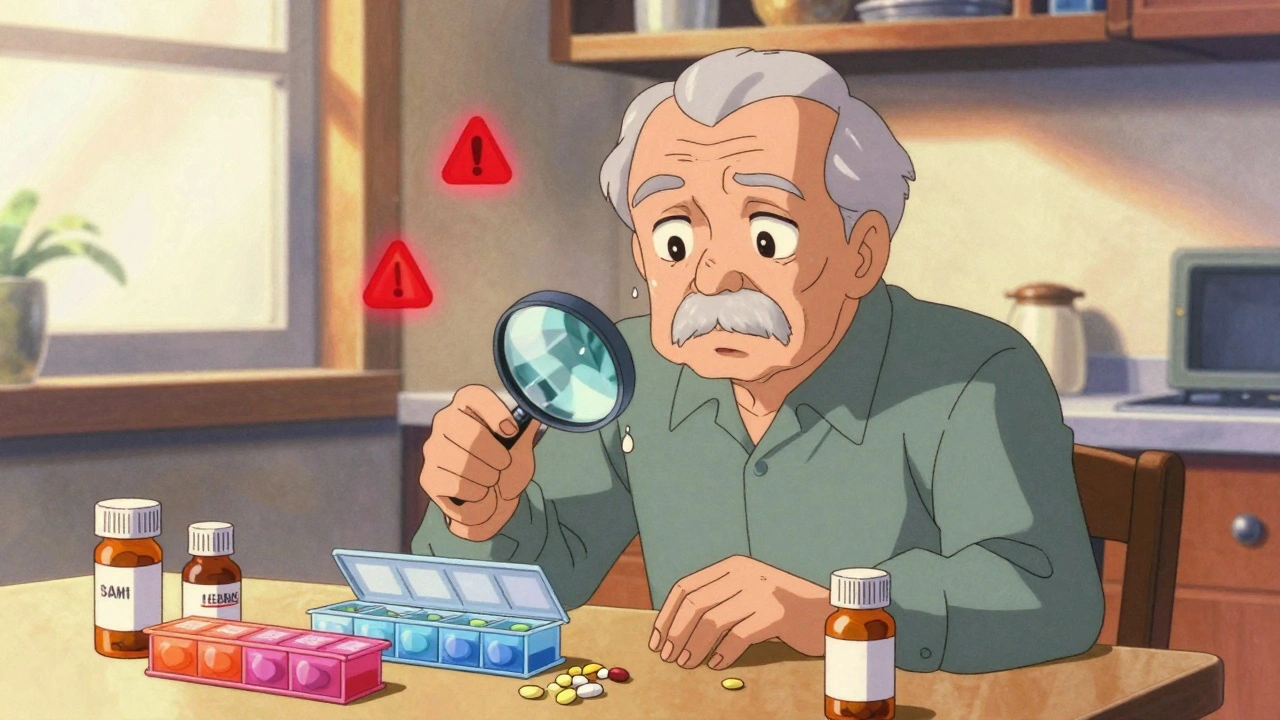
More than 90% of prescriptions for older adults are filled with generic drugs. They’re cheaper, widely available, and approved by the FDA as equally effective as brand-name versions. But for someone over 65, taking a generic drug isn’t just about saving money-it’s about staying safe. The body changes with age, and those changes can turn a standard dose into a dangerous one. What’s safe for a 40-year-old might be risky for an 80-year-old, even if the pill looks identical.
Why Age Changes How Drugs Work
As we get older, our bodies don’t process medicine the same way. Kidneys slow down. The liver doesn’t break down drugs as quickly. Body fat increases, while water content drops. That means drugs stick around longer, build up in the system, and can cause side effects even at normal doses.A 2023 study found that drug metabolism can drop by up to 30% in people over 75. That’s not a small change-it’s enough to turn a daily pill into a toxic dose over time. This is why a "normal" dose for a younger person can be an overdose for an older adult. It’s not about the drug being weak or strong. It’s about the body’s ability to handle it.
Drugs that affect the brain-like sleeping pills, anti-anxiety meds, or even some pain relievers-are especially risky. Older adults are more sensitive to these. A mild sedative might cause dizziness, confusion, or a fall. And falls in older adults aren’t just injuries-they can lead to fractures, hospital stays, and even death.
Generic vs. Brand: Is There a Real Difference?
The FDA requires generic drugs to have the same active ingredient, strength, and route of administration as the brand-name version. They must also be bioequivalent-meaning they work the same way in the body, within a tight range of 80-125% of the brand’s effect.For most drugs, that’s fine. Generic atorvastatin works just as well as Lipitor for lowering cholesterol. Generic metformin controls blood sugar the same way as Glucophage. And for most people, switching saves hundreds a year with no downside.
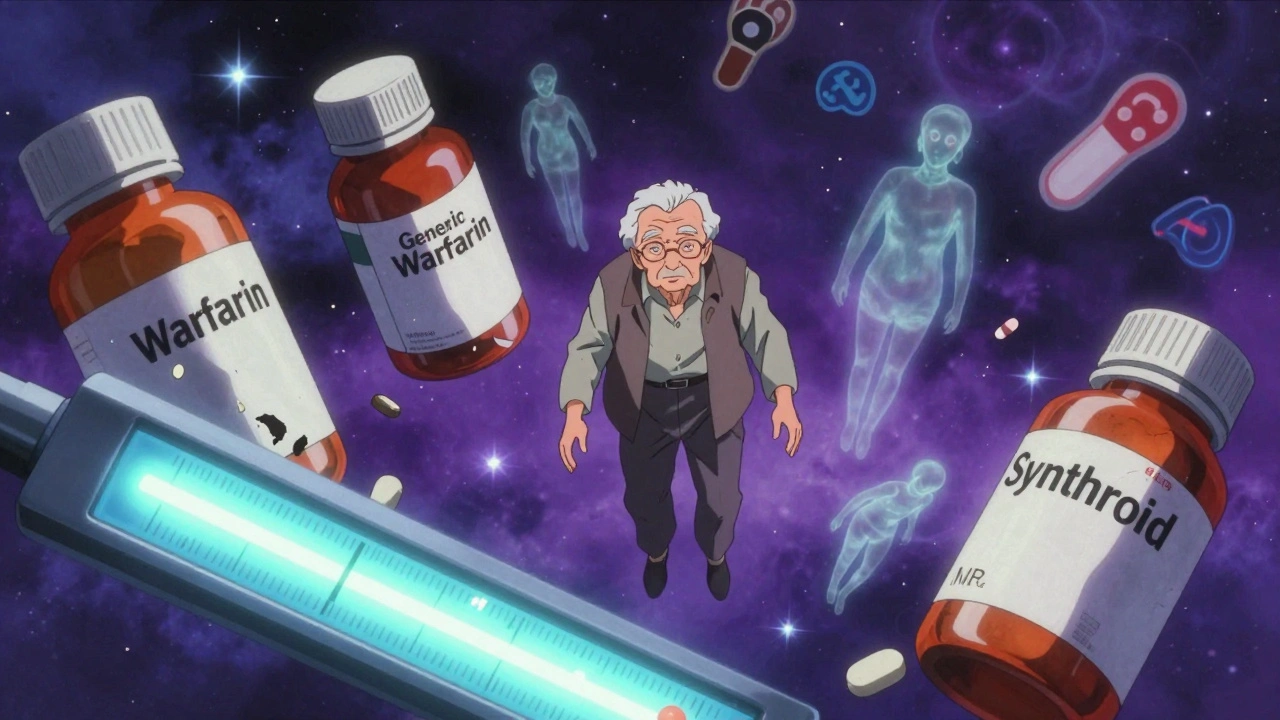
But there are exceptions. Drugs with a narrow therapeutic index (NTI) are trickier. These are medications where even a tiny change in blood level can cause harm or make the drug ineffective. Warfarin is the classic example. It’s used to prevent blood clots, but too much causes bleeding, too little causes clots. Some older adults report unstable INR levels after switching from brand-name Coumadin to generic warfarin. While studies show 98.7% equivalence in clinical trials, real-world experiences vary. One patient’s TSH levels went wild after switching from brand Synthroid to generic levothyroxine, requiring three dosage adjustments over six months.
That doesn’t mean generics are unsafe. It means they need extra care. If you’re on a drug like warfarin, digoxin, or certain seizure meds, talk to your doctor before switching. Don’t assume it’s automatic. Monitor closely. Keep track of symptoms. Get lab tests done more often after the switch.
The Real Danger: Taking Too Many Pills
The biggest threat to older adults isn’t whether a drug is generic or brand-it’s how many they’re taking.People over 65 average 48 prescriptions a year. Nearly 9 out of 10 are generics. But when someone takes five or more medications, their risk of a bad reaction jumps to 58%. With seven or more, it’s 82%. That’s not a small risk-it’s a crisis.
Polypharmacy isn’t just about quantity. It’s about interactions. A blood pressure pill might make a diabetes drug less effective. An antidepressant might increase the risk of falls. Opioids combined with benzodiazepines raise overdose risk by 154%. Gabapentin with opioids increases breathing problems by 70%.
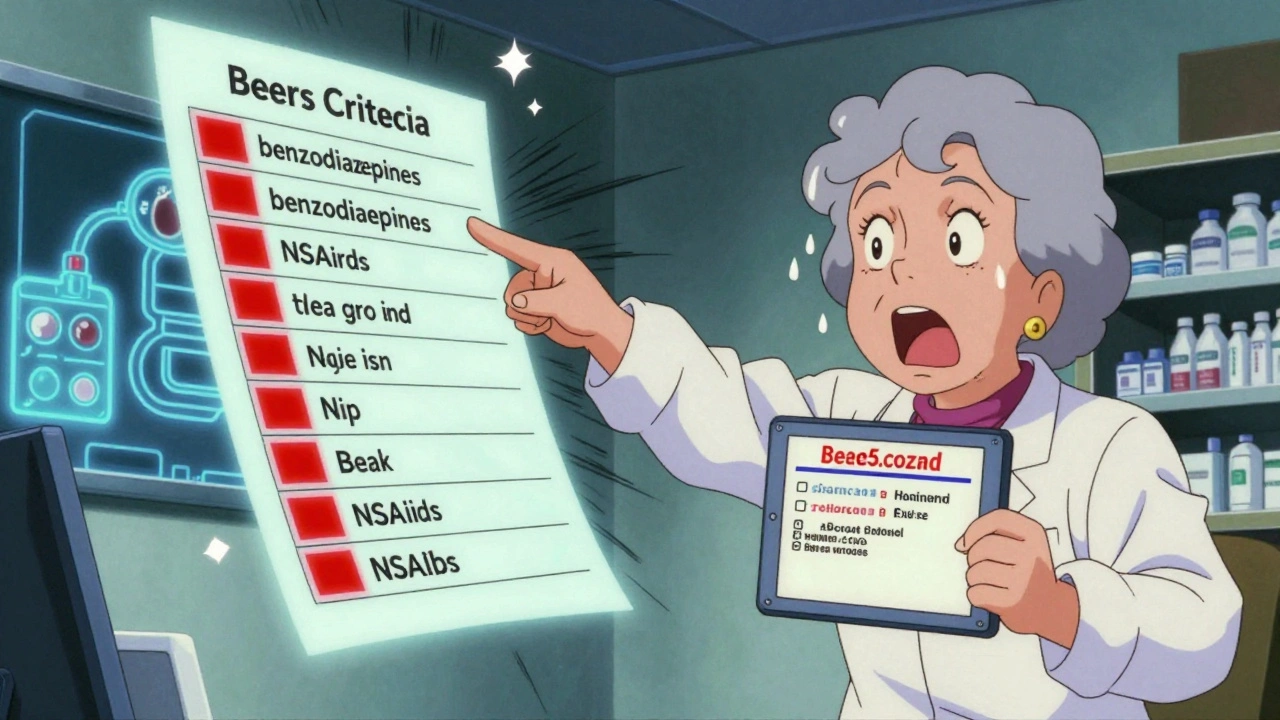
The Beers Criteria, updated in 2023 by the American Geriatrics Society, lists medications that should be avoided or used with extreme caution in older adults. This includes drugs like diphenhydramine (Benadryl), cyclobenzaprine (Flexeril), and certain antipsychotics-even in generic form. These aren’t banned. But they’re flagged because the risks outweigh the benefits for seniors.
What Medications Should Seniors Avoid?
The Beers Criteria 2023 update gives clear guidance. Here are key examples:- NSAIDs like ibuprofen and naproxen: Increase risk of stomach bleeding and kidney damage. Safer alternatives exist.
- Benzodiazepines like diazepam and lorazepam: Cause drowsiness, memory issues, and falls. Long-term use is especially dangerous.
- Anticholinergics like oxybutynin and chlorpheniramine: Linked to confusion, constipation, and urinary retention.
- Sulfonylureas like glyburide: High risk of low blood sugar, which can lead to falls and brain injury.
- Digoxin: Can cause irregular heartbeats. Often unnecessary when better options are available.
- Rivaroxaban (Xarelto): Higher risk of stomach bleeding in people over 75 compared to warfarin.
- SNRIs like venlafaxine: Increase fall risk by 37% in seniors with balance issues.
None of these are banned. But they’re red flags. If your doctor prescribes one, ask: "Is this really necessary? Are there safer options?" Don’t be afraid to push back.
How to Use Generic Drugs Safely
Generic drugs are safe-when used correctly. Here’s how to make sure they’re safe for you or a loved one:- Keep a full medication list-including vitamins, supplements, and over-the-counter drugs. Update it after every doctor visit. Bring it to every appointment.
- Ask for a medication review every three to six months. Pharmacists are trained to spot dangerous combinations. A 2022 study showed quarterly reviews reduce adverse events by 27%.
- Check for interactions. Use tools like the Beers Criteria or ask your pharmacist: "Is this safe for someone my age?"
- Use pill organizers. Color-coded boxes or automated dispensers cut medication errors by 34%.
- Read labels carefully. Many older adults have trouble reading small print. Ask for large-type labels. Ask for plain language instructions.
- Watch for side effects. Dizziness, confusion, fatigue, or loss of appetite aren’t just "getting older." They could be drug reactions.
- Don’t stop or change doses without talking to your doctor. Even if you feel fine, your body might be reacting slowly.
What to Do If You Suspect a Problem
If you notice changes after switching to a generic drug-like new dizziness, confusion, or unusual fatigue-don’t ignore it. Track the symptoms. Note when they started. Write down the exact drug name and dose. Then call your doctor or pharmacist.Some reactions are subtle. A fall that didn’t happen before. A sudden drop in energy. Trouble remembering names. These aren’t normal aging. They’re warning signs.
If your doctor says it’s "just the meds," ask for a trial back to the brand-name version. Sometimes, even a small difference in inactive ingredients (like fillers or dyes) can affect absorption in older bodies. It’s not about brand loyalty-it’s about finding what works safely.
What’s Being Done to Improve Safety?
Regulators and researchers are paying more attention. The FDA’s Sentinel Initiative now tracks adverse events by age group. Early data shows generic and brand-name drugs have similar safety profiles for most medications. But for warfarin in people over 80, reports of issues are 1.8 times higher with generics-likely because of how they’re used, not the drug itself.In 2022, the FDA approved 37 new generic formulations designed for older adults: easier-to-swallow tablets, dissolvable forms, and simplified dosing schedules. The National Institute on Aging has allocated $27 million to study how aging affects drug response. And by 2024, the American Geriatrics Society plans to roll out AI tools that predict medication risks based on age, health conditions, and current drugs.
These are steps forward. But the biggest change still comes from you-asking questions, tracking symptoms, and refusing to accept "it’s just old age" as an answer.
Bottom Line: Generics Are Safe-If You’re Careful
Generic drugs save money. They’re not inferior. But for older adults, safety isn’t just about the pill in the bottle. It’s about the body that takes it. The other drugs you’re on. The way you store them. Whether you understand the instructions. Whether someone’s watching for side effects.Don’t fear generics. But don’t assume they’re risk-free. Work with your doctor and pharmacist. Keep a clear list. Review your meds often. Speak up if something feels off. Your health isn’t a cost-saving experiment. It’s your life.
Are generic drugs as safe as brand-name drugs for older adults?
Yes, for most medications, generic drugs are just as safe and effective as brand-name versions. The FDA requires them to meet the same standards for active ingredients, strength, and how they work in the body. However, older adults are more sensitive to even small changes in drug levels, especially with narrow therapeutic index drugs like warfarin or levothyroxine. In these cases, close monitoring after switching is essential.
Why do older adults have more side effects from medications?
As people age, their kidneys and liver process drugs more slowly. Body fat increases, while water content decreases, causing medications to stay in the body longer. This means a standard dose can build up to toxic levels. Older adults are also more sensitive to drugs that affect the brain, like sedatives or antidepressants, which can cause dizziness, falls, or confusion.
What are the most dangerous drugs for seniors?
According to the 2023 Beers Criteria, high-risk drugs for older adults include benzodiazepines (like diazepam), NSAIDs (like ibuprofen), anticholinergics (like diphenhydramine), sulfonylureas (like glyburide), and muscle relaxants like cyclobenzaprine. These can cause falls, confusion, kidney damage, or dangerous drops in blood sugar. Even in generic form, these drugs carry serious risks for seniors.
Should I avoid switching from brand-name to generic drugs?
Not necessarily. For most drugs, switching is safe and saves money. But for drugs with a narrow therapeutic index-like warfarin, levothyroxine, or certain seizure meds-talk to your doctor first. Monitor for changes in symptoms or lab results after the switch. If you notice new side effects, go back to the brand-name version temporarily to see if it helps.
How can I reduce the risk of bad reactions from multiple medications?
Get a full medication review with your pharmacist every three to six months. Keep an up-to-date list of all drugs, including vitamins and OTCs. Use a pill organizer. Ask your doctor: "Is this still necessary?" and "Are there safer alternatives?" Reducing unnecessary drugs is the most effective way to prevent dangerous interactions.
Can expired or poorly stored generic drugs be dangerous?
Yes. A 2023 FDA analysis found that 22% of medication errors in older adults involve expired or improperly stored drugs. Heat, moisture, and light can degrade pills, making them less effective or even harmful. Always store medications in a cool, dry place. Check expiration dates. Don’t keep old pills "just in case."

11 Comments
Ethan McIvor
Dec 3 2025Man, this hit home. My dad’s on like seven meds, and I swear he’s just "getting older"-until he started stumbling in the kitchen. Turned out it was the generic gabapentin + his blood pressure pill. We switched him back to brand for a month, and he was a whole different person. Not magic, just biology. 💔
Mindy Bilotta
Dec 4 2025i just had to help my mom switch her thyroid med from synthroid to generic and she got so dizzy she fell and cracked her rib. we went back to brand and boom-fixed. docs say it’s "rare" but i’ve seen it twice now. don’t assume it’s fine. check your labs.
also, pill organizers are a lifesaver. get the ones with alarms. trust me.
Michael Bene
Dec 5 2025Oh for fuck’s sake, here we go again-the "generic is dangerous" panic parade. Let me break this down for you folks who think your grandma’s meds are a Shakespearean tragedy: 98.7% of people switch just fine. The FDA doesn’t approve junk. If your uncle’s INR is wobbling, it’s not the pill-it’s the fact he’s taking it with grapefruit juice, forgot to get his blood drawn, and his pharmacist is on a coffee break. Stop blaming the generic. Blame the system. Blame the doctors who don’t follow up. Blame the family who lets their 80-year-old self-medicate with Benadryl because "it helps with sleep."
And yes, I’ve worked in pharmacy for 22 years. I’ve seen more bad outcomes from people hoarding expired antibiotics than from generic levothyroxine. Stop the fearmongering. Education-not paranoia-is the cure.
Brian Perry
Dec 6 2025MY GRANDMA TOOK GENERIC WARFARIN AND GOT A STROKE. THAT’S IT. I’M NEVER LETTING HER TAKE A GENERIC AGAIN. I DON’T CARE WHAT THE FDA SAYS. SHE WAS FINE ON COUMADIN. NOW SHE CAN’T WALK. THIS ISN’T A STATISTIC. THIS IS MY FAMILY.
Gavin Boyne
Dec 7 2025Wow. So we’re now treating seniors like fragile glass figurines that can’t handle the same science the rest of us use? Interesting.
Meanwhile, in Canada, they’ve been using generics for decades without collapsing the healthcare system. In the UK, they’re practically mandatory. But here? We’ve turned medication into a luxury brand. "Oh no, my grandma needs the blue pill with the smiley face on it!"
It’s not the generic. It’s the overprescribing. It’s the lack of medication reviews. It’s the doctors who think "just give them something" is a treatment plan. The real villain? The system that profits from fear, not the pill in the bottle.
Ignacio Pacheco
Dec 7 2025So… if generics are bioequivalent, why do some seniors report issues? Is it the fillers? The coating? The manufacturing batch? Or is it just that we’re not monitoring them closely enough after the switch?
Because if it’s the same active ingredient, same dose, same route… why does the body sometimes react like it’s a different drug? Just curious. Not accusing. Just… wondering.
Jim Schultz
Dec 8 2025Let’s be real: this article is basically a marketing pamphlet for brand-name pharma disguised as public health advice. "Oh no, generics might be slightly different!"-yeah, and so is the weather in July.
Meanwhile, the same people who scream about "generic warfarin risks" are the ones who won’t even try a $4 prescription because "it’s not the same."
And don’t get me started on the Beers Criteria. It’s a list of drugs that doctors used to prescribe like candy. Now they’re afraid to touch anything. Result? Seniors are getting NO treatment for real conditions because everyone’s too scared to prescribe anything.
It’s not the generic. It’s the fear. And the fear is making people sicker.
Kidar Saleh
Dec 9 2025I’ve spent 15 years working with elderly patients in London, and I’ve seen both sides. Generic drugs? Mostly flawless. But the real issue? No one checks in. No one asks, "How are you feeling since the switch?"
Pharmacists are overworked. Doctors are rushed. Families are miles away. So the elderly-many of whom are lonely, confused, or afraid to complain-just endure. Dizziness? "Oh, I’m just old." Confusion? "It’s the dementia."
What we need isn’t more warnings about pills. It’s more human connection. A phone call. A visit. Someone who notices the change. That’s the real safety net.
Chloe Madison
Dec 10 2025THIS IS SO IMPORTANT. I’M A NURSE, AND I SEE THIS EVERY SINGLE DAY.
Seniors aren’t being dangerous-they’re being neglected. They’re given a new prescription, handed a bottle, and told to "take one daily." No explanation. No follow-up. No one checks if they can read the label. No one asks if they’re taking it with their coffee or their grapefruit juice.
And then they get sick. And everyone says, "Oh, it’s just aging." NO. IT’S NOT. IT’S A SYSTEM FAILURE.
PLEASE. If you have a loved one on meds-sit with them. Help them organize their pills. Call their pharmacist. Write down the names. Ask, "Is this still needed?"
You don’t need to be a doctor. You just need to care enough to show up.
Vincent Soldja
Dec 12 2025Generic drugs are safe. The real problem is polypharmacy and poor monitoring.
Makenzie Keely
Dec 12 2025Thank you for this. Seriously. I’ve been trying to tell my aunt for months that her dizziness isn’t "just old age"-it’s the combination of generic gabapentin, her blood pressure med, and the OTC sleep aid she’s been taking since 2018. She didn’t even realize it was a problem until I sat down with her, wrote down every single thing she takes (including the turmeric capsules), and called her pharmacist together.
They flagged THREE interactions. She stopped two, switched one to a safer alternative, and now she’s walking without her cane again.
Don’t wait for a fall. Do the list. Ask the questions. Be the person who shows up. Your loved one’s life might depend on it.