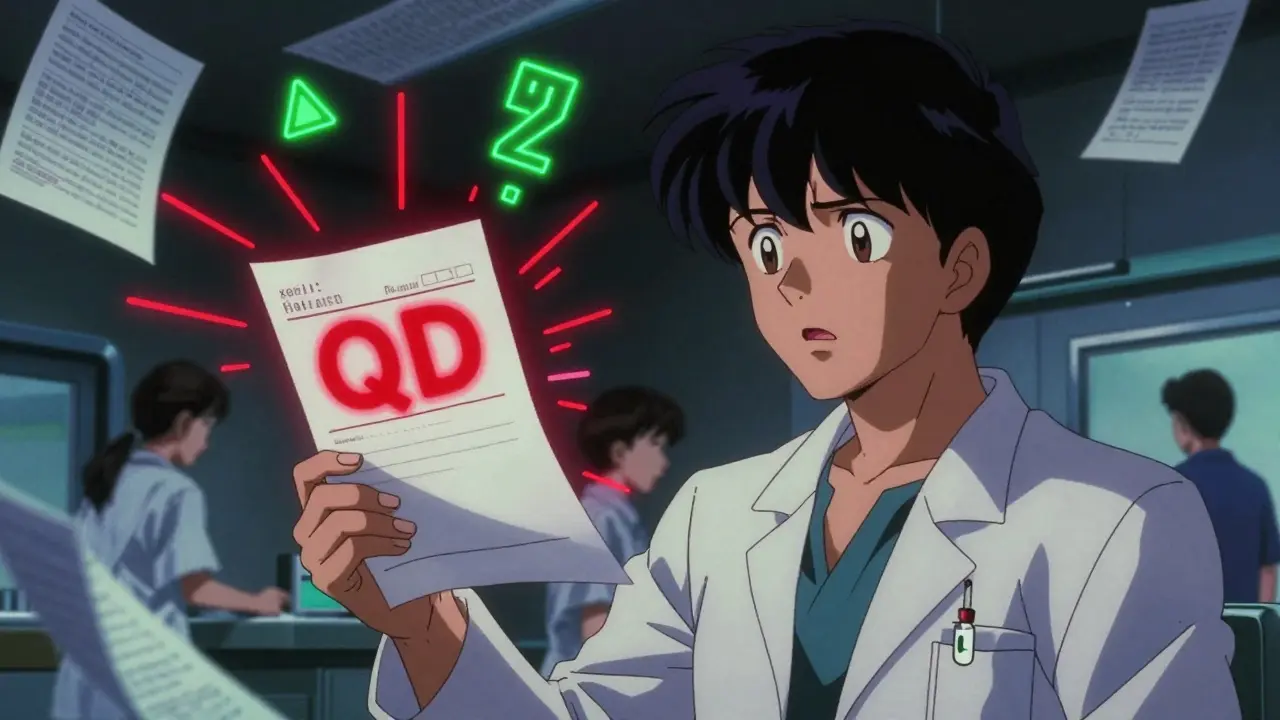
One wrong letter on a prescription can kill. It’s not a scare tactic-it’s a fact. In hospitals, pharmacies, and clinics across the country, dangerous medical abbreviations still slip through cracks, leading to mix-ups that send patients to the ER, the ICU, or worse. The problem isn’t new, but the consequences are real, and they’re preventable. You might think, "My doctor knows what they’re doing," but even the most experienced prescribers make mistakes when shorthand gets misread. And it’s not just handwriting anymore-electronic systems still let these errors slip in.
Why These Abbreviations Are So Dangerous
Medical abbreviations were created to save time. But in high-pressure environments, speed often trumps clarity. The most common offenders aren’t obscure codes-they’re everyday shortcuts that look harmless until something goes wrong. Take QD. It’s meant to mean "once daily." But in handwritten notes, it can look like QID (four times daily) or even QOD (every other day). A 2018 analysis of nearly 5,000 medication errors found that QD was involved in over 43% of all abbreviation-related mistakes. One patient was given a blood thinner four times a day instead of once-resulting in internal bleeding. Another was given insulin daily when it was supposed to be every other day, leading to dangerous lows. Then there’s U for units. It looks like a zero, a four, or even a "cc." A pharmacist once filled a prescription for "10 U" of insulin, thinking it was 10 mL. That’s 100 times the dose. The patient survived-barely. This isn’t rare. The American Society of Health-System Pharmacists found that nearly 29% of pharmacists intercepted a "U" error in the past year. And then there’s MS. On paper, it could mean morphine sulfate-or magnesium sulfate. These drugs do completely different things. Morphine eases pain. Magnesium treats seizures and irregular heart rhythms. Giving magnesium instead of morphine to someone in severe pain? They’ll still be in agony. Giving morphine instead of magnesium to someone with a dangerous heart rhythm? They could die.The Official "Do Not Use" List (And What to Write Instead)
In 2001, The Joint Commission and the Institute for Safe Medication Practices (ISMP) created a list of abbreviations that should never be used. It’s not optional. Hospitals that don’t follow it risk losing their accreditation. Here’s the core list-and what to use instead:- QD → Write "daily"
- QOD → Write "every other day"
- QID → Write "four times daily"
- BID → Write "twice daily"
- BIW → Write "twice weekly"
- U → Write "units"
- IU → Write "international units"
- cc → Write "mL"
- MS or MSO4 → Write "morphine sulfate"
- MgSO4 → Never abbreviate-write "magnesium sulfate"
- SC or SQ → Write "subcutaneous"
- TAC → Write "triamcinolone"
- DTO → Write "diluted tincture of opium"
It sounds simple. But here’s the catch: many prescribers still use these abbreviations because they’ve always done it. A 2022 survey found that 44% of doctors over 50 still use "QD" or "U"-even in hospitals where it’s banned.
How Technology Helps-And Sometimes Hurts
Electronic health records (EHRs) were supposed to fix this. And they did-sort of. A 2021 study showed EHRs cut abbreviation errors by 68%. But 13% of errors still happened because doctors typed free-text notes. Someone typed "MS 10 mg" into a comment field. The system didn’t flag it. The nurse printed it. The pharmacist dispensed it. And the patient got morphine when they needed magnesium. Newer EHRs now have "hard stops"-they won’t let you submit a prescription if you type "QD" or "U." Some even auto-correct "MS" to "morphine sulfate" and "MgSO4" to "magnesium sulfate." But not all systems do this. And even when they do, some clinicians just click past the warning. A 2023 update from Epic Systems rolled out AI tools that scan for dangerous abbreviations in voice dictations. If a doctor says, "Give her 10 U of insulin," the system now flags it and asks, "Did you mean units?" It’s not perfect-but it’s a big step.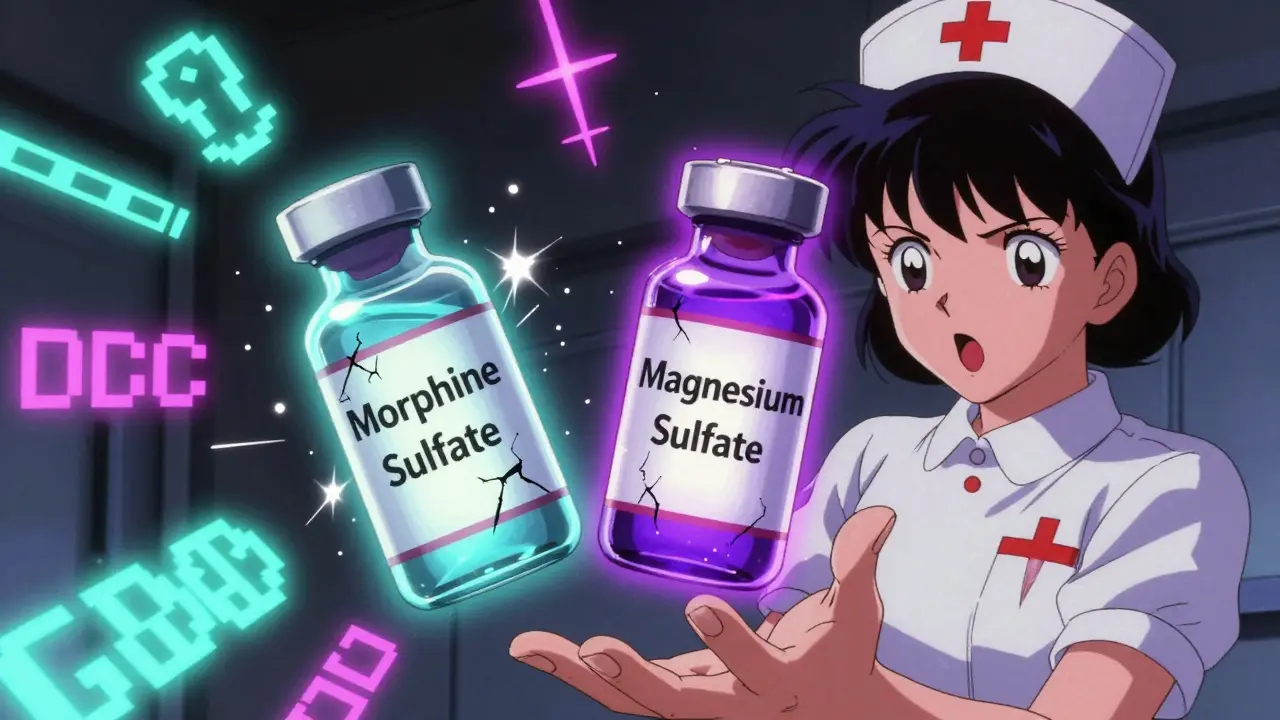
Real Stories From the Front Lines
Reddit’s r/Pharmacy community is full of posts like this one from November 2022: "Caught a potentially fatal error today. Order said ‘MS 10 mg SC.’ I asked the doctor to clarify. Turns out they meant morphine sulfate. If I hadn’t checked, they would’ve given magnesium sulfate. The patient had chronic pain. They would’ve been in agony for hours before anyone realized the mistake." That story got 87 comments-all from pharmacists who’d seen the same thing. One wrote: "I once saw ‘AZT’ on a script. Thought it was zidovudine (an HIV drug). Turned out to be azathioprine (an immune suppressant). The patient was being treated for lupus. We almost gave them the wrong drug for cancer." And then there’s the case from a rural clinic in Wisconsin. A nurse prescribed "TAC 0.1% cream" for a rash. The pharmacist thought it was Tazorac (a strong acne treatment). The patient ended up with severe skin burns. The doctor had meant triamcinolone, a mild steroid. The handwriting was unclear. The abbreviation was ambiguous. The damage was done.Why Change Is So Hard
You’d think after 20+ years of warnings, everyone would’ve stopped. But human habits die hard. Many older doctors learned these shortcuts in medical school decades ago. They’ve never been taught the safer way. Some think, "I’ve been doing this for 30 years. Nothing’s happened yet." But that’s the problem. Most errors never get reported. The patient doesn’t die-they just get sicker. They’re discharged. They come back in a week. The system doesn’t track it. The doctor doesn’t know they almost killed someone. A 2020 survey by the American College of Physicians found that 31% of doctors felt their workflow slowed down when they had to write out full terms. But after six months, that number dropped to 8%. The initial friction fades. The safety doesn’t.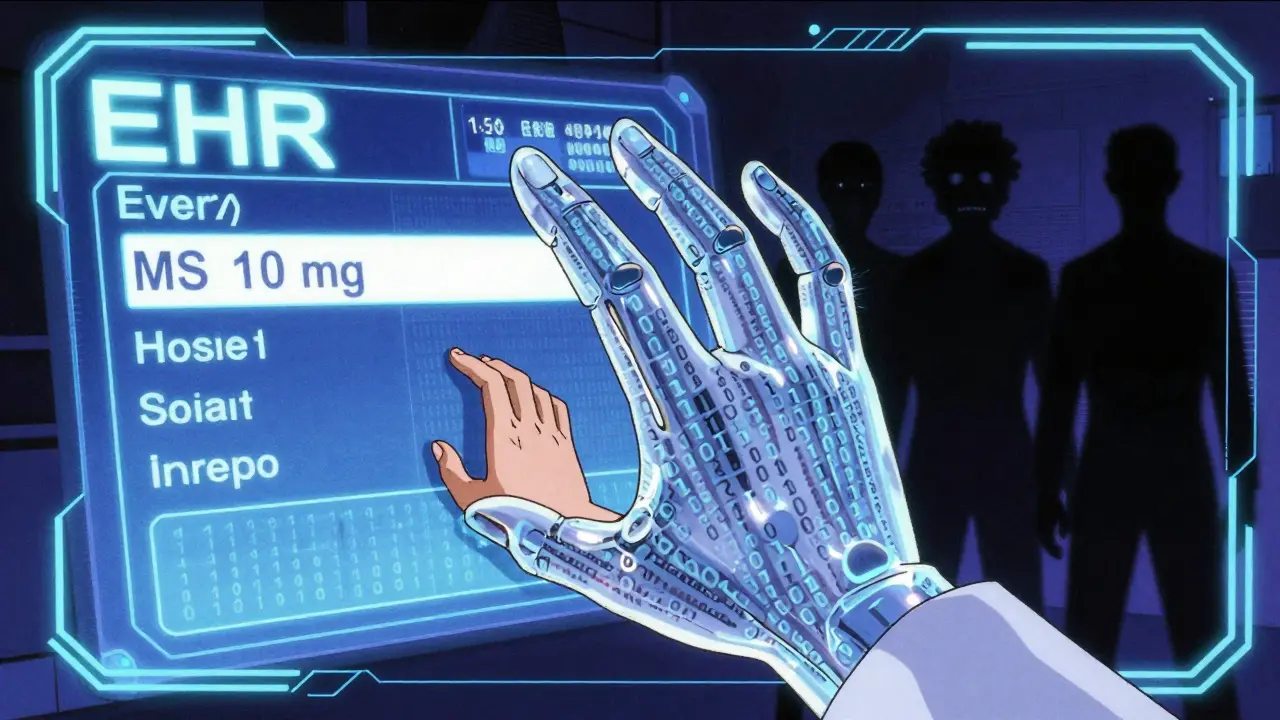
What You Can Do
If you’re a patient:- Always ask: "What does this abbreviation mean?" If your prescription says "QD," ask, "Does that mean once a day?"
- Don’t assume the pharmacist knows what the doctor meant. Ask them to double-check.
- If you’re given a new medication, read the label. Does it say "daily" or "QD"? If it’s the latter, ask why.
If you’re a healthcare worker:
- Use only the full terms. Even if it takes 3 extra seconds.
- Never rely on memory. If you’re unsure, look it up. ISMP’s full list is free and updated yearly.
- Speak up. If you see a colleague using "U" or "MS," say something. It’s not being confrontational-it’s saving lives.
The Bigger Picture
This isn’t just about letters and symbols. It’s about culture. For too long, medicine has rewarded speed over safety. We’ve accepted sloppy handwriting, rushed notes, and ambiguous codes as "part of the job." But the data doesn’t lie. Facilities that fully banned dangerous abbreviations saw an 89% drop in related errors within 18 months. In one hospital in Minnesota, the number of near-fatal errors dropped from 12 a year to zero after they implemented hard stops in their EHR and trained every staff member. The cost of change? Minimal. The cost of inaction? Billions in extra care, lost productivity, and-worse-lives.What’s Next
In January 2024, ISMP added 17 new abbreviations to their danger list-mostly related to HIV drugs like DOR, TAF, and TDF. These were once considered safe because they were only used in specialized clinics. But now, more patients are getting these drugs in community pharmacies. And mistakes are rising fast. By 2026, most major EHR systems will automatically correct dangerous abbreviations during voice dictation. That’s good. But it’s not enough. Technology can catch mistakes. But only people can stop them from happening in the first place. The next time you write a prescription-or see one-ask yourself: Could this be misread? If the answer is yes, write it out. Full. Clear. Unmistakable.What is the most dangerous medical abbreviation?
The most dangerous abbreviation is "QD" (once daily). It’s the most commonly misread, often mistaken for "QID" (four times daily) or "QOD" (every other day). This error has led to fatal overdoses of blood thinners, insulin, and chemotherapy drugs. The Joint Commission and ISMP recommend writing "daily" instead.
Why is "U" for units so risky?
"U" looks like a zero, a four, or even "cc." A prescription for "10 U" of insulin could be read as 10 mL (which is 100 times the dose), leading to a life-threatening low blood sugar. Pharmacists report intercepting "U" errors nearly 30% of the time. Always write "units" in full.
Can electronic health records prevent these errors?
Yes-but not always. EHRs reduce abbreviation errors by about 68%, but 13% of errors still happen because doctors use free-text fields or ignore warning pop-ups. The most effective systems use "hard stops" that prevent submission unless the abbreviation is corrected. AI tools now auto-detect and flag dangerous terms during voice dictation.
What’s the difference between MS and MgSO4?
"MS" stands for morphine sulfate, a painkiller. "MgSO4" is magnesium sulfate, used for seizures and heart rhythm problems. They’re completely different drugs. Confusing them can cause severe pain, respiratory failure, or cardiac arrest. Always write out the full name-never abbreviate.
Are these rules the same in New Zealand and Australia?
Yes. While the list was created in the U.S., similar guidelines are now standard in Australia, Canada, the UK, and New Zealand. The Australian Commission on Safety and Quality in Health Care and New Zealand’s Health Quality & Safety Commission both endorse the same "Do Not Use" list. The goal is global consistency to reduce errors across borders.
What should I do if I see a dangerous abbreviation on a prescription?
Don’t fill it. Don’t guess. Call the prescriber and ask for clarification. Say, "I see ‘QD’ here-could you confirm this is once daily?" Or, "The order says ‘MS’-did you mean morphine sulfate or magnesium sulfate?" It’s better to delay the medication than risk giving the wrong one. Pharmacists are trained to catch these errors-and you’re their best ally.



8 Comments
lisa Bajram
Jan 10 2026OMG, I had no idea QD could be so deadly! My grandma almost got killed by this exact thing last year-her blood thinner was written as QD but the pharmacy read it as QID. She ended up in the ER with bleeding everywhere. I swear, if I see any abbreviations on a script now, I scream at the pharmacist until they confirm it’s written out. Safety isn’t optional-it’s survival.
Dwayne Dickson
Jan 12 2026It is, indeed, an egregious and systemic failure of professional standardization within the clinical environment. The persistence of non-standardized nomenclature-particularly in an era of digitized healthcare-represents a profound epistemological lacuna in medical education and institutional governance. The Joint Commission’s directives, while laudable, remain under-enforced due to entrenched behavioral inertia among senior practitioners. One must conclude that cultural resistance to standardized lexicons constitutes a latent threat vector in patient safety architecture.
Jake Nunez
Jan 13 2026My cousin’s a nurse in Chicago. She told me they had a guy come in with a heart issue and they gave him morphine instead of magnesium because someone wrote ‘MS’ on a sticky note. He coded right there in the hallway. They fixed it in time, but the whole unit went quiet for a week. No one wants to be the one who missed it.
neeraj maor
Jan 15 2026Let me tell you something they don’t want you to know-this whole ‘dangerous abbreviations’ thing is a distraction. The real problem? Pharma companies pushed these shortcuts so EHRs would be easier to integrate with their billing systems. They don’t care if you die as long as the code gets billed. QD, U, MS-all of it was designed to make prescriptions faster to process, not safer. The ‘safety guidelines’? Just PR spin. Look at the patent filings from Epic and Cerner-they all have timestamps right after the 2001 ISMP list came out. Coincidence? I think not.
Jaqueline santos bau
Jan 16 2026I CAN’T BELIEVE PEOPLE STILL DO THIS. I SAW A POST ON FACEBOOK WHERE A DOCTOR SAID ‘I’M NOT CHANGING-I’VE BEEN DOING IT FOR 40 YEARS.’ 40 YEARS?!?!? THAT’S NOT EXPERIENCE, THAT’S NEGLIGENCE. MY AUNT ALMOST DIED BECAUSE SOMEONE WROTE ‘U’ AND THEY GAVE HER 100 UNITS OF INSULIN. I’M STILL TERRIFIED TO GO TO THE DOCTOR. WHY IS THIS STILL HAPPENING IN 2024?!?!?!?!?!
Kunal Majumder
Jan 17 2026Man, I’m a med student in Delhi and we got drilled on this from day one. Our prof said, ‘If you’re too lazy to type it out, you’re too lazy to save a life.’ I used to write QD all the time till I saw a video of a kid in Mumbai who got the wrong dose because of it. Now I write everything out-even if it takes 5 extra seconds. It’s not about being slow. It’s about being sure.
Aurora Memo
Jan 17 2026I work in a clinic and we switched to full terms two years ago. At first, everyone complained it was slower. But after a month, it just became normal. The best part? Patients started asking us, ‘Is this really daily?’ instead of just taking the pill. That shift-from passive to active-made me feel like we were actually helping, not just prescribing. Small changes, big impact.
chandra tan
Jan 18 2026My dad’s a pharmacist in Bangalore. He says the biggest problem isn’t doctors-it’s the patients. They bring in handwritten scripts from 30 years ago and expect you to ‘figure it out.’ One guy came in with ‘MS’ and said, ‘Doc said it’s for pain.’ My dad called the clinic and it turned out to be magnesium sulfate for a seizure disorder. The guy had no idea. That’s why I always say: if you don’t know, ask. Twice.