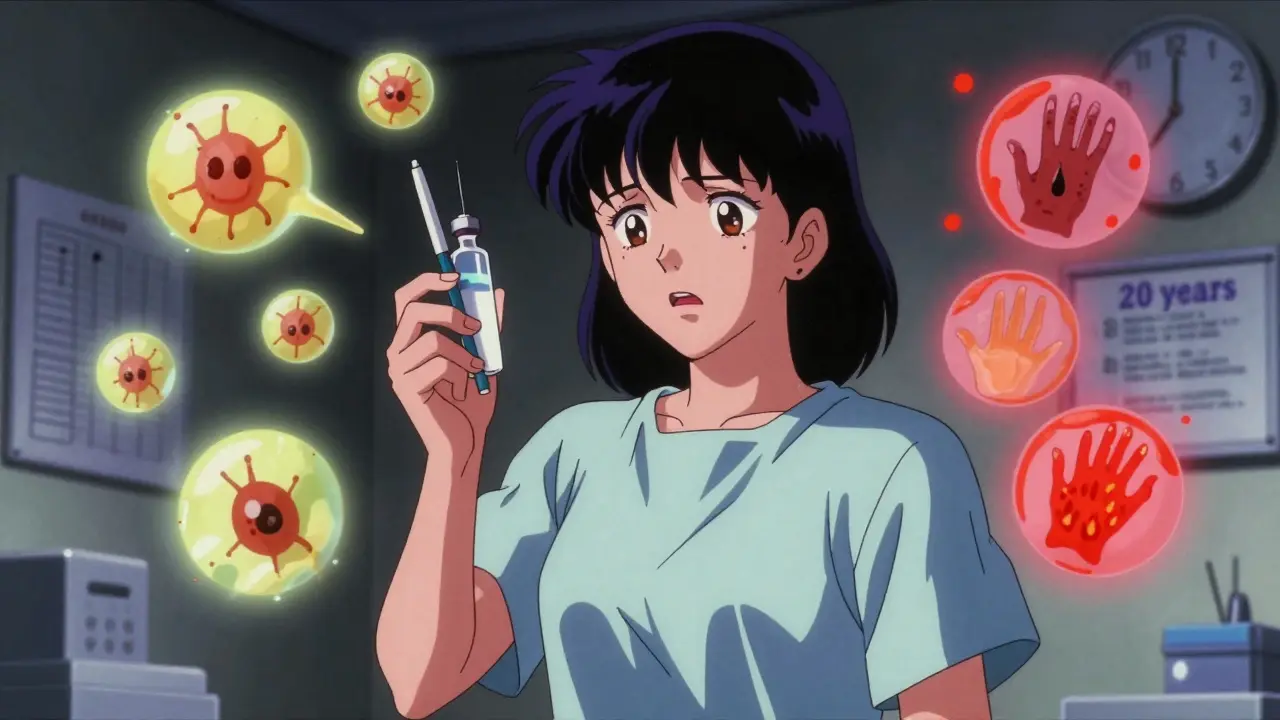
More than 10% of people in the U.S. say they’re allergic to penicillin. But here’s the surprising truth: penicillin allergy is often misdiagnosed. In fact, fewer than 1% of those people actually have a real immune system reaction to it. Most of what people call an allergy is just a side effect - something uncomfortable, but not dangerous. And this misunderstanding is costing lives, money, and health.
What’s the real difference between an allergy and a side effect?
An allergic reaction to penicillin means your immune system mistakes the drug for a threat. It releases chemicals like histamine, triggering symptoms like hives, swelling, trouble breathing, or even anaphylaxis - a life-threatening drop in blood pressure. These reactions usually happen within minutes to an hour after taking the drug. They’re rare, but serious.
Side effects? Those are completely different. They’re not immune-driven. They’re just how your body reacts to the drug’s chemistry. Think nausea, diarrhea, or a mild rash. These are common, usually harmless, and go away on their own. A viral rash that shows up while you’re on penicillin? That’s not an allergy. A stomach upset? Not an allergy. Yet, both get labeled as “penicillin allergy” all the time.
Why does this mistake matter so much?
If you’re wrongly labeled allergic to penicillin, doctors can’t use it. Instead, they reach for broader-spectrum antibiotics - drugs like vancomycin, clindamycin, or fluoroquinolones. These aren’t just more expensive. They’re riskier.
People with mislabeled penicillin allergies are 45% more likely to get a Clostridioides difficile infection - a severe, sometimes deadly gut infection. They’re also more likely to develop MRSA, a hard-to-treat staph infection. One study found that patients with false penicillin allergy labels had 6 more deaths per 1,000 within a year after hospitalization than those who could safely take penicillin.
And the cost? Hospitals spend an extra $1,000 per admission because of this mislabeling. That adds up to $20 billion a year in the U.S. alone. It’s not just about money. It’s about driving antibiotic resistance. When we overuse powerful drugs because we’re afraid of penicillin, we make infections harder to treat for everyone.
Most penicillin reactions aren’t allergies - here’s how to tell
Let’s break down what’s actually happening when people think they’re allergic:
- Immediate reaction (true allergy): Hives, swelling of lips/tongue/throat, wheezing, dizziness, vomiting, low blood pressure. Happens within minutes to an hour. This is IgE-mediated. It’s rare, but real.
- Delayed rash (not an allergy): A flat, red, itchy rash that shows up days after starting penicillin. Often mistaken for an allergy. In reality, it’s usually caused by a virus you already had - like mononucleosis - and the penicillin just coincided with it. This is not an immune reaction to the drug.
- Stomach upset: Nausea, vomiting, diarrhea. Happens in 5-10% of people. This is a direct effect on your gut, not your immune system.
- Vaginal yeast infection: Penicillin kills good bacteria that keep yeast in check. This is a common side effect, not an allergy.
- Headache or dizziness: Mild and temporary. Again, not an immune response.
The key question: Did you have trouble breathing? Did your face swell? Did you pass out? If not, it’s probably not an allergy.
How do you find out if you’re truly allergic?
There’s a simple, safe, and proven way to check: penicillin allergy testing. It’s not complicated. It’s three steps:
- History review: Your doctor asks about your reaction. When did it happen? What happened? Did you need epinephrine? Was it years ago? Tools like PEN-FAST help score your risk. Low score? You’re likely not allergic.
- Skin test: A tiny amount of penicillin is placed under your skin. If you’re allergic, you’ll get a raised bump - like a mosquito bite - within 15-20 minutes. This test is over 95% accurate.
- Oral challenge: If the skin test is negative, you take a small dose of amoxicillin (a penicillin-type drug) under supervision. You’re watched for an hour. Over 99% of people pass this step without issue.
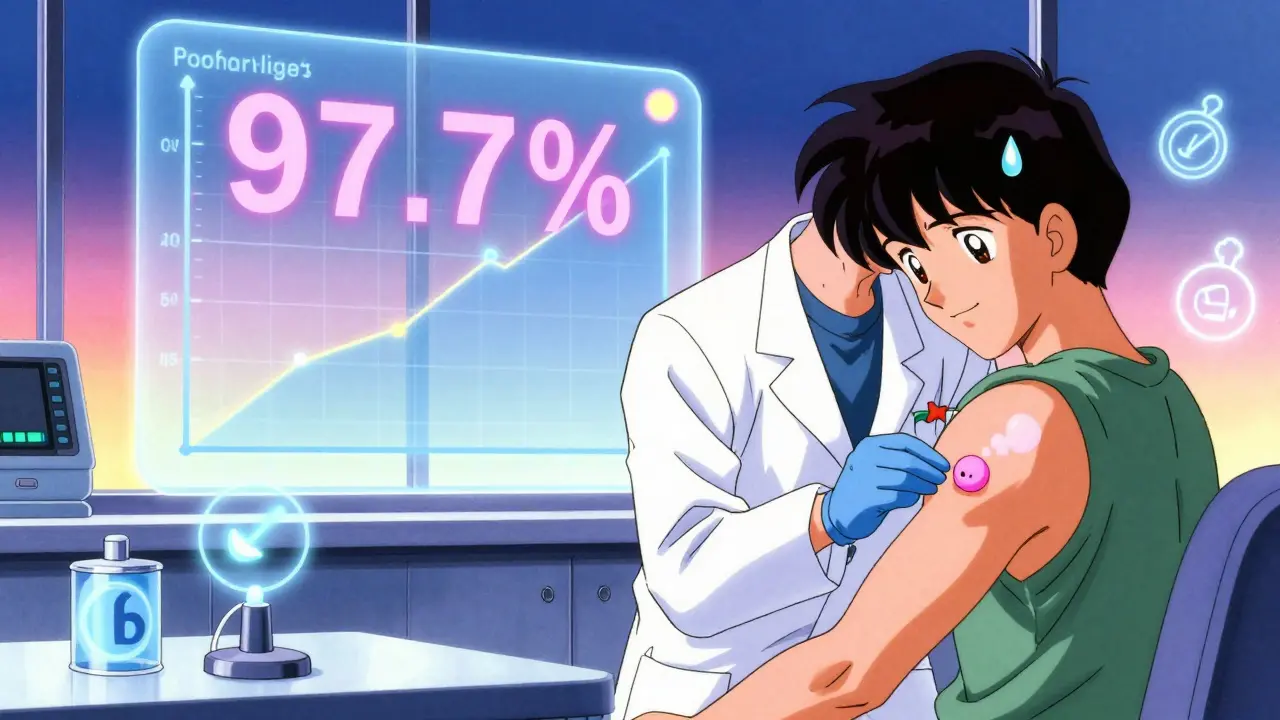
At the Mayo Clinic, over 52,000 patients were tested between 2015 and 2022. Only 2.3% ended up being truly allergic. That means 97.7% of people who thought they were allergic - weren’t.
What about reactions from years ago?
Here’s another myth: “I had a reaction 20 years ago. I’ll never be able to take penicillin.”
False. Penicillin-specific antibodies fade over time. After 10 years, 80% of people who once had a true allergy lose their sensitivity. That means if you had a reaction as a kid - even a real one - you might be fine now.
One Reddit user, u/PenicillinNoMore, spent 25 years avoiding penicillin after a childhood rash. She ended up in the hospital multiple times with expensive, risky antibiotics. At 32, she got tested. Turned out she wasn’t allergic. She took amoxicillin for a sinus infection - no problem. Saved thousands in medical bills.

Why don’t more people get tested?
Two big reasons: fear and access.
A 2021 survey found that 32% of people refused testing because they were scared of having a reaction. But here’s the truth: the testing is done in a controlled setting with emergency meds on hand. Serious reactions during testing are almost unheard of.
Another problem? Doctors don’t always refer patients. A 2022 study showed only 39% of primary care doctors knew that delayed rashes are rarely allergic. So they just keep the label on your chart.
Insurance can be a hurdle too. Some people can’t find an allergist who takes their plan. But things are changing. Hospitals like Kaiser Permanente now run pharmacist-led allergy clinics. They test 15-20 patients a week. The success rate? 92% of low-risk patients get their allergy label removed.
What’s changing in 2026?
The system is catching up. In 2023, the U.S. government launched a $8.7 million national initiative to fix penicillin mislabeling. The CDC and University of Pennsylvania created a smartphone app called PAAT - it helps doctors decide who needs testing. It’s already in use in 250 million patient records through Epic’s EHR system.
Starting in 2025, Medicare will start paying hospitals based on how well they use antibiotics properly. Hospitals that reduce unnecessary broad-spectrum use - by testing and de-labeling penicillin allergies - will get bonuses.
Within five years, experts predict penicillin allergy testing will be as routine as checking your blood pressure. If you’ve ever been told you’re allergic, it’s time to ask: “Could this be wrong?”
What should you do if you think you’re allergic?
Don’t assume. Don’t ignore it. Don’t wait until you’re sick again.
- Check your medical records. Does it just say “penicillin allergy” with no details? That’s a red flag.
- Ask your doctor: “Was this reaction immediate? Did I have trouble breathing? Was it years ago?”
- Request a referral to an allergist - or ask if your clinic offers penicillin testing.
- If you’re pregnant, need surgery, or have a recurring infection - this is especially important. You deserve the safest, most effective treatment.
Penicillin is one of the safest, cheapest, and most effective antibiotics ever made. If you’re avoiding it because of a mislabeled side effect, you’re not protecting yourself - you’re putting yourself at greater risk.





14 Comments
Harshit Kansal
Jan 6 2026I'm from India and we see this all the time. People get a rash after amoxicillin and swear they're allergic. Then they get hospitalized with some superdrug that costs 10x more. Seriously, get tested. It's not that hard.
Vinayak Naik
Jan 7 2026My cousin got labeled allergic after a toddler rash at 3. Now she's 28 and just got tested last year. Turns out she's fine. Took penicillin for a tooth infection and didn't even sneeze. Saved her $12k in meds. Why do docs just leave that label on? Lazy.
Cam Jane
Jan 8 2026I'm a nurse and I've seen this too many times. A kid gets a rash after antibiotics during a viral infection. Mom panics, doctor writes 'penicillin allergy' in the chart. Ten years later, the same kid needs surgery and they give them clindamycin instead. Result? C. diff. Again. It's not just misinformation-it's medical negligence.
Katie Schoen
Jan 10 2026So let me get this straight... we're spending $20 BILLION a year because people can't tell the difference between a stomach ache and anaphylaxis? 😂 I mean, I get it. But also... why are we still letting this happen in 2026?
Wesley Pereira
Jan 10 2026The real issue isn't the testing-it's the EHR systems. My hospital's chart still has 'Penicillin Allergy' in red bold letters from 2011. Even after the allergist cleared her. The software won't let you override it without a 7-step form and a notarized affidavit. We're stuck in the Stone Age.
Lily Lilyy
Jan 11 2026This is exactly why we need better public health education. If you've been told you're allergic, don't accept it as gospel. Ask questions. Push for testing. Your life-and your wallet-will thank you. You deserve better care.
Pavan Vora
Jan 13 2026In India, we don't have access to allergists in most towns... but we do have Ayurvedic doctors who say, 'Stop antibiotics, drink neem water.' So the label stays... and the infection spreads. This problem isn't just American-it's global.
Joann Absi
Jan 13 2026I'm a drama queen and I'm here for it 😭💔 I was labeled allergic after a rash at 7... turned out it was chickenpox + amoxicillin. Now I'm 34, got tested, and took penicillin for a UTI. I cried. Not from the drug. From the relief. I've been avoiding antibiotics for 27 YEARS because of a mistake. 27. YEARS. 🥲🫂
Melanie Clark
Jan 15 2026This is just another government controlled narrative to push big pharma profits the CDC and Epic and Mayo Clinic are all connected to the same pharmaceutical board you think this is coincidence you think they want you to use penicillin because its cheap no they want you to think its dangerous so you take the expensive ones that have side effects that require more drugs to fix its a cycle and you are part of it
Saylor Frye
Jan 15 2026Fascinating. The structural inefficiencies in antibiotic stewardship are a microcosm of our broader healthcare dysfunctions. The misattribution of side effects as allergies reflects a deeper epistemological failure in clinical reasoning. One wonders if the rise of algorithmic EHRs has exacerbated or alleviated this issue.
Brian Anaz
Jan 16 2026So let me get this straight. 97% of people who think they're allergic aren't? And we're wasting billions because people are too scared to get tested? That's not just dumb. That's criminal. Someone needs to get fired.
Indra Triawan
Jan 16 2026I think this is all part of the great pharmaceutical deception. The immune system knows what's right. If your body rejects it, you should listen. Maybe penicillin is just not for you. Not everything needs to be 'fixed' with science.
Ashley S
Jan 16 2026I don't care what the 'science' says. I had a rash. I'm not taking it again. End of story. You don't know what I went through.
Isaac Jules
Jan 17 2026I got tested last year. Skin test negative. Took the amoxicillin challenge. Zero reaction. My chart still says 'allergic'. The nurse said 'we don't remove it unless the doctor signs off'. My doctor didn't even know I got tested. So here I am. Still labeled. Still getting clindamycin. Still paying more. Still at risk. 😑