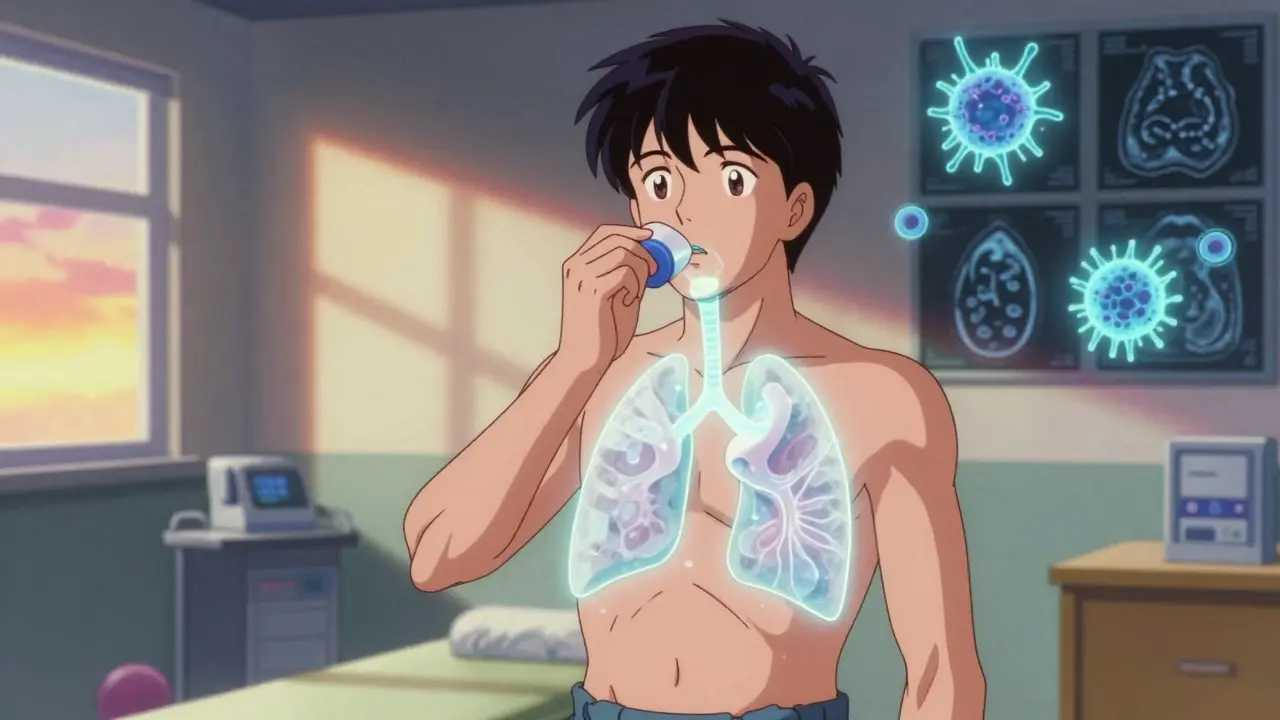
When you recover from COVID-19, you might think your lungs are back to normal. But for many, the virus leaves behind invisible damage that doesn’t show up on standard X-rays or lung function tests. This isn’t just fatigue or weakness-it’s a real, measurable change in how oxygen moves through the smallest airways in your lungs. Research from the Centre for Heart Lung Innovation (HLI) in 2025 found that pulmonary long COVID affects about one-third of all long COVID cases, and it’s not rare. Around 12.6% of people who were hospitalized with COVID-19 develop post-COVID-19 pulmonary fibrosis (PCPF), where scar tissue forms in the lungs and stays long after the virus is gone.
What’s Really Happening in Your Lungs?
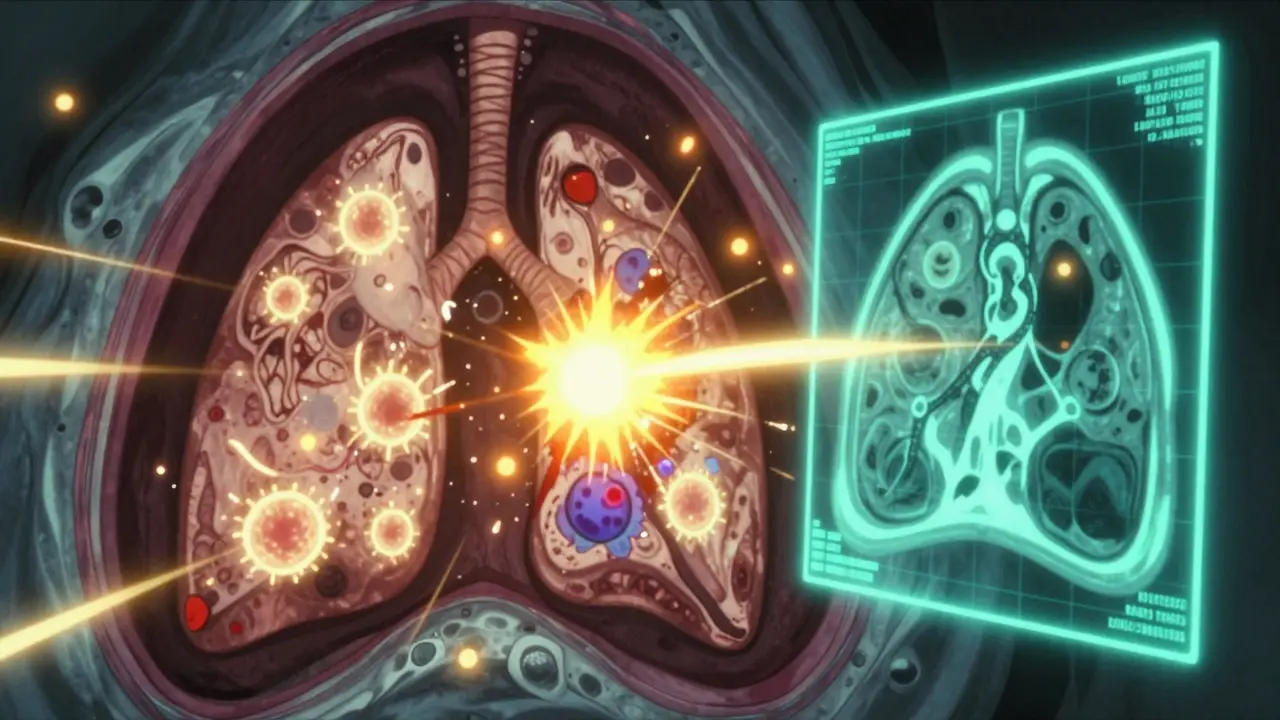
The biggest surprise for scientists wasn’t the virus itself, but what happens after it’s cleared. Even when the virus is no longer detectable, your immune system doesn’t shut off. Instead, a type of white blood cell called a neutrophil keeps firing off inflammatory signals like a broken alarm. These cells, meant to fight infection, end up damaging the tiny air sacs and airways where oxygen gets into your bloodstream. This is called neutrophilic inflammation, and it’s the core driver of breathing problems in long COVID.
Traditional scans like CTs can miss this. They show big structures, but not what’s happening in the smallest airways. That’s where hyperpolarized xenon MRI comes in. This advanced imaging lets doctors see exactly how oxygen moves through the lungs. In people with pulmonary long COVID, it shows clear gaps-areas where oxygen doesn’t transfer properly, even if the rest of the lung looks fine. Dr. Don Sin’s team at HLI called these invisible zones the "hidden injury" of long COVID.
Who’s Most at Risk?
Not everyone who gets COVID ends up with lasting lung damage. But certain groups are far more likely to struggle. People who were hospitalized-especially those who needed oxygen or ventilation-are at much higher risk. A 2025 review of 50 studies found that hospitalized patients had 2.6 times the risk of ongoing breathlessness compared to those who recovered at home.
Those with pre-existing lung conditions like COPD face even greater danger. One study showed that COPD patients who caught COVID had a 4.6% death rate, compared to 0% in COPD patients who never had the virus. They also had more flare-ups and heart problems afterward. Even if you didn’t need hospital care, if you had a moderate to severe infection, you’re still at risk. One Italian study found that 30.4% of patients still had breathing issues three months after leaving the hospital.
How Do You Know If You Have It?
The most common symptom is shortness of breath during everyday activities-climbing stairs, walking to the mailbox, even talking. But there’s a simple tool doctors use to spot trouble early: the mMRC dyspnea scale. If your score is 2 or higher on this scale (meaning you get breathless walking on level ground or need to stop for breath after a few minutes), you’re more likely to have ongoing lung problems. This score, taken just one month after infection, is a strong predictor of whether you’ll need rehabilitation.
Another clue? Your body’s physical performance. The 30-second sit-to-stand test (30STS) measures how many times you can stand up and sit down in half a minute. People with severe long COVID symptoms, especially post-exertional malaise (PEM), can do far fewer repetitions than before. It’s not just about tiredness-it’s a sign your lungs and muscles aren’t working together like they should.
What Does Rehabilitation Look Like?
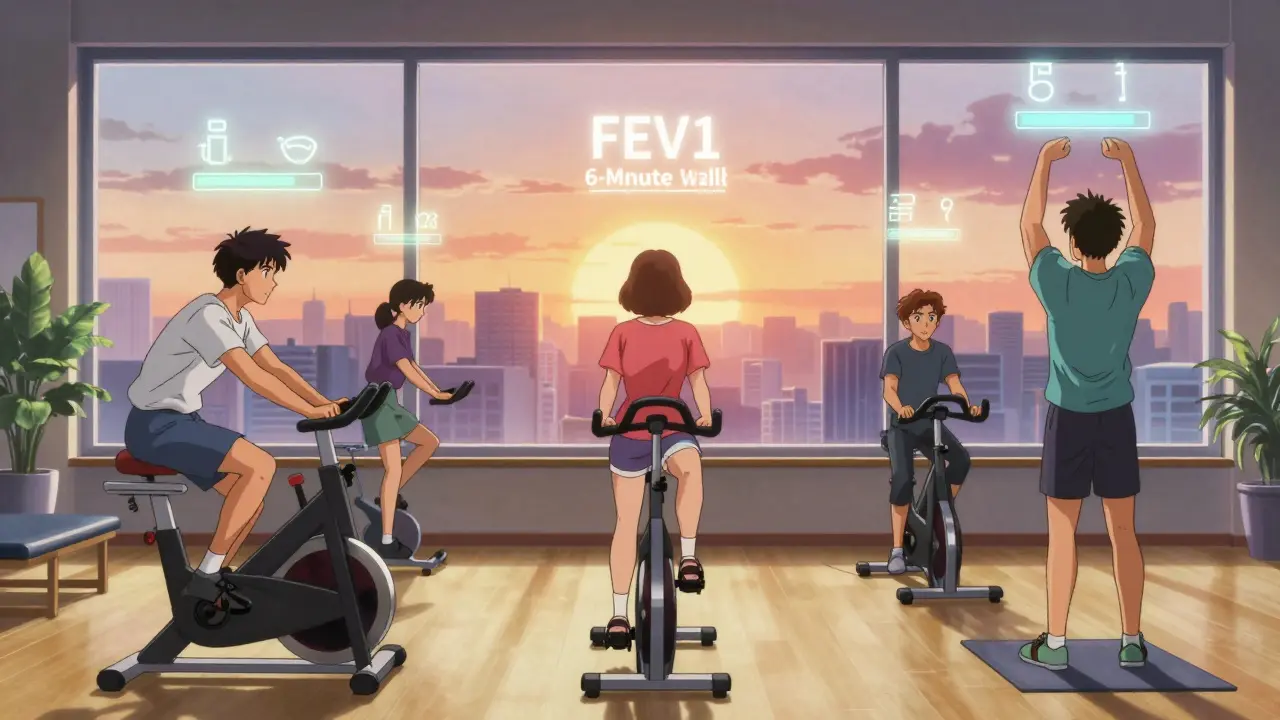
Recovery isn’t just rest. It’s structured, targeted work. Pulmonary rehabilitation for long COVID starts at least four weeks after the acute phase and lasts 8 to 12 weeks. Sessions happen two or three times a week and include three key parts:
- Breathing exercises to retrain how you use your diaphragm and reduce air trapping in the lungs
- Aerobic training like walking, cycling, or using an arm ergometer-starting slow, then building up
- Strength training for arms and legs to improve overall endurance and reduce fatigue
Studies from the Lung Foundation Australia show that people who complete the full program see real improvements: better FEV1 (how much air you can blow out in one second), improved diffusion capacity (how well oxygen gets into your blood), and longer 6-minute walk distances. One patient reported going from needing to stop after 100 meters to walking 500 meters without breathlessness-something they hadn’t done in months.
For people with COPD or heart issues, programs are adjusted. Monitoring is tighter, pace is slower, and rest periods are built in. The goal isn’t to push through pain-it’s to rebuild capacity safely.
What About Medications?
There’s no magic pill yet. But research is pointing in new directions. One Korean study found that patients who got remdesivir during their acute infection had a lower chance of developing pulmonary fibrosis. On the flip side, those who took baricitinib had a higher risk-though researchers warn this might be because the drug was given to sicker patients, not because it caused harm.
The real hope is in future treatments. HLI researchers are already planning clinical trials to test drugs that specifically target neutrophils-the cells causing the damage. If we can quiet this ongoing inflammation, we might stop scarring before it starts. These trials are expected to begin in late 2026.
What’s the Long-Term Outlook?
Most people do improve. By six months, many see measurable gains in lung function, especially if they stick with rehab. But 12.6% of hospitalized patients end up with permanent fibrosis. That means lifelong monitoring, possible oxygen therapy, and adjusted activity levels.
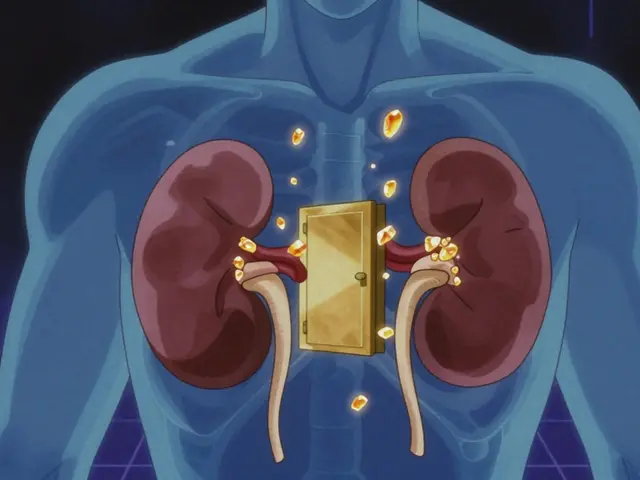
It’s not just about breathing. Pulmonary long COVID is linked to other problems too. The RECOVER Initiative found that long COVID patients have a 1.65 times higher risk of developing chronic kidney disease. That’s why care needs to be holistic-lung rehab isn’t just about lungs. It’s about the whole body.
What Should You Do Now?
If you’re still struggling with breathlessness, fatigue, or reduced stamina after COVID-19:
- See your doctor and ask about the mMRC dyspnea scale
- Request a referral to a pulmonary rehabilitation program
- Track your 30STS test results-do them weekly and note changes
- Avoid pushing too hard. Rest when you need to. Overdoing it can set you back
- Stay active within your limits. Walking, seated exercises, and light stretching help more than you think
Recovery isn’t linear. Some days are better than others. But progress is possible-and it starts with recognizing that this isn’t "just fatigue." It’s a real, treatable condition.
Can you fully recover from lung damage caused by COVID-19?
Many people do recover significantly, especially with structured pulmonary rehabilitation. Studies show measurable improvements in lung function by six months for most patients. However, about 12.6% of those who were hospitalized develop permanent fibrotic changes (post-COVID pulmonary fibrosis), which require ongoing management. Recovery depends on severity of the initial infection, age, pre-existing conditions, and whether rehabilitation was started early.
Is hyperpolarized xenon MRI available everywhere?
No, it’s still limited to specialized research centers and major hospitals. Facilities like the Centre for Heart Lung Innovation in Canada, Duke University, and the University of Kansas Medical Center are using it for long COVID research. It’s not yet a standard diagnostic tool in most clinics, but as evidence grows, access is expected to expand over the next few years.
Does vaccination reduce the risk of long-term lung damage?
Yes. Multiple studies show vaccinated individuals who get breakthrough infections are significantly less likely to develop severe acute illness, hospitalization, or long-term complications like pulmonary fibrosis. While vaccines don’t eliminate risk entirely, they strongly reduce the chance of the kind of immune overreaction that leads to lasting lung damage.
Can I do pulmonary rehab at home?
You can start with basic breathing techniques and walking, but supervised rehab is more effective. A structured program includes monitoring, personalized pacing, and adjustments based on your progress. Home programs lack the feedback and safety checks that prevent setbacks. If access is limited, ask your doctor about telehealth rehab options or community-based programs that offer remote coaching.
Why does breathing get worse with activity after COVID?
The inflammation in your small airways blocks oxygen transfer, so your body can’t get enough oxygen during exertion. Your muscles also weaken from lack of use, and your breathing muscles become inefficient. This creates a cycle: you avoid activity because you’re breathless, which makes you weaker, which makes you more breathless. Rehabilitation breaks this cycle by gradually rebuilding strength and oxygen efficiency.


12 Comments
Blessing Ogboso
Mar 22 2026As someone from Nigeria who’s seen family members struggle with long-term breathlessness after COVID, I can’t stress enough how vital this info is. In our communities, we often brush off lingering symptoms as ‘just weakness’ or ‘bad luck,’ but this isn’t just fatigue-it’s a silent war inside the lungs. I’ve watched my aunt go from cooking daily to needing oxygen just to sit up. Pulmonary rehab isn’t luxury-it’s survival. And yes, even in rural areas, simple breathing exercises and walking routines can change everything. We need more outreach, not just in the US but here too. Let’s not let stigma or lack of access kill people who already survived the virus.
Also, I’m so glad you mentioned the mMRC scale. My cousin scored a 3 and finally got referred after months of being told ‘it’s all in your head.’ That one tool saved her life. Let’s make it standard everywhere.
And to anyone reading this: if you’re still struggling, don’t wait. Start walking. Even 5 minutes a day. Your lungs don’t need grand gestures-they need consistency.
And yes, vaccines matter. My sister was unvaccinated, got hospitalized, and now has fibrosis. My brother, fully vaccinated, had mild symptoms and recovered fully. The data isn’t just numbers-it’s people.
Let’s stop treating this like a ghost story. It’s real. It’s measurable. And it’s treatable if we act early.
Jefferson Moratin
Mar 22 2026The linguistic precision of this post is commendable, particularly in its delineation of neutrophilic inflammation as a persistent, post-viral immune dysregulation rather than a residual infection. The distinction between structural parenchymal damage and functional microvascular obstruction is clinically significant and underappreciated in mainstream discourse. The use of hyperpolarized xenon MRI as a biomarker for oxygen transfer inefficiency represents a paradigm shift from anatomical imaging to physiological mapping. One might argue that the current diagnostic framework for long COVID remains anchored in pre-pandemic paradigms of pulmonary function testing, which are inherently inadequate for detecting microstructural ventilation-perfusion mismatches. The data presented here necessitates a reclassification of pulmonary long COVID as a distinct entity-not a sequelae, but a novel pathophysiological state.
Caroline Dennis
Mar 23 2026Neutrophilic inflammation = the real villain. Not the virus. Not the immune system. The *dysregulated* immune response. That’s the key.
30STS is underrated. If you can’t do 15 reps, you’re in the danger zone. Start rehab. Now.
MMRC ≥2? You need a referral. Period.
Vaccines = reduced fibrosis risk. End of story.
Zola Parker
Mar 24 2026So… you’re telling me the government didn’t tell us this because they’re hiding the truth? 🤔
Also, I heard the CDC is using xenon MRI to track people’s souls now. 😈
My cousin’s dog got COVID and now it’s got ‘invisible lung damage.’ 🐶💨
Also, I think this is all a ploy to sell more oxygen tanks. Just saying. 💊
florence matthews
Mar 24 2026This is so important 💗 I’ve been through this and no one believed me until I found a rehab program. It’s not ‘just tired’-it’s your body trying to heal in silence.
Thank you for writing this. I wish I’d seen it 6 months ago.
Also, I’m so glad we’re finally talking about this like it’s real. 🤍
Love you all. Keep breathing. 🌿
Kenneth Jones
Mar 26 2026Stop wasting time with rehab. Just exercise. Hard. Every day. No excuses. If you can’t breathe, you’re weak. Train harder. That’s it. No more coddling. People need to stop treating themselves like glass. This isn’t special. It’s just fitness. Do the work. Or don’t. But don’t act like it’s a medical mystery. It’s not.
Also, vaccines work. Get one. Done.
Mihir Patel
Mar 26 2026OMG I CANNOT BELIEVE THIS IS HAPPENING TO ME 😭
I WAS JUST FINE UNTIL I STARTED CLIMBING STAIRS AND THEN I FELT LIKE I WAS DROWNING IN AIR 😵💫
MY DOCTOR SAID IT WAS ALL IN MY HEAD BUT NOW I KNOW IT WASN’T 😤
I DID THE 30STS AND ONLY DID 8 REPETITIONS 😭
IS THERE A SUPPORT GROUP FOR THIS? I NEED TO TALK TO SOMEONE WHO GETS IT 😭😭😭
ALSO I THINK THE VIRUS IS STILL IN MY LUNGS SOMEHOW 🤫
PLS REPLY I’M SO SCARED
Kevin Y.
Mar 26 2026Thank you for sharing this comprehensive and deeply researched overview. I’ve worked in pulmonary care for over 15 years, and this is among the most accurate summaries I’ve seen on long-term pulmonary sequelae post-COVID. The emphasis on neutrophilic inflammation as a driver-rather than just fibrosis-is critical. Many clinicians still focus on CT findings, which are often normal in early stages. The use of the mMRC and 30STS as screening tools is not only practical but essential for early intervention. I’ve personally referred dozens of patients to structured rehab, and outcomes improve dramatically when initiated between 4–8 weeks post-acute phase. I also want to emphasize that telehealth rehab, when properly structured, can be highly effective, especially in underserved areas. We’re not just treating lungs-we’re restoring dignity, independence, and quality of life. This work matters.
Marissa Staples
Mar 27 2026I think what’s missing here is how emotional this all is. Not just physically, but mentally. You’re not just tired-you’re grieving the person you were before. I didn’t realize how much I missed being able to walk to the store without stopping until I did it again, six months later. It’s not just about lung function. It’s about trust in your own body. And that takes time. Maybe more than rehab can fix. But still… it helps. Just knowing it’s real… that’s something.
Korn Deno
Mar 27 2026Neutrophils are the real story here. They’re not just fighting the virus-they’re stuck in fight mode. It’s like your body’s alarm system got jammed and now it’s screaming at empty rooms. That’s why scans look fine but you still can’t breathe. The lung isn’t broken. The signal is. That’s why drugs targeting neutrophil activity could be game-changing. We’re not fixing tissue-we’re resetting the immune thermostat. And yeah, rehab isn’t magic, but it’s the only thing that teaches your body to listen to itself again. Slow. Steady. No rush. Let the body relearn.
Agbogla Bischof
Mar 28 2026As a former ICU nurse in Lagos, I’ve seen this firsthand. Many patients were discharged with normal X-rays, then came back months later gasping. We didn’t have xenon MRI. We had walking tests, pulse oximeters, and intuition. The mMRC scale? We used it daily. One patient, a 52-year-old tailor, couldn’t sew anymore because he got winded tying thread. We started him on seated breathing + daily 5-minute walks. Three months later? He’s back at his machine. No drugs. No fancy machines. Just consistency.
Also-vaccines. My patients who were vaccinated? Half the hospitalization rate. Half the fibrosis. Don’t let misinformation kill you. This isn’t politics. It’s biology.
Pat Fur
Mar 29 2026My mom had this. Took her 10 months to walk to the mailbox without stopping. Rehab saved her. Not cured-saved. There’s a difference.
Also-vaccines. She wasn’t vaccinated. I was. I got COVID. Felt like a cold. Still working. No rehab needed.
It’s not magic. It’s science. Do the thing.