Naloxone Eligibility Checker
This tool determines if you should discuss naloxone co-prescribing with your doctor based on your opioid use and risk factors. It's based on CDC guidelines and the information in this article.
Every year, thousands of people die from opioid overdoses - not because they were using drugs illegally, but because they were taking prescribed pain medicine. It’s a quiet crisis. A parent on oxycodone for back pain. A veteran on morphine after surgery. A grandmother on hydrocodone for arthritis. They’re not addicts. They’re patients trying to live with chronic pain. But when opioids are taken long-term, especially at higher doses or mixed with other sedatives, the risk of breathing stopping becomes real. And that’s where naloxone co-prescribing comes in - not as a punishment, but as a safety net.
What Is Naloxone Co-Prescribing?
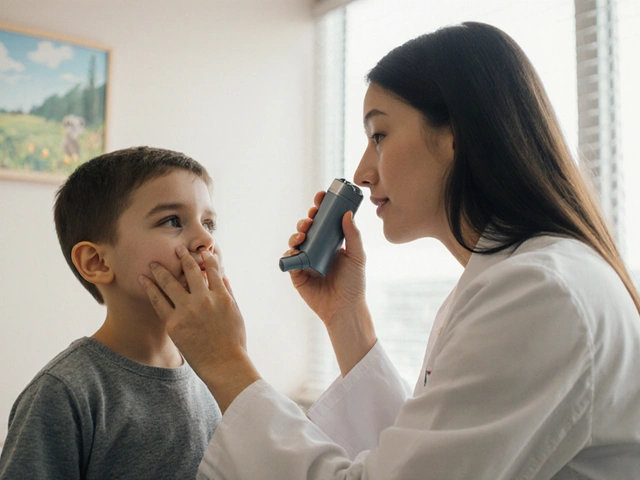
Naloxone co-prescribing means a doctor gives you naloxone at the same time they prescribe an opioid painkiller. Naloxone is not a pain reliever. It doesn’t make you feel good. It doesn’t get you high. It’s a reverse button. If someone overdoses - if their breathing slows or stops - naloxone can bring them back to life within minutes. It works by kicking opioids off the brain’s receptors, letting oxygen flow again.
This isn’t new science. Naloxone was first made in 1960 and approved by the FDA in 1971. But for decades, it was only used in hospitals or by paramedics. In 2016, the CDC officially recommended that doctors offer naloxone to patients at higher risk. Since then, it’s become standard practice for anyone on high-dose opioids, those taking benzodiazepines like Xanax or Valium at the same time, or anyone with a history of substance use or overdose.
Who Needs It?
You don’t have to be using heroin to be at risk. The real danger often comes from prescription pain pills. Here’s who should get naloxone with their opioid prescription:
- Patients taking 50 morphine milligram equivalents (MME) or more per day - that’s about 10 5mg oxycodone pills daily.
- People on both opioids and benzodiazepines - this combo is especially deadly.
- Those with sleep apnea, COPD, or other breathing problems.
- Anyone who’s had a non-fatal overdose before - even if it was years ago.
- People with depression, anxiety, or other mental health conditions.
- Those recently released from jail or prison - tolerance drops fast, and overdose risk spikes.
- Anyone using alcohol heavily or other substances like cocaine or meth.
It’s not about judging someone’s behavior. It’s about recognizing that opioids are powerful drugs. Even the most responsible patients can make a mistake - like taking an extra pill after a bad day, or mixing meds without realizing the danger.
How It Works in Real Life
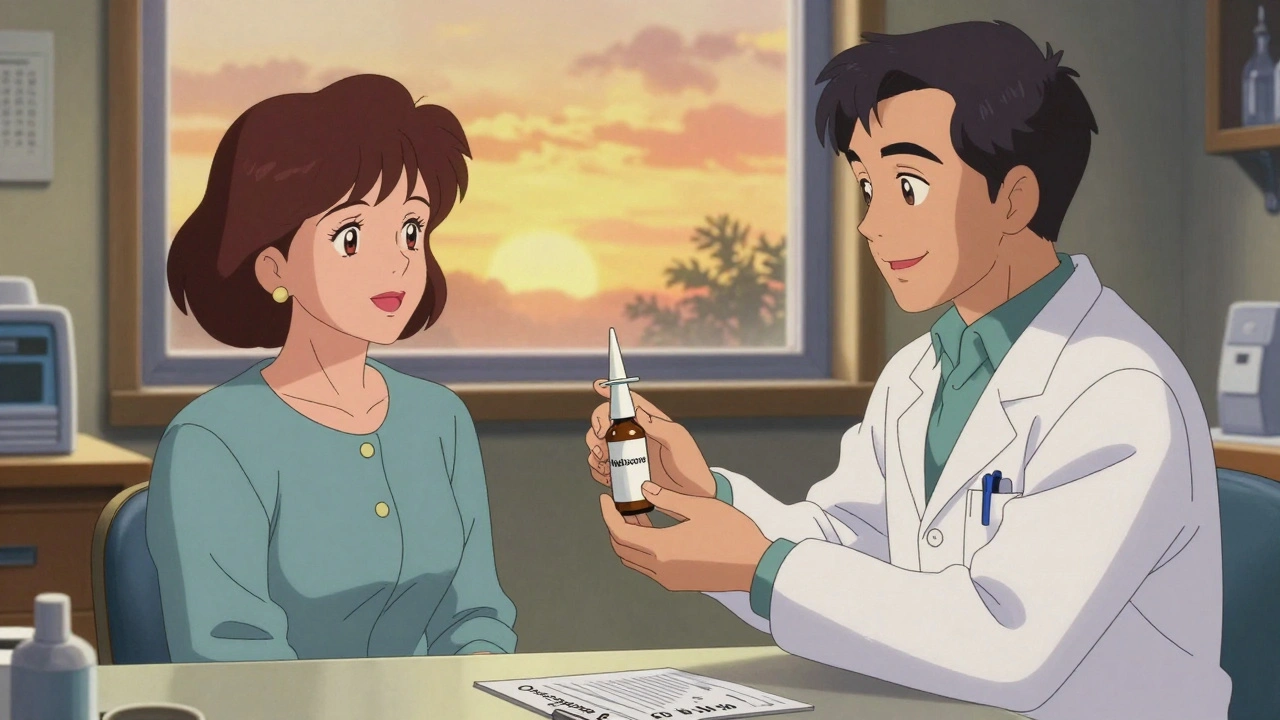
Imagine Sarah, 62, takes oxycodone for chronic back pain. Her doctor prescribes 60 MME per day - above the 50 MME threshold. She’s also on a low-dose antidepressant. Her doctor doesn’t just hand her a script. He sits down and says: “I’m giving you this nasal spray because I care about your safety. If you ever feel dizzy, stop breathing, or can’t wake up - this can save your life. And if someone else finds you like that, they can use it too.”
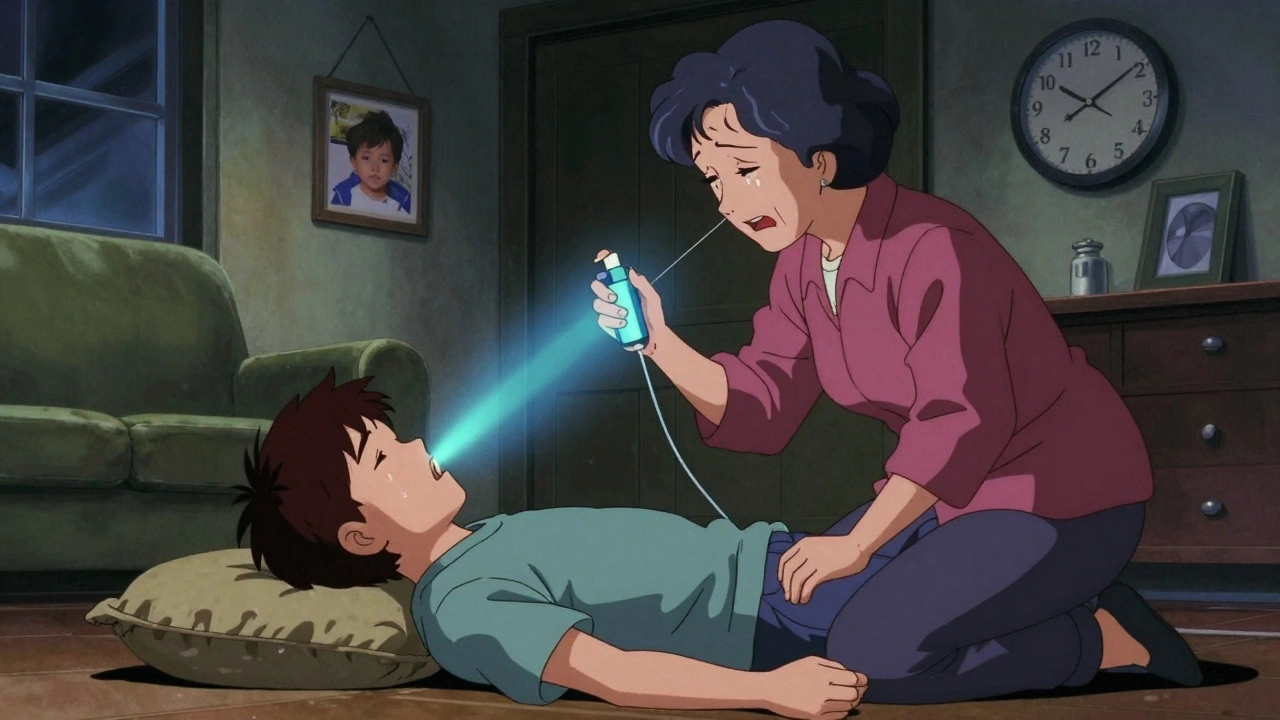
Sarah was upset at first. “You think I’m going to overdose?” she asked. But when her 17-year-old grandson found the bottle one day, took a pill, and passed out, she used the naloxone spray. He woke up before the ambulance arrived. “That spray saved his life,” she says now. “I wish I’d understood sooner.”
Studies show this works. One study of nearly 2,000 patients found that those who got naloxone with their opioid prescription had 47% fewer emergency room visits and 63% fewer hospital stays due to overdose. That’s not luck. That’s prevention.
Types of Naloxone You’ll Get
You won’t get a needle. Most people get the nasal spray - easy, no training needed. The two main brands are Narcan® and Kloxxado™, but generic versions are now common and cheaper. Here’s what you’ll likely receive:
- Narcan® nasal spray - 4 mg dose, one spray in each nostril if needed. Comes in a small plastic device. No assembly. Just point and spray.
- Kloxxado™ - 8 mg dose, higher strength for fentanyl overdoses (which are now common in prescription pills).
- Generic injectable kits - less common now, but still used. Requires a syringe and vial. Harder to use in panic.
Most pharmacies stock the nasal spray now. If yours doesn’t, ask. In 49 states, pharmacists can dispense naloxone without a prescription under standing orders. You don’t need to be a patient to get it.
Cost and Insurance
Before 2018, naloxone could cost $150 or more. Now? Most insurance plans - including Medicare and Medicaid - cover it with little to no copay because of the SUPPORT Act. Generic nasal sprays cost as little as $25-$50 at big pharmacies like CVS or Walgreens. Even without insurance, many community health centers and harm reduction programs give it away for free.
And here’s the thing: the cost of not having it is far higher. An overdose hospitalization can run $20,000. A funeral? Even more. Naloxone is one of the cheapest, most effective tools in modern medicine.
Why Some Doctors Still Don’t Offer It
Despite the evidence, nearly half of doctors still don’t routinely offer naloxone. Why?
- They’re uncomfortable talking about overdose. Many fear it will make patients feel judged. But research shows patients respond better when it’s framed as safety - not suspicion.
- They think it encourages misuse. There’s no evidence of that. People who get naloxone don’t take more opioids. They just feel safer.
- They don’t know how to prescribe it. Training is still uneven. Some clinics use simple checklists. Others use electronic prompts in their medical records.
- They’re in rural areas. Only 42% of rural pharmacies stock naloxone, compared to 85% in cities. Access isn’t equal.
But change is happening. In New York, all opioid prescriptions now come with a naloxone offer. In California, it’s required at 90 MME or higher. And in states with mandates, co-prescribing rates jumped from under 20% to over 60% in just a few years.
What to Do If You’re Prescribed Opioids
If your doctor gives you an opioid painkiller, ask these three questions:
- “Am I at risk for overdose?”
- “Can I get naloxone with this prescription?”
- “Can you show me how to use it - and who else should know how?”
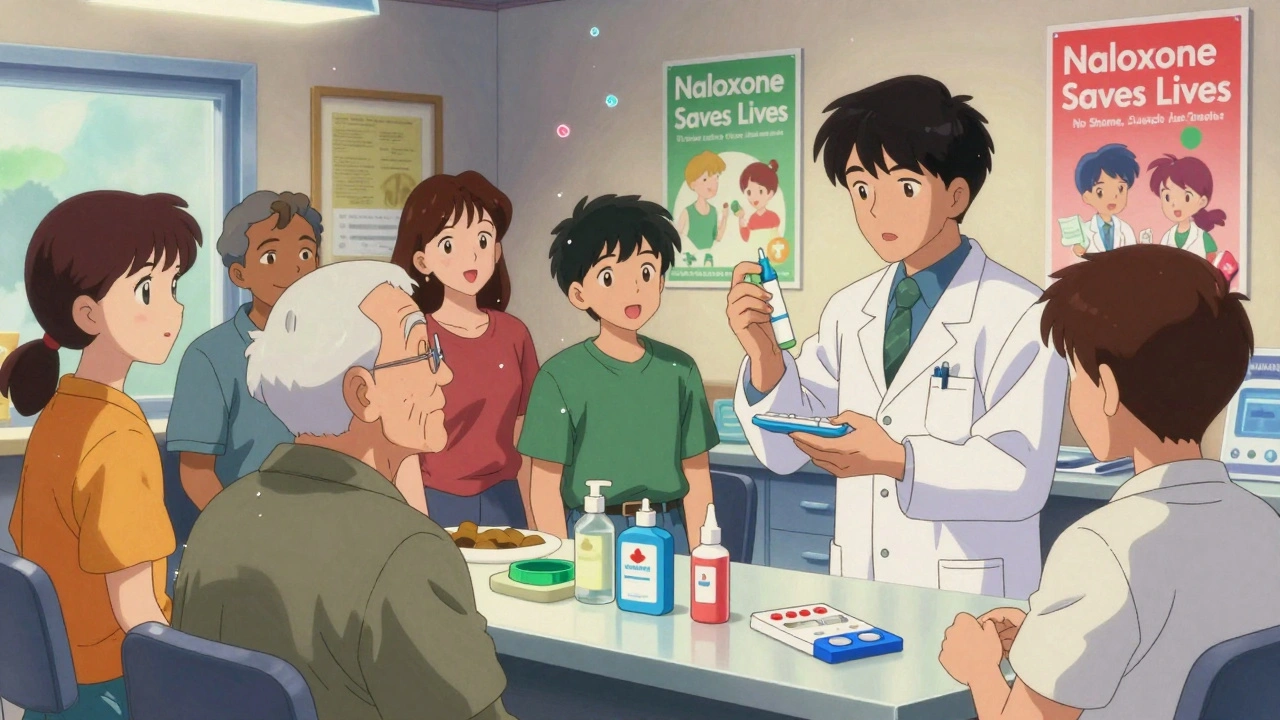
Don’t wait until it’s too late. Keep the naloxone in a place everyone in your home can reach - not locked up. Teach your partner, your kids, your neighbor. Practice with a training kit (many pharmacies give them out for free). Time matters. The average person takes 3 to 5 minutes to call 911. Naloxone works in under a minute.
Use the S.L.A.M. method if you ever need to act:
- S - Signs of overdose: unresponsive, slow or no breathing, blue lips, pinpoint pupils.
- L - Life-saving steps: call 911, start rescue breathing if trained.
- A - Administer naloxone: spray once in each nostril.
- M - Monitor: stay with them. Naloxone wears off in 30-90 minutes. They could overdose again.
The Bigger Picture
Naloxone isn’t a cure for the opioid crisis. It doesn’t fix addiction. It doesn’t replace treatment. But it buys time. It gives someone a second chance. And sometimes, that second chance leads to recovery.
Some critics say offering naloxone lets doctors keep prescribing high doses. But the truth is, most patients who get naloxone don’t end up on higher doses - they get help to reduce them. And when people survive an overdose, they’re more likely to seek treatment.
Every time naloxone is used, it’s a reminder: we can save lives without shame. We can care for pain without risking death. We don’t have to choose between compassion and safety. We can have both.
What’s Next?
The FDA approved a generic nasal spray in 2023 - cheaper and more widely available. In 2024, the CDC updated its guidelines to recommend naloxone for anyone who’s had a non-fatal overdose, even if they’re on low-dose opioids. And by 2025, a long-acting version of naloxone could be approved - one injection that lasts for weeks.
Meanwhile, federal funding for naloxone distribution hit $500 million in 2024. Community groups are handing out kits in parks, libraries, and churches. Pharmacists are training customers. Families are learning what to do.
This isn’t just policy. It’s practice. It’s a simple tool that saves lives. And it’s available right now - to you, to your loved ones, to anyone who needs it.
Is naloxone only for people who use street drugs?
No. Naloxone is for anyone who takes prescription opioids, especially at higher doses or with other sedatives like benzodiazepines. Most overdoses happen to people taking legally prescribed pain medication - not illegal drugs. It’s a safety tool, not a judgment.
Can I get naloxone without a prescription?
Yes. In 49 states, pharmacists can dispense naloxone without a prescription thanks to standing orders. You can walk into most pharmacies and ask for it. Many community health centers and harm reduction programs give it away for free.
Will using naloxone get me in trouble?
No. All 50 states have Good Samaritan laws that protect people who call 911 or administer naloxone during an overdose. These laws exist to save lives, not punish them. You won’t be arrested for helping.
How long does naloxone last?
Naloxone works quickly - usually within 2 to 5 minutes - but its effects wear off in 30 to 90 minutes. Opioids can stay in the body longer. That’s why you must call 911 and stay with the person. They may need a second dose or medical care even after waking up.
Can I use naloxone on someone who didn’t take opioids?
Yes. Naloxone has no effect on people who haven’t taken opioids. It won’t hurt them. If you’re unsure whether someone overdosed on opioids, give it anyway. It’s safe, simple, and could save a life.
What if I’m scared to ask my doctor for naloxone?
It’s okay to feel that way. But remember - your doctor’s job is to keep you safe. You can say: “I’ve heard naloxone can help in case of accident. Can we talk about whether I should have it?” Most doctors are relieved when patients ask. It means they’re taking their health seriously.

12 Comments
Jack Arscott
Dec 2 2025Just got my first Narcan spray from the pharmacy today 😊 My grandma’s on oxycodone and I was terrified she’d OD. Now I keep it next to her coffee mug. Life-changing tool.
Lydia Zhang
Dec 3 2025Doctors should just stop prescribing opioids altogether
Kay Lam
Dec 5 2025I’ve been a nurse for 22 years and I’ve seen too many people die because they were afraid to ask for naloxone. It’s not about trust or suspicion-it’s about acknowledging that pain management is a high-stakes game and we need to treat it like one. The fact that we’re still having this conversation in 2025 is a failure of the system, not the patients. I’ve handed out free nasal sprays in waiting rooms, taught teenagers how to use them during school health fairs, and once saved a guy in a Walmart parking lot because his mom didn’t know what was happening. It’s not glamorous. It’s not policy. It’s just basic human care. And yet we act like it’s controversial. We don’t need more studies. We need more courage.
Matt Dean
Dec 6 2025So now we’re treating adults like children who can’t be trusted with pills? Next they’ll make us carry a rescue kit every time we take ibuprofen.
Walker Alvey
Dec 6 2025Of course naloxone works. It’s just a chemical reset button. The real question is why we keep pressing the button instead of turning off the machine
Adrian Barnes
Dec 8 2025The institutionalization of harm reduction as a substitute for clinical accountability is a profound ethical failure. The normalization of co-prescribing reflects a systemic abdication of therapeutic responsibility. Patients require comprehensive pain management protocols-not pharmacological parachutes.
Linda Migdal
Dec 9 2025Why are we giving out free overdose antidotes like candy? This isn’t Europe. We’re rewarding negligence. If you can’t handle your meds, maybe you shouldn’t get them.
Tommy Walton
Dec 10 2025Life is a glitch. Naloxone is the ctrl+alt+delete. 🤖
Lucinda Bresnehan
Dec 11 2025i got my first naloxone last month after my doc prescibed me hydrocodone for my herniated disc. i was nervous but then i showed my 14 year old how to use it and she said ‘so if dad passes out i just spray him?’ and i cried. we keep it in the kitchen drawer next to the butter. no one’s perfect. but we can be prepared. thank you to whoever wrote this post. it helped me feel less alone.
Shannon Gabrielle
Dec 13 2025Oh great let’s hand out life-saving sprays like free samples at Costco. Next they’ll give us parachutes before we jump off bridges. Wake up people-this isn’t safety, it’s enabling wrapped in a rainbow sticker
ANN JACOBS
Dec 13 2025It is my sincere belief that every individual who is prescribed an opioid medication-regardless of dosage, regardless of comorbidities-should be provided with naloxone as a matter of standard, compassionate, and ethically non-negotiable clinical practice. The fact that this is still considered optional speaks volumes about the moral lag in our healthcare system. We do not withhold epinephrine from patients with known allergies. We do not refuse insulin to diabetics because they might forget to take it. Why then do we treat opioid safety as an afterthought? Because it is easier to be reactive than proactive. But we must do better. We owe it to the mothers, the veterans, the grandparents, the children who almost lost their parents. We owe it to Sarah. We owe it to everyone.
Jeremy Butler
Dec 15 2025The empirical evidence supporting naloxone co-prescribing is robust, statistically significant, and methodologically sound. To oppose it on ideological grounds constitutes a misapplication of medical ethics. The burden of proof lies not with the provider of the intervention, but with the detractor who would deny a life-saving measure based on unverified assumptions regarding behavioral disinhibition.