Workplace Medication Risk Assessment Tool
Select the scenario that best describes your current work environment or health situation to see the primary risks and recommended mitigation strategies based on NIOSH and USP guidelines.
Taking Prescription Meds
I take medications (e.g., opioids, benzodiazepines) that may affect my cognitive or motor functions.
Handling Hazardous Drugs
I work with antineoplastic agents or other hazardous drugs in a clinical or pharmacy setting.
Potential Dangers
- Cognitive decline & slowed reaction times
- Increased risk of falls (especially if combined with Benzos)
- Impaired motor skill coordination
- Increased risk of workplace accidents by >2x
Recommended Mitigation
Common Exposure Routes
Engineering Controls
Closed-System Transfer Devices prevent hazardous drugs from escaping into the air, reducing surface contamination significantly.
Focus on "donning and doffing" techniques and adhering to USP Chapter 800 standards (16-24 hours of training).
Taking a prescription pill might seem like a private health matter, but when you're operating heavy machinery or performing surgery, it becomes a critical safety issue. At the same time, millions of people go to work every day in environments where the medications they handle-like chemotherapy drugs-could actually poison them over time. This creates a dual challenge: the risk of being impaired by what you take and the risk of being harmed by what you touch.
| Risk Type | Primary Examples | Main Danger | Key Mitigation |
|---|---|---|---|
| Impairment | Opioids, Benzodiazepines | Cognitive decline, falls, accidents | Drug-free policies & medical review |
| Exposure | Antineoplastic (Chemo) drugs | Cancer, reproductive toxicity | Closed-system transfer devices (CSTDs) |
The Danger of Impairment: When Your Medicine Works Against Your Job
It is a tough spot to be in: you have a legitimate medical condition, but the treatment makes you drowsy or slow. Opioids is a class of drugs used for pain relief that can significantly impair motor skills and mental clarity. According to data from NIOSH, nearly 19% of workers with musculoskeletal disorders are prescribed these medications. While they manage pain, they also increase the risk of workplace injuries by more than double.
Then there are Benzodiazepines, often used for anxiety or sleep. When workers combine these with opioids, the risk of a fall-which could be catastrophic on a construction site or in a warehouse-jumps by 84%. This isn't just about "being tired"; it's about a physiological change in how your brain processes information and coordinates movement.
The tragedy is that some employees face a "vicious cycle." High-stress jobs lead to anxiety, which leads to benzodiazepine use, which then impairs performance, leading to more stress. This often results in higher disability rates and increased healthcare costs per worker. However, the solution isn't always simple. Some companies have rigid drug-free policies that can unfairly penalize workers who need these meds for survival, even if they've never had a safety incident on the clock.
Hazardous Drugs: The Invisible Threat to Healthcare Workers
For those in the medical field, the risk isn't about what they swallow, but what they breathe or touch. Antineoplastic agents is a category of powerful medications used to treat cancer by killing rapidly dividing cells. Because these drugs are designed to be toxic to cells, they don't distinguish between a tumor and the healthy skin or lungs of a nurse.
The NIOSH (National Institute for Occupational Safety and Health) maintains a massive list of hazardous drugs-over 370 as of 2024. These aren't just chemo drugs; they include other medications that can cause reproductive issues or organ damage even at low doses. The way these drugs get into the body is often surprising:
- Inhalation: 38% of exposures happen through aerosols or vapors.
- Splashing: 29% occur when drugs splash into the eyes or onto the skin.
- Contaminated Surfaces: 22% of the time, workers touch a countertop or tool that was contaminated hours earlier.
- Poor Hygiene: 7% through accidental ingestion.
- Needlesticks: 4% via sharps injuries.
This is a systemic problem. In some cases, chemotherapy nurses have reported developing chronic skin rashes despite following all the rules, because the surfaces in their work areas remained contaminated. This is why relying on "being careful" isn't enough; you need physical barriers.
Building a Safer Workplace: From Gear to Guidelines
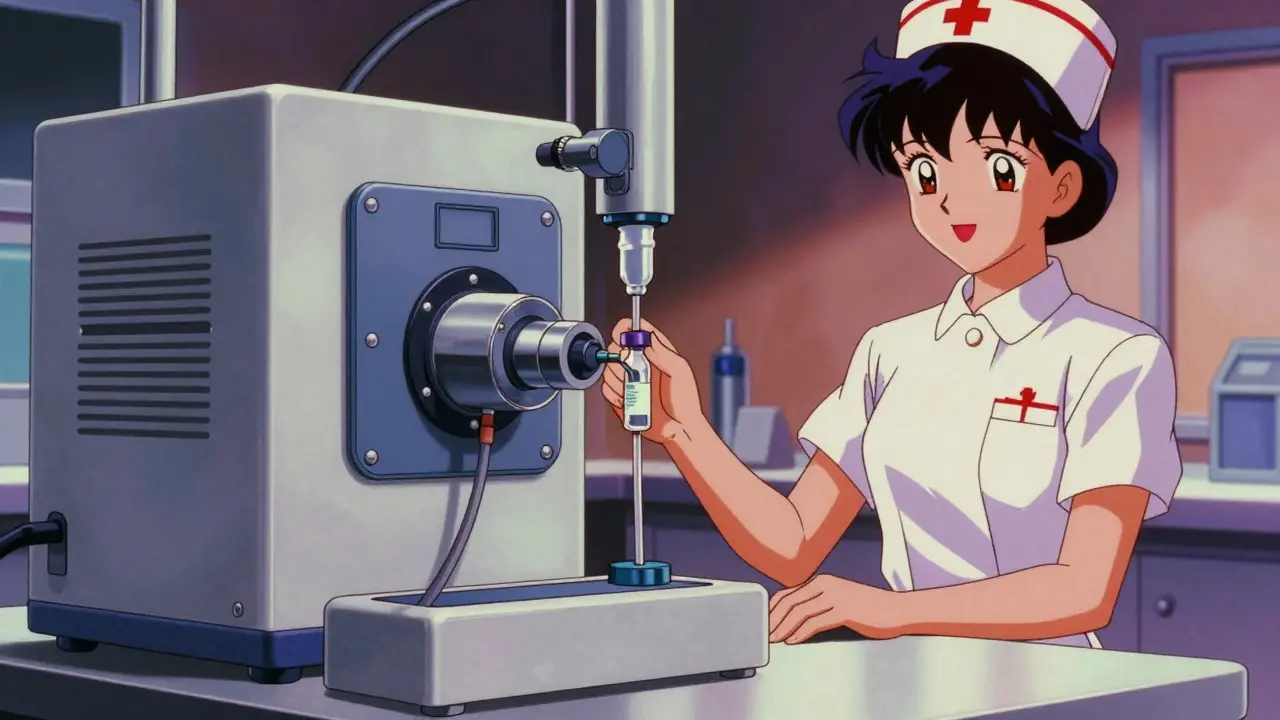
To stop these risks, you can't just tell people to be careful. You need a layered defense. The gold standard is moving from administrative warnings to engineering controls. For example, Closed-System Transfer Devices (CSTDs) are specialized tools that prevent hazardous drugs from escaping into the air or onto surfaces during the mixing and administration process. In some facilities, these devices have slashed surface contamination from 42% down to less than 5% in just six months.
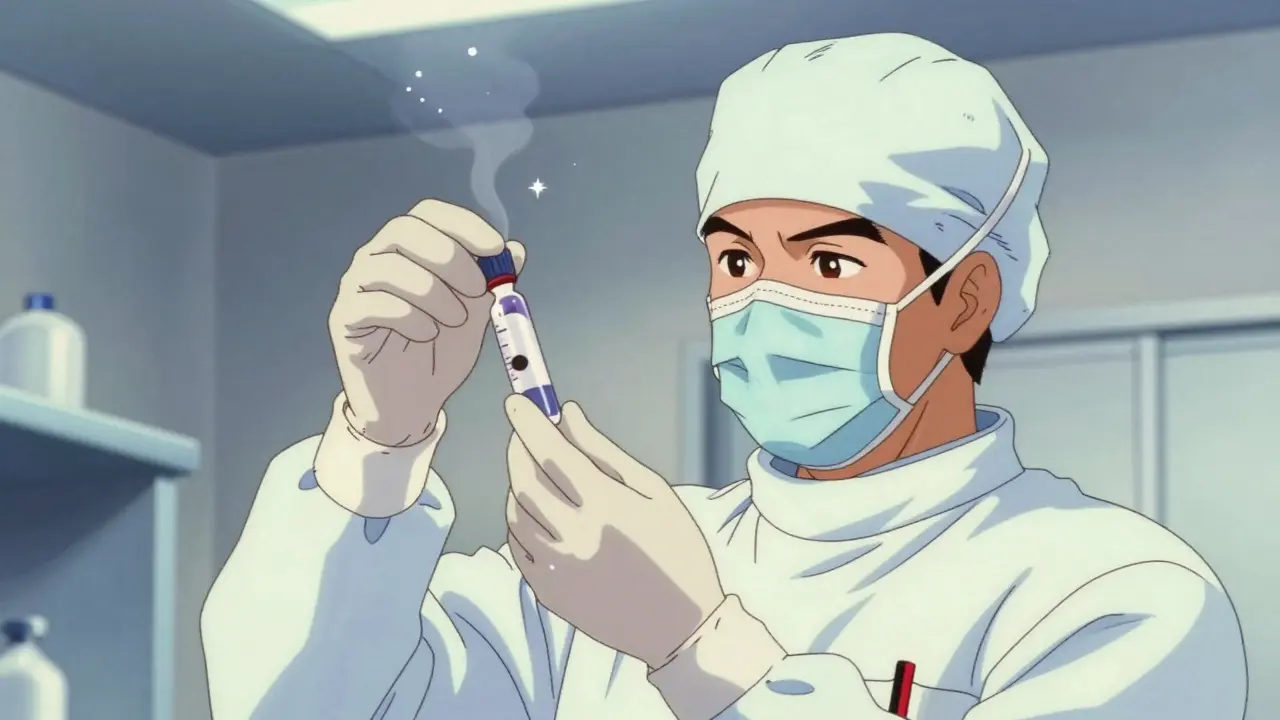
But gear is only half the battle. Training is the other. The USP Chapter 800 standards require significant training-usually 16 to 24 hours initially-on how to handle these drugs. This includes the high-stakes skill of "donning and doffing" (putting on and taking off) personal protective equipment (PPE) without accidentally touching the contaminated side of the glove or gown.
For those managing the workforce, the focus should be on reasonable accommodation. Rather than a blanket ban on medications, employers can use medical reviews to determine if a worker can safely perform their specific tasks. A worker on an opioid might be safe in an office setting but a liability operating a forklift.
The Regulatory Landscape and Economic Impact
Safety isn't just a moral issue; it's a financial one. The economic burden of medication-related incidents in the workplace is roughly $4.7 billion every year. This includes the direct cost of ER visits, the massive loss in productivity when a skilled worker is sidelined, and the cost of workers' compensation claims.
Regulators are starting to crack down. The OSHA (Occupational Safety and Health Administration) has ramped up enforcement, handing out millions in penalties to facilities that ignore hazardous drug protocols. However, there is a gap in protection. While large hospitals (200+ beds) usually have robust safety programs, smaller facilities with fewer than 50 beds are lagging far behind, with only about 34% having a comprehensive program.
We are also seeing a shift in how the FDA handles these risks. Recently, the FDA began requiring boxed warnings on 27 different antineoplastic drugs specifically to warn the people administering them about the occupational risks. This moves the conversation from "company policy" to a fundamental medical warning.

Future Trends: AI and New Biologics
The future of workplace safety is moving toward real-time monitoring. Some hospitals are piloting AI-powered systems that can predict high-exposure scenarios with high accuracy, allowing managers to intervene before a spill or leak occurs. This moves us from "cleaning up the mess" to "preventing the event."
However, new challenges are emerging. The rise of targeted therapies and biologics means we are introducing new chemicals into the workplace every day. Currently, nearly 42% of new oncology drugs approved in 2023 don't even have established exposure limits. We are essentially experimenting with safety in real-time as these new treatments hit the clinics.
Can I be fired for taking a prescribed medication that impairs me?
It depends on the company policy and local labor laws. While "drug-free" policies are common, many jurisdictions require employers to provide reasonable accommodations for legitimate medical needs, provided the worker can perform the essential functions of the job without posing a direct safety threat to themselves or others.
What are the most common symptoms of hazardous drug exposure?
Acute effects often include nausea, vomiting, skin rashes, and hair loss. Long-term chronic exposure is more insidious and is linked to a significantly higher risk of certain cancers and adverse reproductive outcomes, including infertility or birth defects.
How do CSTDs actually work to protect nurses?
Closed-System Transfer Devices (CSTDs) use mechanical barriers or vacuum systems to prevent the escape of drug vapors and aerosols into the environment and prevent the entry of air into the system, effectively sealing the hazardous drug inside the tubing and vial.
Who is most at risk for hazardous drug exposure?
While oncology nurses are the most obvious group, pharmacy technicians, anesthesiologists, and staff in ambulatory surgery centers are also at high risk. Pharmacies actually account for about 32% of hazardous drug exposures due to the compounding process.
Is there a way to check if my workplace is safe?
Check if your facility follows NIOSH's 2024 Hazardous Drugs list and USP Chapter 800 guidelines. Look for the presence of certified safety cabinets, the use of CSTDs, and whether you have received comprehensive training on PPE donning and doffing.
Next Steps for Workers and Managers
If you are an employee: If you are taking a medication that makes you dizzy or slow, don't wait for an accident to happen. Talk to your doctor about timing your doses or adjusting your medication. If you work with hazardous drugs, insist on surface sampling tests to see if your "clean" area is actually clean.
If you are a manager: Stop relying on PPE as your first line of defense. Move up the hierarchy of controls: first, try to eliminate the hazard; second, use engineering controls (like ventilation and CSTDs); and only then rely on administrative rules and PPE. Audit your ventilation systems, as nearly 27% of facilities have inadequate airflow that keeps toxic vapors in the breathing zone.