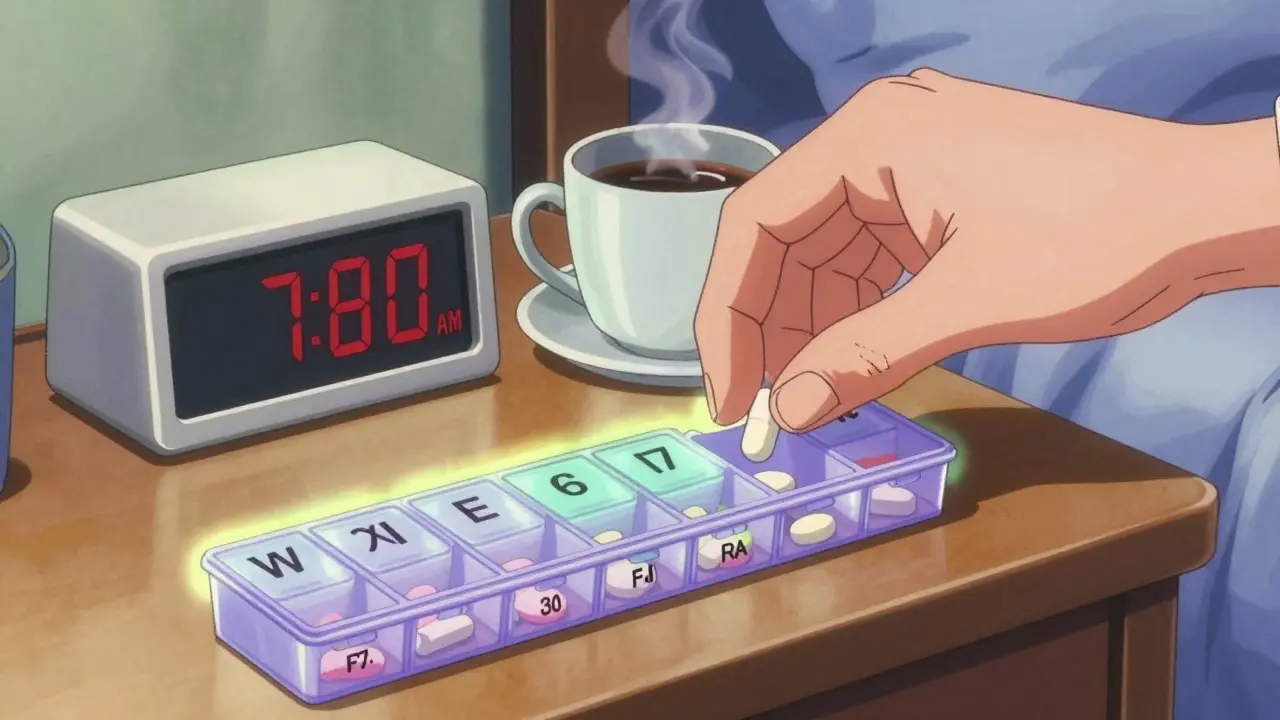
Skipping a pill because you’re running late, feeling fine, or just forgetting isn’t harmless-it’s risky. Every time you miss a dose of your prescription medication, you’re not just delaying treatment. You’re disrupting the delicate balance your body needs to stay stable, heal, or survive. This isn’t about being perfect. It’s about understanding why timing matters-and what happens when it doesn’t.
Why Timing Isn’t Just a Suggestion
Your body doesn’t work on a schedule you choose. It works on the rhythm of medicine in your bloodstream. Most prescription drugs are designed to maintain a steady level-called the therapeutic window-so they can do their job without causing harm. Too little, and the drug won’t work. Too much, and you risk side effects or toxicity.Take antibiotics, for example. If you stop after three days because your sore throat feels better, you’re not curing the infection. You’re killing off the weakest bacteria and leaving behind the strongest. Those survivors multiply. Next time, the same antibiotic won’t work. That’s how antibiotic resistance starts. The CDC says you must finish the full course, even if you feel fine. Seven days? Ten days? That’s not a suggestion. It’s science.
Same goes for blood pressure meds. High blood pressure doesn’t give you symptoms until it’s already damaging your heart, kidneys, or brain. If you skip a dose because you feel “normal,” you’re letting your blood pressure spike back up. That spike isn’t harmless. It’s a tiny stroke waiting to happen. The American Heart Association says consistent dosing cuts your risk of heart attack and stroke by up to 50% over time.
When One Hour Off Can Break the System
Some medications don’t just need to be taken daily-they need to be taken at the same time each day. A difference of even an hour can throw things off.Warfarin, a blood thinner, is one of the most dangerous to get wrong. Your INR level (a measure of how long it takes your blood to clot) must stay within a tight range. If you take it at 8 a.m. one day and 8 p.m. the next, your INR can swing dangerously. Too high? You could bleed internally. Too low? You could get a clot that causes a stroke. That’s why people on warfarin get blood tests every 2-4 weeks. Their lives depend on consistency.
Immunosuppressants after a transplant? One missed dose can trigger rejection. Diabetes meds like insulin or sulfonylureas? Take them at the wrong time, and your blood sugar can crash-leaving you dizzy, confused, or unconscious. Even something as simple as a thyroid pill like levothyroxine needs to be taken on an empty stomach, first thing in the morning. Eat breakfast 20 minutes early? Your body won’t absorb it properly. The difference between 30 minutes and 2 hours can mean your dose doesn’t work at all.
What Happens When You Skip
People skip doses for all kinds of reasons. Forgetting. Feeling better. Thinking it’s not serious. Worrying about side effects. Not being able to afford it. But the consequences are never small.Studies show that for every extra pill you’re supposed to take each day, your chance of sticking to the schedule drops by about 16%. That’s why someone on five medications has only a 40% chance of taking them all correctly. And when they don’t? Hospitals fill up. In the U.S., non-adherence causes up to 125,000 deaths a year and contributes to 10-25% of all hospital admissions. That’s not a statistic. That’s your neighbor. Your parent. Maybe you.
Real stories aren’t dramatic. They’re quiet. A man skips his heart failure meds because he doesn’t feel short of breath. Two weeks later, he’s in the ER with fluid in his lungs. A woman stops her antidepressant because she thinks it’s “not working.” Her anxiety returns, worse than before. A teenager forgets her asthma inhaler for a few days. She ends up in the ICU.
These aren’t rare cases. They’re common. And they’re preventable.

How to Actually Remember
You don’t need to be perfect. You just need a system.- Use a pill organizer. Not the fancy kind. Just a simple weekly one with morning, afternoon, evening, and night slots. Fill it every Sunday. If the pill’s not there, you missed it.
- Set alarms. Your phone can remind you. Set two: one for the time you plan to take it, one 30 minutes later as a backup.
- Link it to something you already do. Take your pill right after brushing your teeth. Right after your morning coffee. Right before you lock the door to leave for work. Habits stick better than reminders.
- Ask your pharmacist for a blister pack. Some pharmacies will package your meds in daily strips with the time printed on each one. No guessing. No confusion.
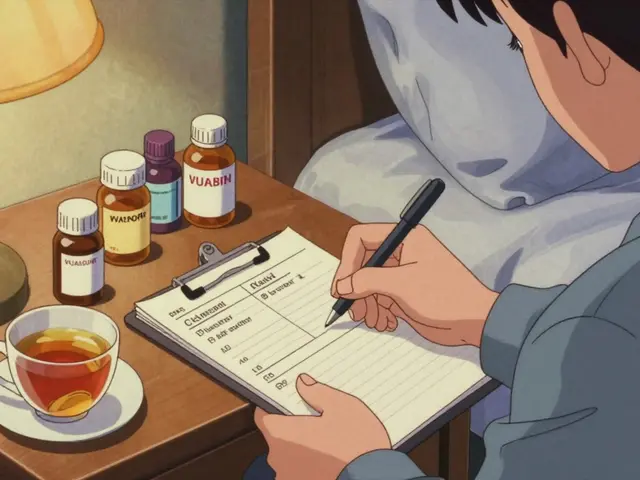
- Keep a simple log. Just a note on your phone: “Feb 1: Took all meds.” Seeing a streak builds motivation.
And if you forget? Don’t panic. Don’t double up unless your doctor says so. Call your pharmacist. They know your meds better than anyone. They’ll tell you if it’s safe to take it late, or if you should skip it entirely.
Doctors, Pharmacists, and You
Your doctor doesn’t expect you to remember everything. That’s why they’re supposed to use the “teach-back” method: they ask you to repeat the instructions in your own words. If you say, “I take this after dinner,” but they meant “before breakfast,” they catch it. If they don’t ask-ask them.Pharmacists are your secret weapon. They don’t just hand out pills. They review all your meds together. They spot interactions. They simplify regimens. They can often combine multiple pills into one daily dose. If you’re on more than four medications, ask for a medication therapy review. It’s free with most insurance.
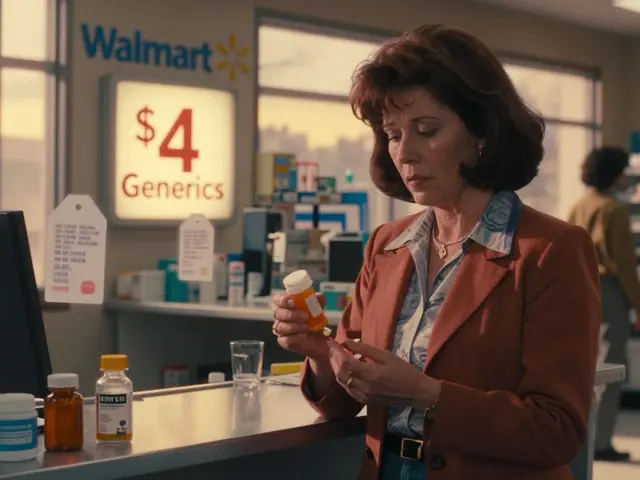
And if cost is the problem? Say it. There are patient assistance programs. Generic versions. Mail-order discounts. Your pharmacist knows them. They’ll help. Skipping doses because you can’t afford it is dangerous. But you don’t have to choose between food and medicine.
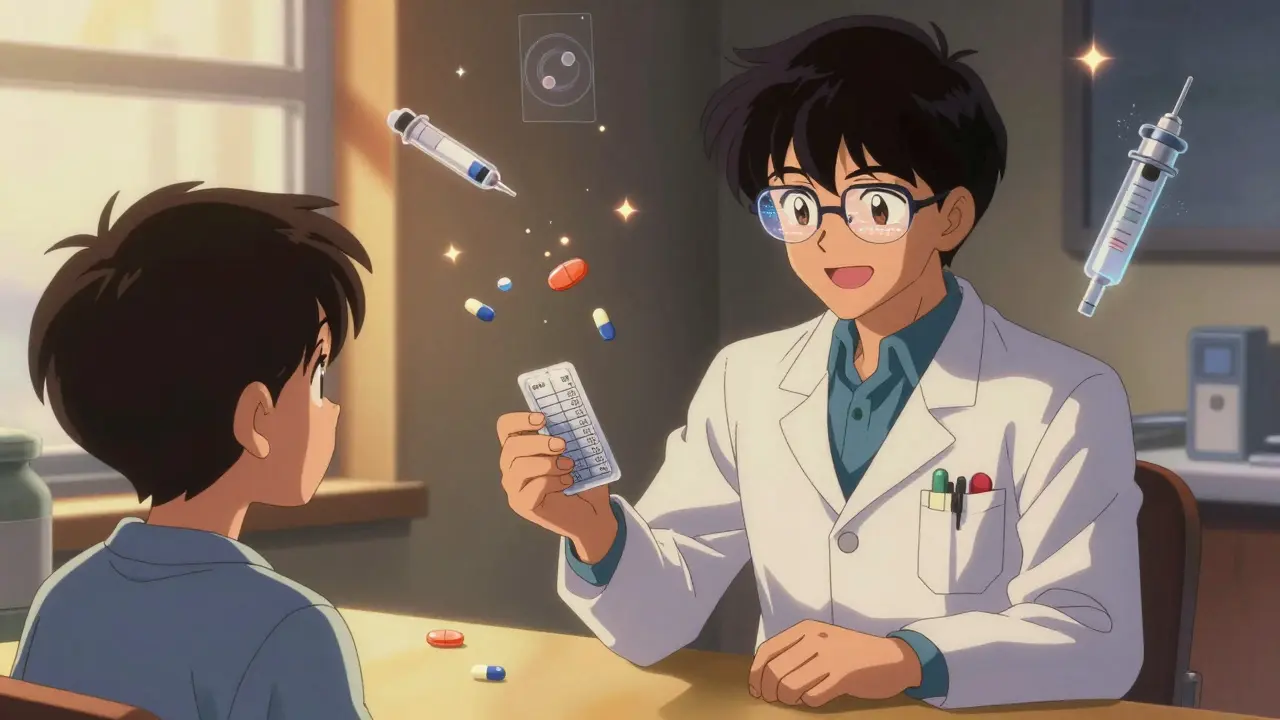
It’s Not About Discipline. It’s About Design.
You’re not lazy if you forget. Your brain is overloaded. Life is busy. Medication schedules are confusing. That’s why the system needs to work for you-not the other way around.Use tools. Ask for help. Call your pharmacist when you’re unsure. Don’t assume you know what the label means. “Take with food” isn’t the same as “take after dinner.” “Take at bedtime” means right before you lie down-not when you’re scrolling on your phone at 1 a.m.
Every dose you take on time is a small act of self-care that adds up. It’s not about being perfect. It’s about showing up-for your body, your future, the people who depend on you. One missed pill might not seem like much. But over time, it’s the difference between staying healthy and ending up in the hospital.
Don’t wait for a crisis to start paying attention. Start today. Open your pillbox. Set the alarm. Call your pharmacist. Your life depends on the rhythm you create.
What happens if I skip one dose of my blood pressure medication?
Skipping one dose can cause your blood pressure to rise sharply, especially if you’ve been taking it regularly. While one missed dose won’t cause immediate harm, repeated skipping leads to dangerous fluctuations that increase your risk of stroke, heart attack, or kidney damage over time. If you miss a dose, take it as soon as you remember-but never double up unless your doctor says to.
Can I stop taking antibiotics when I feel better?
No. Stopping antibiotics early-even if you feel fine-lets the toughest bacteria survive. These bacteria multiply and become resistant to the drug. That means the next time you get sick, the same antibiotic won’t work. You could end up with a harder-to-treat infection that requires stronger drugs, IV treatment, or hospitalization. Always finish the full course as prescribed.
Why do some pills need to be taken on an empty stomach?
Food can block or slow down how your body absorbs certain medications. For example, thyroid pills like levothyroxine won’t work properly if taken with coffee, calcium, or iron. Antibiotics like tetracycline bind to dairy and become useless. Taking these on an empty stomach-usually 30-60 minutes before eating-ensures your body gets the full dose it needs.
I’m on five different medications. How do I keep track?
Start with a weekly pill organizer and fill it every Sunday. Ask your pharmacist if they offer pre-filled blister packs with times printed on each dose. Use phone alarms labeled with the drug name. Bring all your meds to your next appointment-your pharmacist can check for interactions and simplify your regimen. Many pharmacies offer free medication reviews for patients on multiple prescriptions.
Is it okay to skip doses if I can’t afford my meds?
Never skip doses because of cost. Instead, talk to your pharmacist or doctor. Many drug manufacturers offer free or low-cost programs. Generic versions are often available. Some pharmacies have $4 prescription lists. Medicare Part D and Medicaid may cover more than you think. Skipping doses puts your health at risk-and can lead to hospital bills that cost far more than your medication.
Can I use a pill reminder app?
Yes. Apps like Medisafe, MyTherapy, or even Google Calendar alarms work well. Some apps even notify your caregiver if you miss a dose. But apps aren’t foolproof. Combine them with a physical pill organizer and a routine tied to daily habits (like brushing your teeth) for the best results.
Why do I feel worse when I start taking my new medication?
Some medications cause temporary side effects as your body adjusts-like dizziness, nausea, or fatigue. This doesn’t mean the drug isn’t working. It usually improves after 1-2 weeks. But if symptoms are severe or you’re tempted to stop, call your doctor. Never quit cold turkey. They may adjust your dose or timing to help you tolerate it better.
How long does it take for a medication to start working?
It varies. Antibiotics often show improvement in 2-3 days. Blood pressure meds may take 2-4 weeks to reach full effect. Antidepressants can take 4-6 weeks. Don’t judge effectiveness based on how you feel after one or two doses. Consistency builds results. If you’re unsure, ask your pharmacist how long to wait before expecting results.
What to Do Next
Start small. Pick one medication you’re most likely to skip. Set a phone alarm for it tomorrow. Put your pillbox on your coffee maker. Call your pharmacist and ask: “Is there a simpler way to take these?”You don’t need to fix everything at once. Just one more dose taken on time today makes a difference. Over weeks, those doses become habits. Over months, those habits become your health.


9 Comments
Juan Reibelo
Jan 24 2026Just got back from the pharmacy-they gave me a blister pack with times printed on each dose. Game changer. I used to forget half the time, now I literally can’t miss. I even put the box next to my toothbrush. If I forget to brush, I remember I forgot my meds. Weirdly, it works.
Also, my pharmacist asked if I wanted a free medication review. I said no. Then I went back two days later and said yes. Best 10 minutes of my year. She caught a dangerous interaction between my blood pressure med and my fish oil. I had no idea.
Vatsal Patel
Jan 25 2026Ah yes, the sacred ritual of pill-popping-where human biology bows to corporate pharmacology like a peasant before the king. You think your body needs this chemical ballet? Maybe it’s just screaming for a break. The pharmaceutical industry doesn’t want you healthy-they want you *maintained*. A $400-a-month drip-feed of dependency is far more profitable than a $10 vitamin and a good night’s sleep.
But hey, if you like being a lab rat with a pill organizer, go ahead. I’ll be over here, fasting and listening to my body. It’s never lied to me. Unlike your doctor.
blackbelt security
Jan 26 2026One habit. One alarm. One pillbox. That’s it. No magic. No genius. Just showing up. I used to skip my thyroid med for weeks because I felt fine. Then I crashed. Hard. Now I set two alarms-one labeled ‘THYROID’ and one labeled ‘DON’T BE AN IDIOT.’ Works every time.
You don’t need discipline. You need a system. And if you’re too busy for that? You’re too busy to be alive.
Patrick Gornik
Jan 26 2026Let’s deconstruct this performative compliance culture, shall we? The entire edifice of pharmaceutical adherence is built on a foundational lie: that biology is a linear equation. It’s not. Your INR isn’t a thermostat. Your microbiome isn’t a spreadsheet. You’re not a robot with a refill schedule.
And yet-we’re weaponized into obedience by fear-mongering stats and paternalistic pamphlets. ‘125,000 deaths!’ Sure. But how many of those were caused by polypharmacy? How many by drug interactions? How many by doctors who never bothered to simplify a regimen of seven pills? The system doesn’t care if you’re drowning in meds-it cares if you’re paying for them.
And don’t get me started on ‘blister packs.’ That’s not healthcare. That’s pharmaceutical packaging as a behavioral nudge. We’ve outsourced autonomy to a plastic tray. Pathetic.
Tommy Sandri
Jan 28 2026Thank you for this comprehensive and well-structured overview. The emphasis on consistency in pharmacokinetics is scientifically sound and clinically validated. It is noteworthy that non-adherence remains one of the most significant modifiable risk factors in chronic disease management, with substantial economic and human costs.
Further, the integration of pharmacist-led interventions, such as medication therapy reviews, represents a best-practice model in patient-centered care. I would encourage healthcare systems to expand access to such services, particularly in underserved populations where cost and literacy barriers are prevalent.
Luke Davidson
Jan 29 2026I used to think I was fine skipping my antidepressant when I felt good. Then I hit a wall so hard I didn’t leave my bed for three days. Turns out, ‘feeling good’ wasn’t my brain healing-it was the meds doing their job. I cried when I realized that. Not because I was weak. Because I was stupid.
Now I take my pill after I pour my coffee. No alarms. No apps. Just the smell of coffee = my brain goes ‘oh right, time to be alive again.’
And if you’re scared to talk to your pharmacist? Do it. They’ve heard it all. They don’t judge. They just want you to live. I told mine I couldn’t afford my meds. She handed me a coupon for $4 a month. I almost cried again. This time, happy tears.
Karen Conlin
Jan 31 2026Let me tell you about my mom. She’s 72. On seven meds. Forgot half of them. Then we got her a pill organizer with big labels. We put it on her TV remote. Now she takes them while watching Judge Judy. She says it’s her ‘daily show.’
And here’s the thing-she didn’t need a lecture. She needed a system that fit her life. Not the other way around. You don’t fix adherence by shaming. You fix it by making it stupid simple.
Also, if you’re on five meds? Ask for a med review. Free. Seriously. Your pharmacist will thank you. And you’ll thank yourself when you’re not in the ER because your blood thinner and your NSAID decided to have a civil war in your gut.
asa MNG
Jan 31 2026omg i literally just skipped my blood pressure pill bc i was late for work and now im like maybe i shoulda not done that 😭 i feel fine tho?? like why r u scaremongering?? 🤡 i dont wanna be a zombie with a pillbox 😭
Sushrita Chakraborty
Feb 1 2026As someone who has managed complex medication regimens for elderly parents in India, I can attest that cultural attitudes toward medication adherence vary widely. Many believe that if symptoms subside, the illness is cured. This misconception is dangerous-and widespread.
However, solutions exist: community health workers, family-based reminder systems, and pharmacist-led education in local languages can bridge the gap. In rural Punjab, a local clinic now uses voice-call reminders in Punjabi. Adherence rose from 42% to 87% in six months.
It is not about individual failure. It is about systemic design. We must create systems that honor human complexity-not demand perfection from broken structures.