
If you take levothyroxine for hypothyroidism and enjoy tofu, soy milk, or edamame, you’re not alone. But you might be unknowingly reducing how well your medication works. The problem isn’t that soy is bad for your thyroid-it’s that it can block your body from absorbing the hormone you need. This isn’t a myth. It’s backed by decades of research, real patient cases, and updated guidelines from major medical centers.
Why Soy Interferes with Thyroid Medication
Soy contains compounds called isoflavones-mainly genistein and daidzein. These aren’t toxins. They’re natural plant chemicals found in beans, tempeh, and soy milk. But when they meet levothyroxine in your gut, they stick to it. Think of it like Velcro: the soy proteins grab onto the hormone molecules and prevent them from being absorbed into your bloodstream. Studies show this can cut levothyroxine absorption by 9% to 30%. That’s not a small drop. For someone taking 75 mcg a day, that could mean only 52 mcg is actually getting into their system. Over time, your TSH levels rise because your body thinks it’s still hypothyroid-even though you’re taking your pill. This isn’t about soy causing hypothyroidism. It’s about soy making your medication less effective. People with normal thyroid function don’t usually see changes in their hormone levels from eating soy. But if you’re already on thyroid replacement, your body has zero room for error.What Foods and Products Contain Problematic Soy
Not all soy is the same. The more processed or concentrated the soy, the higher the risk.- Whole soy foods: Tofu, tempeh, edamame, soy milk, and miso. These are the biggest offenders because they contain full soy protein and isoflavones.
- Soy protein isolates: Found in protein powders, veggie burgers, and meat substitutes. These are even more concentrated than whole soy and can cause stronger interference.
- Soy isoflavone supplements: Pills marketed for menopause or bone health. These deliver high doses of the active compounds without the fiber or protein to slow absorption.
- Hidden soy: Many processed foods like bread, cereals, sauces, and snacks contain soy lecithin or soy flour. These usually contain too little soy to matter.
How Long Should You Wait After Taking Levothyroxine?
Timing is everything. The longer you wait, the better your body absorbs the hormone. The latest guidance from the Mayo Clinic a leading U.S. medical center that updated its thyroid medication guidelines in March 2023 to reflect new research on soy interaction timing says:- Take levothyroxine on an empty stomach with a full glass of water.
- Wait at least 60 minutes before eating or drinking anything else.
- Wait at least 2 hours before consuming soy products.
- For children, infants, or those with very sensitive absorption, wait 3 to 4 hours.
What About Taking Levothyroxine at Night?
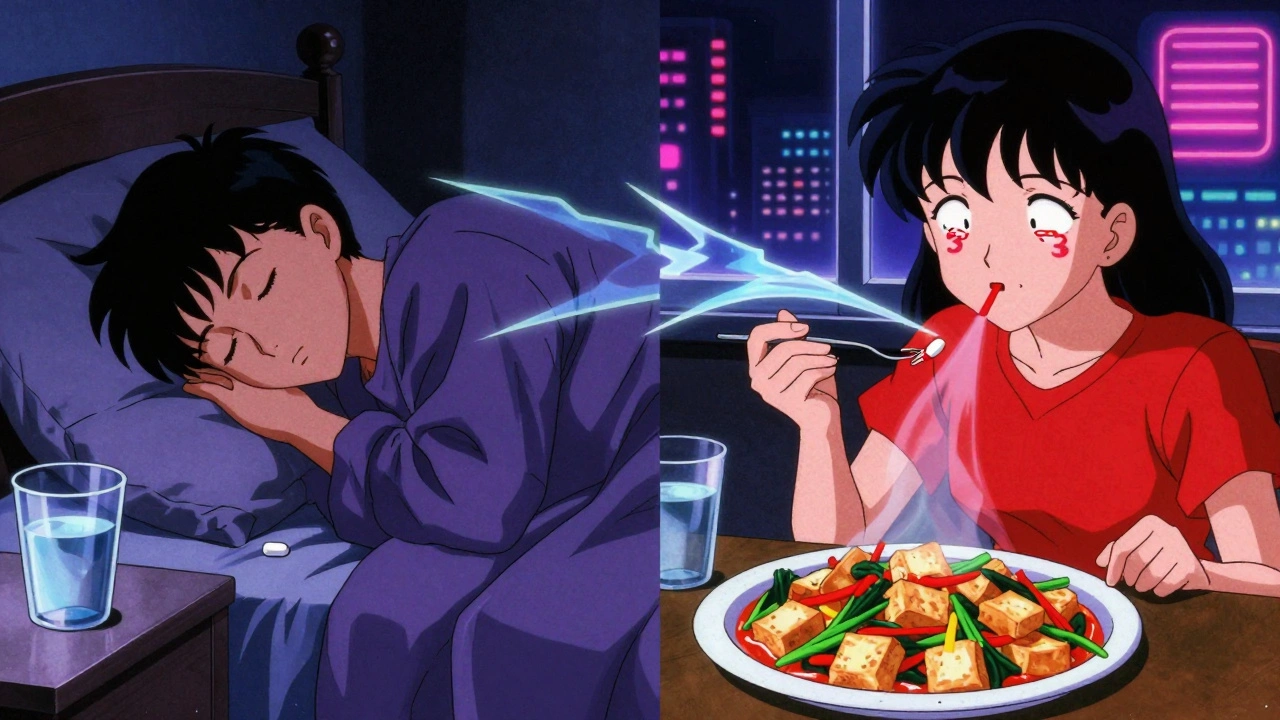
Many people find it easier to take their pill at bedtime. This isn’t just a trick-it’s a smart strategy for avoiding food interference. If you take levothyroxine at night, you avoid breakfast foods like soy milk, tofu scrambles, or soy yogurt. Just make sure:- You haven’t eaten for at least 3-4 hours before taking it.
- You don’t have acid reflux or sleep apnea, which can interfere with absorption.
- You take it at the same time every night.
How Soy Compares to Other Interfering Foods
Soy isn’t the only thing that messes with levothyroxine. Here’s how it stacks up:| Interfering Substance | Absorption Reduction | Recommended Separation Time |
|---|---|---|
| Calcium supplements | 25-36% | 4 hours |
| Iron supplements | 30-50% | 4 hours |
| Soy products | 9-30% | 2-3 hours |
| Coffee | ~20% | 60 minutes |
| High-fiber foods (psyllium) | ~15% | 2 hours |
Real Stories: What Happens When People Ignore the Rules
One Reddit user, HypoWarrior42, started drinking soy milk every morning with breakfast. Within three months, their TSH jumped from 1.8 to 5.2. Their doctor increased their dose from 75 mcg to 100 mcg. When they switched to water-only mornings and waited 3 hours before soy, their TSH dropped back to 1.9. Another user, SoyLoverHypo, has taken Synthroid with soy milk for five years. Their TSH stays steady at 1.5. Why? They take their pill at 10 p.m. and eat soy only at lunch. Timing saved their treatment. These aren’t outliers. A 2023 Healthline survey of 1,200 hypothyroid patients showed:- 31% had elevated TSH when eating soy within 1 hour of their pill.
- 42% saw no change when they waited 2+ hours.
- 27% still had issues even with timing-often because they took soy protein supplements.
What Should You Do? A Simple Action Plan
You don’t need to overhaul your life. Just follow this routine:- Take levothyroxine first thing in the morning with a full glass of water. No coffee, no food, no soy.
- Wait 60 minutes before eating anything else.
- Wait 2-3 hours before having soy milk, tofu, tempeh, or soy protein.
- Or, take your pill at bedtime, 3-4 hours after your last meal. Avoid soy after dinner.
- Track your TSH every 6-8 weeks after changing your routine. Your doctor needs to see the numbers.
- Never skip your dose if you eat soy. Just adjust timing next time.
What’s New in 2025? The Future of Soy and Thyroid Care
Research is moving fast. In June 2023, Cleveland Clinic launched a NIH-funded study (NCT05678901) to create personalized timing algorithms based on genetics, gut health, and soy intake patterns. Early results suggest some people metabolize soy faster than others-and may need less separation. The American Thyroid Association now lists “defining precise soy-levothyroxine interaction thresholds” as a top research priority. That means better, individualized advice is coming soon. For now, stick with the 2-3 hour rule. It’s simple, proven, and backed by the latest science.What If You Accidentally Eat Soy Too Soon?
Don’t panic. One mistake won’t ruin your treatment. If you ate soy 30 minutes after your pill:- Don’t take another dose. That can cause overdose symptoms like rapid heartbeat or anxiety.
- Write it down. Note the time and what you ate.
- Take your next dose on schedule.
- Ask your doctor to check your TSH in 6 weeks.
Can I still eat tofu if I take levothyroxine?
Yes, you can. Just don’t eat it within 2-3 hours of taking your pill. Tofu is fine at lunch or dinner if you take your medication in the morning, or at breakfast if you take it at night. The key is timing, not total avoidance.
Does soy cause hypothyroidism?
No. Soy doesn’t cause hypothyroidism in healthy people. It only interferes with how well your medication works if you already have an underactive thyroid. If you’re not on medication and have normal thyroid function, eating soy is safe.
Is soy milk worse than tofu for thyroid meds?
They’re both high-risk, but soy milk can be more problematic because it’s often consumed quickly and in larger volumes right after taking medication. Tofu is usually eaten as part of a meal, which naturally delays absorption. Either way, wait 2-3 hours after your pill.
What if I take levothyroxine with food and soy together?
This can reduce your medication’s effectiveness by up to 30%. You may feel tired, gain weight, or have cold intolerance-even if you’re taking your pill. Your TSH will rise. Fix the timing, and your levels will normalize. Don’t double your dose.
Should I avoid soy completely if I have hypothyroidism?
No. Avoiding soy entirely isn’t necessary and can make it harder to eat a balanced diet. Many people with hypothyroidism thrive on plant-based diets. The goal isn’t to eliminate soy-it’s to manage the timing so your body can absorb your medication properly.


12 Comments
Scott Butler
Dec 14 2025Soy is just another liberal food cult thing. Americans used to eat real food-eggs, bacon, butter. Now we’re chugging soy milk like it’s holy water while our thyroid meds stop working. Wake up.
Emma Sbarge
Dec 16 2025My endocrinologist told me the same thing. I used to have soy lattes with my pill. My TSH was through the roof. Switched to water only in the morning and waited two hours. TSH dropped to normal in six weeks. No drama. Just science.
nina nakamura
Dec 17 20259 to 30 percent absorption reduction? That’s not even the half of it. The real issue is people think they can outsmart biology with timing tricks. You’re not a lab rat. Your gut doesn’t care about your schedule. And if you’re still eating soy after reading this, you’re not trying to get better-you’re trying to feel justified.
Rawlson King
Dec 18 2025Canada’s health agency has the same guidelines. We’ve known this for years. Americans still act like this is some new conspiracy. You don’t need a 2023 study to tell you that soy binds to hormones. Basic chemistry. Why is this even a debate?
Constantine Vigderman
Dec 19 2025OMG this is life changing!! I was taking my pill with my soy smoothie and wondering why I was so tired all the time 😭 I switched to night dosing and now I feel like a new person!! Thanks for sharing!! I’m telling all my vegan friends!! 🙌
Cole Newman
Dec 19 2025you know what’s wild? people think they’re being healthy eating tofu but they’re just sabotaging their meds. i had a coworker who ate edamame at 7am and took levo at 7:15. she was always tired. told her this. she called me a soy shamer. lol. she’s still on 125mcg and her TSH is 7.2. dumbass.
Casey Mellish
Dec 20 2025As an Australian who’s been on levothyroxine for 12 years, I can confirm: timing is everything. I take mine at 8pm, after dinner. No soy after 5pm. No coffee after 6pm. Simple. Consistent. No drama. My TSH has been stable at 1.4 since 2018. No supplements, no magic-just discipline.
Tom Zerkoff
Dec 21 2025Thank you for this meticulously researched and clearly articulated guide. The distinction between soy as a dietary concern versus a pharmacological interference is critical, and this post elucidates that with precision. For patients with hypothyroidism, adherence to timing protocols is not optional-it is foundational to therapeutic efficacy. I encourage all readers to share this with their care teams.
Yatendra S
Dec 21 2025soy is just the modern yin to thyroxine’s yang… we’re all just trying to balance the cosmic forces of digestion and hormones 🌱☯️
kevin moranga
Dec 21 2025Hey everyone, I’m not a doctor but I’ve been on levothyroxine for 8 years and I eat tofu almost every day. Here’s what worked for me: I take my pill right when I wake up with a big glass of water, then I wait until after my morning walk-about 90 minutes-before I have my tofu scramble. Sometimes I even push it to two hours if I’m feeling off. And guess what? My TSH has been rock solid for years. It’s not about giving up soy, it’s about giving yourself a chance to absorb what you need. You got this. Small changes, big results.
Alvin Montanez
Dec 22 2025Let’s be real-this isn’t about soy. This is about people who think they can outsmart their own biology because they read a blog post. You don’t get to pick and choose which science you follow. If your body can’t absorb medication because of plant proteins, then you don’t get to keep eating it like it’s harmless. This isn’t a lifestyle tweak. It’s a medical necessity. And if you’re still arguing about it, you’re not trying to heal-you’re trying to rationalize your bad habits.
Lara Tobin
Dec 22 2025I used to feel so guilty eating tofu. Like I was failing at being healthy. But this made me realize it’s not about avoiding it-it’s about timing it right. I switched to night dosing and now I have my soy milk with dinner. I feel so much better. Thank you for not making me feel broken for loving my food.