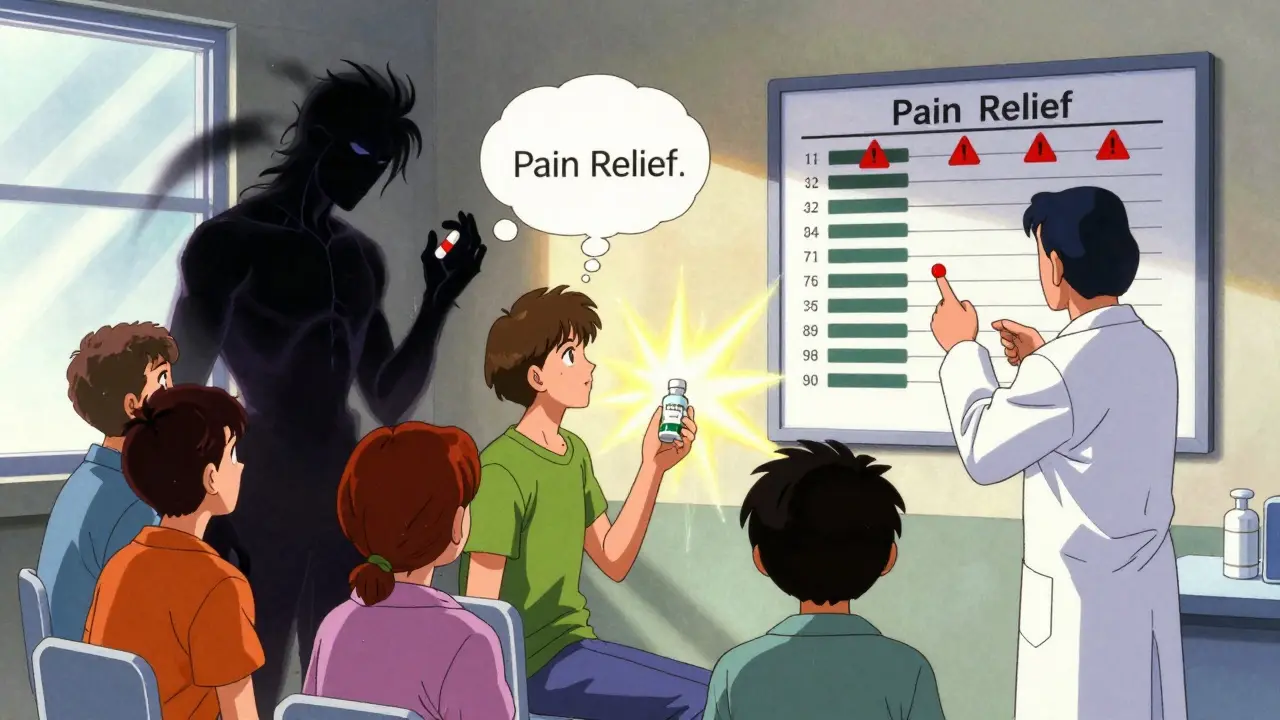
When you hurt - whether it’s a bad back, a sore knee, or a surgical wound - your first thought isn’t about risk. It’s about relief. But what you take to feel better might be more dangerous than you think. For years, doctors reached for opioids like oxycodone or hydrocodone as the go-to solution for moderate to severe pain. Now, the science is clear: opioids are not better at managing long-term pain, and they come with risks that can change your life - or end it.
Why Opioids Are No Longer First Choice
Opioids work by locking onto receptors in your brain and spinal cord, blocking pain signals. They’re powerful. But they also trigger reward pathways, which is why they’re so addictive. The CDC declared the opioid crisis a public health emergency in 2017. By 2021, over 80,000 Americans died from opioid overdoses. That number isn’t just statistics - it’s people in every town, every neighborhood. The truth? For chronic pain like lower back pain or osteoarthritis, opioids don’t outperform simpler, safer options. A major study called the SPACE trial, published in JAMA in 2018, followed 240 patients with chronic pain for a full year. Half got opioids. Half got non-opioid meds like ibuprofen or acetaminophen. At the end of the year, both groups reported nearly the same level of pain relief. But the opioid group had more side effects - dizziness, constipation, nausea - and worse long-term outcomes. Even more startling: patients on opioids had slightly higher pain intensity scores. Not better. Worse. And that’s not an outlier. The VA and American College of Physicians both found the same thing: opioids aren’t superior for long-term pain. They’re just riskier.The Hidden Dangers of Long-Term Opioid Use
Most people think the biggest danger of opioids is addiction. That’s true - but it’s not the only one. Long-term use increases your risk of heart attack. A study of nearly 300,000 patients found that those taking opioids for 180 days or more over 3.5 years had more than double the risk of heart attack compared to those who didn’t take them. Even people taking low doses - 120 mg of morphine per day or more - had a 58% higher risk. Why? Opioids affect your cardiovascular system. They can slow your breathing, lower your blood pressure, and cause inflammation in your arteries. These aren’t side effects you’ll feel right away. They build up silently. You might feel fine. But your heart isn’t. And then there’s tolerance. Over time, your body needs more of the drug to get the same relief. That leads to higher doses. Higher doses mean higher overdose risk. Even small changes in your health - like starting a new medication or getting sick - can make you more sensitive to opioids. A dose that was safe last month could be deadly this month.What Works Better Than Opioids?
Non-opioid pain relievers aren’t just safer - they’re often just as effective. Three main types are widely used:- NSAIDs like ibuprofen (Advil), naproxen (Aleve), and celecoxib (Celebrex) reduce inflammation and pain. They’re great for joint pain, sprains, and headaches.
- Acetaminophen (Tylenol) doesn’t fight inflammation, but it’s excellent for fever and mild to moderate pain. It’s gentler on the stomach than NSAIDs.
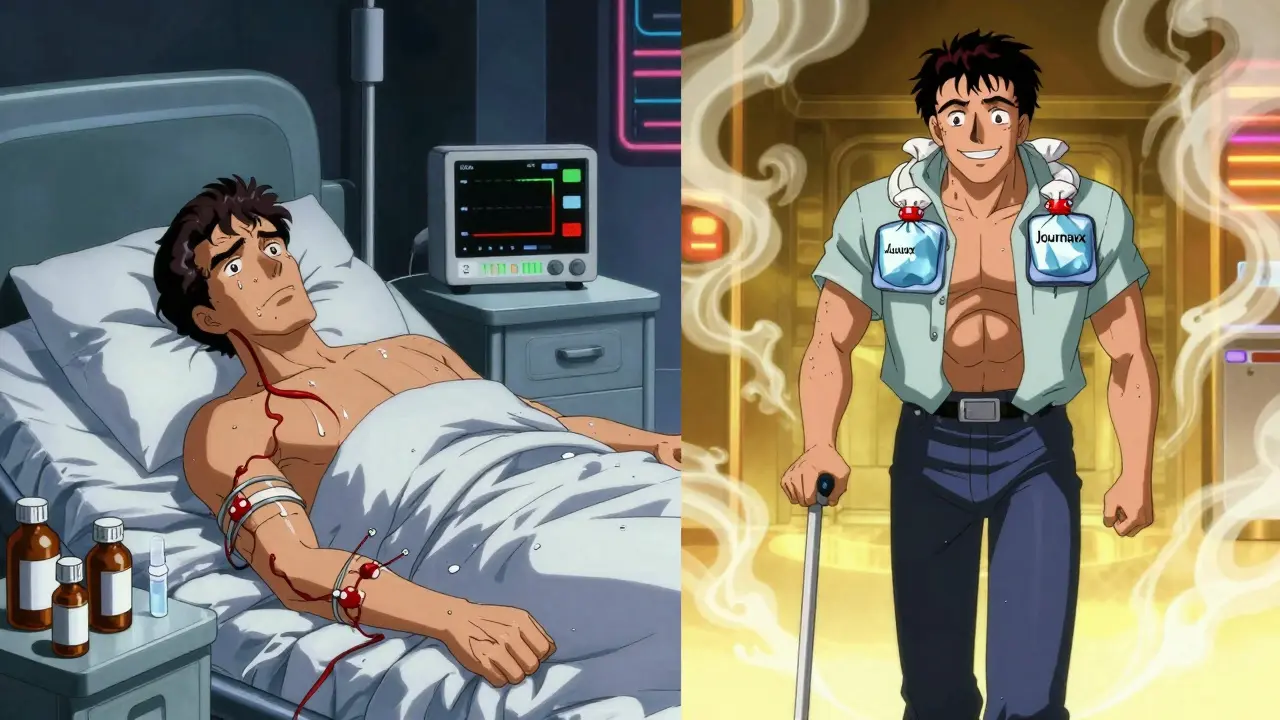
- Newer non-opioid options like Journavx, approved by the FDA in March 2024, offer a breakthrough for acute pain. It’s not a narcotic. It doesn’t cause addiction. And in clinical trials, it worked better than placebo for surgical pain.
When Are Opioids Still Used?
This isn’t about banning opioids. It’s about using them wisely. There are still times they make sense:- Post-surgery pain, especially major surgery, for a few days.
- Cancer-related pain, where quality of life is the main goal.
- End-of-life care, where comfort is priority.
What Should You Do If You’re on Opioids?
If you’ve been on opioids for more than a few weeks, ask yourself:- Is my pain really better than before I started?
- Am I taking more now than I used to?
- Do I feel foggy, constipated, or overly tired most days?
- Have I ever missed a dose because I was afraid of withdrawal?
What’s Changing in Pain Management?
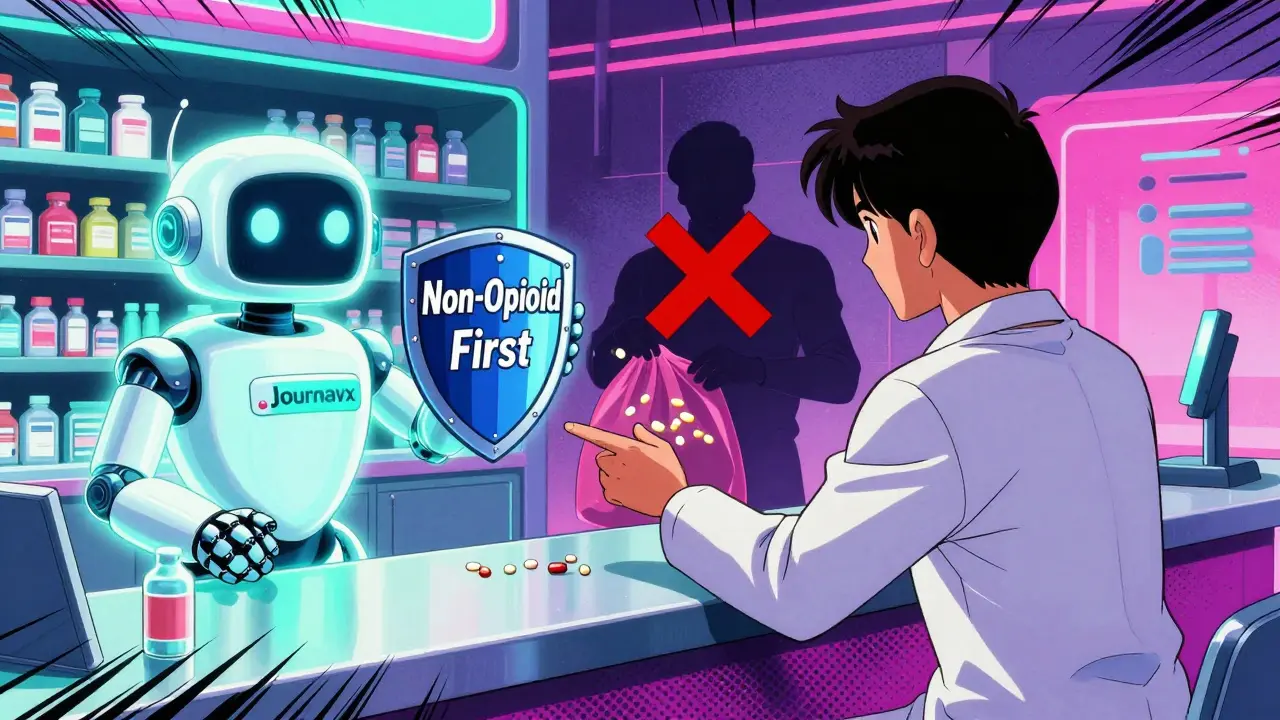
The tide is turning. The California Medical Board now requires doctors to try non-opioid treatments before prescribing opioids for chronic pain. The FDA is funding research and fast-tracking new non-opioid drugs. Hospitals are training staff in multimodal pain control - using a mix of heat, ice, movement, and non-addictive meds to reduce or eliminate opioid needs. This isn’t just policy. It’s science. And it’s personal. Every person who’s lost someone to an opioid overdose, every parent who’s watched their child vomit after morphine, every senior who can’t walk because their pain meds made them dizzy - they’re driving this change. The message is simple: for most types of pain, you don’t need opioids to feel better. And you shouldn’t have to risk your life to get relief.Safe Pain Relief: Your Quick Action Plan
- For mild to moderate pain: Start with acetaminophen (up to 3,000 mg/day) or an NSAID like ibuprofen (200-400 mg every 6 hours). Check with your doctor if you have kidney, liver, or stomach issues.
- For acute pain after surgery: Ask if Journavx or similar non-opioid options are available. Combine with ice, elevation, and movement.
- For chronic pain: Try physical therapy, weight management, or cognitive behavioral therapy before opioids. If opioids are suggested, ask for the evidence - and ask for alternatives.
- If you’re on opioids: Never increase your dose without talking to your doctor. Keep naloxone (Narcan) at home if you live alone or have a history of substance use.




12 Comments
Sam Davies
Jan 12 2026Oh wow, a whole essay on how opioids are bad? Groundbreaking. I’m sure the 80,000 dead Americans didn’t see this coming. 🙃 Next you’ll tell us water is wet and gravity exists. At least opioids let me sleep through my ex’s voice in my head. Now I’m stuck with Advil and existential dread. Thanks, CDC.
Jennifer Littler
Jan 12 2026From a clinical perspective, the SPACE trial data is robust-non-inferiority in pain relief with significantly lower adverse event profiles. The VA’s multimodal guidelines align with ACP recommendations, emphasizing functional restoration over pharmacologic suppression. Journavx’s NK-1 antagonism offers a novel mechanism without mu-opioid receptor activation. Caution remains for hepatic metabolism with acetaminophen in polypharmacy patients.
Alfred Schmidt
Jan 12 2026YOU’RE ALL WEAK!! OPIOIDS WORK!! I’VE BEEN ON OXYCODONE FOR 12 YEARS AND I’M STILL FUNCTIONING!! YOU PEOPLE ARE JUST AFRAID OF REAL PAIN!! MY DOCTOR PRESCRIBED IT AND I’M NOT A DRUG ADDICT I’M A PATIENT!! STOP TELLING ME WHAT TO DO WITH MY BODY!!
Priscilla Kraft
Jan 13 2026Thank you for writing this 💙 I was on opioids for 3 years after my back surgery and didn’t realize how foggy I was until I switched to naproxen + PT. My sleep improved, my anxiety dropped, and I actually remembered my kid’s birthday. You’re not weak for needing relief-you’re brave for seeking safer options. 🌱
Michael Patterson
Jan 13 2026Look i know this is gonna sound crazy but i read this whole thing and i think the real issue is that doctors are too scared to prescribe anymore because of all the media hype and now people are suffering in silence because no one wants to be labeled an addict or a druggie. I mean sure maybe opioids are risky but if you have chronic pain and nothing else works what are you supposed to do? just sit there and cry? i had a friend who had a spinal tumor and they took oxycodone for 8 months and he was fine until the docs cut him off and now he’s in a wheel chair and depressed. so yeah maybe the stats are scary but real life is messier than a jama study.
Matthew Miller
Jan 14 2026Let’s be real-this is just another liberal virtue signaling piece wrapped in pseudoscience. You’re ignoring the fact that 90% of opioid deaths are from fentanyl, not prescribed pills. And now we’re punishing people in chronic pain because of cartel criminals? That’s not medicine, that’s cruelty disguised as policy. You want to save lives? Go after the drug dealers, not the patients.
Adewumi Gbotemi
Jan 14 2026Here in Nigeria, we don’t have much of this problem. Painkillers are expensive and hard to get. We use ginger, heat, and prayer. But I see your point-people need options, not just pills. If your body hurts, you should be able to move without being addicted. Simple things help more than we think.
Sean Feng
Jan 16 2026So what? I take oxycodone. It works. End of story.
Vincent Clarizio
Jan 17 2026Think about it: we live in a world where we’ve weaponized pain relief to the point that a person’s dignity is now measured by their ability to endure suffering without chemical escape. Opioids were never the villain-they were the mirror. We built a system that treats pain as a failure of will, not a biological reality. The real crisis isn’t addiction-it’s our collective refusal to acknowledge that some people’s bodies are broken, and they deserve to be held, not judged, while they heal.
Alex Smith
Jan 19 2026So the CDC says non-opioids are preferred… but when I asked my doctor about Journavx, he laughed and said, ‘We don’t stock that-it’s $800 a pill and your insurance won’t cover it.’ So now I’m stuck choosing between my back pain and my rent. Thanks for the science, guys. Now where’s the policy?
Madhav Malhotra
Jan 19 2026In India, we’ve used turmeric, massage, and yoga for pain for centuries. No pills needed. But I get it-modern life makes us want quick fixes. Still, maybe the answer isn’t just new drugs… but rediscovering old ways. And hey, if you’re on opioids, don’t be ashamed. Just ask for help. We all need it sometimes.
Priya Patel
Jan 21 2026My mom was on opioids for 5 years after her hip replacement. She didn’t even realize how tired she was until she switched to gabapentin + acupuncture. Now she dances at weddings again 😭 I’m so glad this info is out there. You’re not alone if you’re scared to ask for help. Just start the conversation. 💕