
When you’re pregnant, even a simple headache can turn into a panic. You grab the bottle of acetaminophen, then pause. Is it safe? What about that cold medicine? The truth is, the first 12 weeks of pregnancy are the most delicate time for your baby’s development-and the most confusing time for deciding what meds to take, and what to avoid.
The Critical Window: Weeks 3 to 8
The first trimester isn’t just a phase-it’s a construction site. From the moment of conception, your baby’s body is being built, piece by piece. The heart starts beating around week 4. The brain begins forming by week 5. Arms, legs, eyes, ears-all take shape between weeks 3 and 8. This is called embryogenesis, and it’s when your baby is most vulnerable to things that can cause birth defects.
According to the CDC, 90% of major birth defects happen during this narrow window. That’s why timing matters more than you think. A medication taken on day 20 might interfere with heart development. On day 28, it could affect limb formation. On day 40, it might change how the palate forms. There’s no universal rule-you can’t say "this drug is always dangerous." But you can say: if you’re exposed during these weeks, the risk is real.
Common Medications and Their Real Risks
Most pregnant people take at least one medication in the first trimester. Some are prescribed. Others are picked up at the pharmacy without a second thought. Here’s what the data shows about the most common ones:
- Acetaminophen (Tylenol): For years, this was the gold standard for pain and fever relief in pregnancy. The FDA and ACOG still recommend it as the safest option. But new research from 2023 suggests a possible link to a 30% higher risk of ADHD and 20% higher risk of autism spectrum disorder with long-term or high-dose use. That doesn’t mean you can’t use it-just don’t take it daily for weeks unless your doctor says so. Stick to the lowest dose needed, for the shortest time.
- NSAIDs (ibuprofen, naproxen, aspirin): These are risky even early on. A 2011 Canadian study of over 4,700 pregnancies found that taking NSAIDs in the first trimester raised the risk of miscarriage by 60%. They also interfere with early placental development. Avoid them unless your doctor specifically says it’s safe for your situation.
- Antidepressants: Paroxetine (Paxil) has been linked to a 1.5 to 2 times higher risk of heart defects like ventricular septal defects. Fluoxetine (Prozac) and sertraline (Zoloft) don’t show the same pattern, but they can still cause temporary symptoms in newborns like jitteriness or trouble feeding. If you’re on antidepressants and just found out you’re pregnant, don’t stop cold turkey. Untreated depression raises risks too-preterm birth, low birth weight, even suicide. Talk to your provider about switching or adjusting.
- Antibiotics: Amoxicillin, cephalosporins, and erythromycin are generally safe. Tetracycline? Avoid it after week 15-it stains developing teeth. Fluoroquinolones like ciprofloxacin? Animal studies show cartilage damage. Human data is limited, but most doctors avoid them unless there’s no alternative.
- Pseudoephedrine (Sudafed): This decongestant can increase the risk of gastroschisis-a rare but serious abdominal wall defect-by 20-30% if taken in the first trimester. If you’re congested, try saline sprays, humidifiers, or loratadine (Claritin) instead.
- Isotretinoin (Accutane): This acne drug is a known teratogen. It can cause severe brain, heart, and facial defects in up to 35% of exposed pregnancies. If you’re on this, you need to be on two forms of birth control. If you get pregnant while taking it, contact a teratology specialist immediately.

What About Over-the-Counter and Herbal Products?
You might think "natural" means safe. It doesn’t. Many herbal supplements have zero safety data in pregnancy. Ginger tea? Fine. But black cohosh? Licorice root? These can trigger contractions or affect hormone levels. Even vitamin A in high doses (over 10,000 IU/day) can cause birth defects. Stick to prenatal vitamins with 770 mcg RAE or less.
Antihistamines like diphenhydramine (Benadryl), loratadine (Claritin), and cetirizine (Zyrtec) are generally considered safe for allergies. But avoid combination products with decongestants or alcohol. And skip bismuth subsalicylate (Pepto-Bismol)-it contains salicylates, which behave like aspirin.
The Bigger Picture: When Medication Is Necessary
Here’s the hard truth: sometimes not taking a drug is more dangerous than taking it.
Take epilepsy. Stopping seizure meds during pregnancy can cause maternal seizures, which increase fetal death risk by 400%. The same goes for diabetes-uncontrolled blood sugar raises the chance of major birth defects from 2-3% to 10-15%. For thyroid conditions, levothyroxine is not just safe-it’s essential. About half of pregnant women need higher doses to keep TSH under 2.5 mIU/L.
And what about autoimmune diseases? Hydroxychloroquine (Plaquenil) is used for lupus and rheumatoid arthritis. Studies show no increased risk of birth defects. In fact, stopping it can trigger flares that harm both mother and baby.
There’s no one-size-fits-all answer. That’s why the American College of Obstetricians and Gynecologists (ACOG) recommends a five-step approach:
- Confirm your pregnancy timeline using your last period and an early ultrasound.
- Know which week of development you’re in-this tells you what systems are forming.
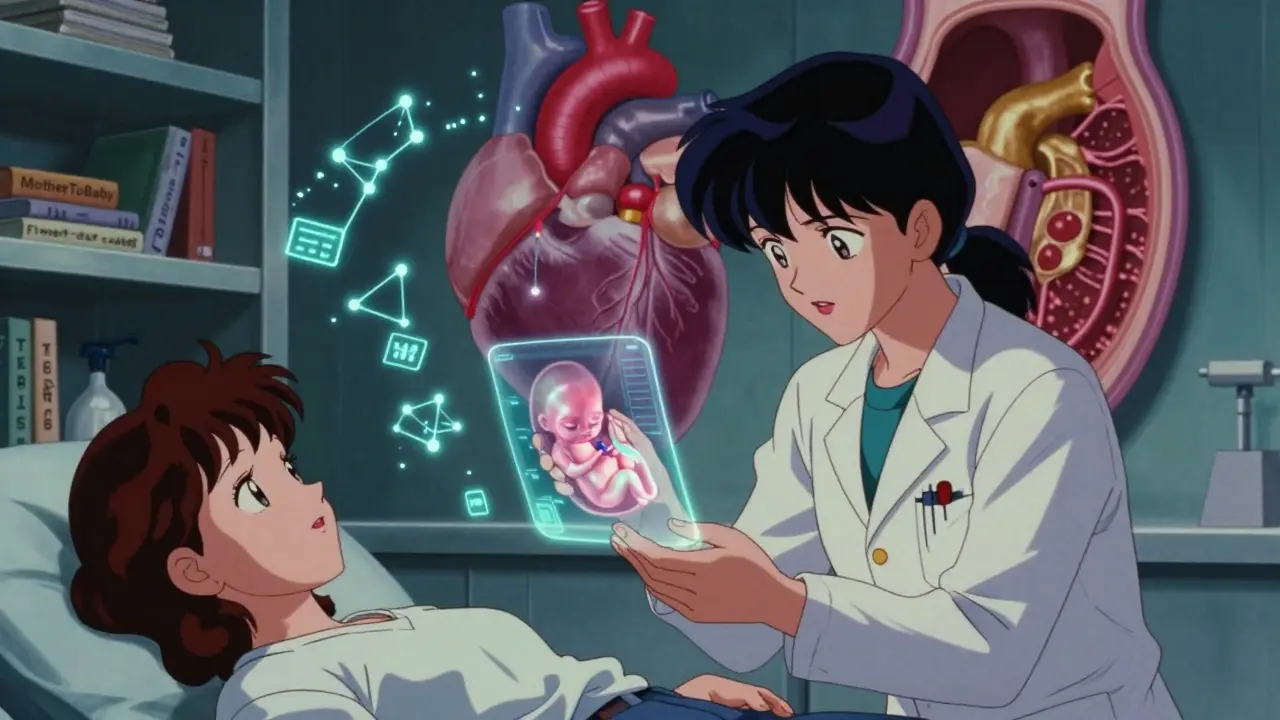
- Check reliable sources like MotherToBaby or TERIS (Teratology Information System) for actual data, not rumors.
- Try non-drug options first: rest, hydration, warm compresses, acupuncture, physical therapy.
- If you need medication, use the lowest effective dose for the shortest possible time.
The Data Gap: Why So Much Is Unknown
Here’s the uncomfortable truth: we don’t know much. The FDA says 98% of prescription labels don’t have enough pregnancy safety data. Only 10% of all approved medications have solid human studies. Why? Because for decades, pregnant people were excluded from clinical trials out of fear-not science.
Today, we’re stuck with outdated categories (A, B, C, D, X) that never meant much, and now we’re trying to fill the gaps with fragmented data. The NIH reports that 96% of commonly used medications lack enough evidence to say whether they’re truly safe.
That’s why you might get conflicting advice. One doctor says "avoid ibuprofen." Another says "it’s fine in early pregnancy." One pharmacist says "Benadryl is safe." Another warns about drowsiness and potential long-term effects.
There’s a reason MotherToBaby fields over 15,000 calls a year from worried parents and providers. We’re in a prescription information desert.
What You Can Do Right Now
You don’t need to be an expert. But you do need to be proactive.
- Make a list of everything you take-prescription, OTC, supplements, herbal teas. Even the ones you think are harmless.
- Bring that list to your first prenatal visit. Don’t wait until you’re 12 weeks in.
- Use MotherToBaby.org or call 1-866-626-6847. They’re free, confidential, and staffed by specialists who know the latest data.
- Don’t assume your OB knows everything. Many don’t. That’s why tools like TERIS and the FDA’s Pregnancy Exposure Registry exist.
- If you’re taking a medication you’re unsure about, don’t quit cold turkey. Talk to your doctor. A sudden stop can be more dangerous than the drug itself.
The goal isn’t to avoid all medication. It’s to make informed choices. You’re not being reckless if you need pain relief. You’re not being careless if you need your antidepressant. You’re being responsible when you ask the right questions and use trusted resources.
Every pregnancy is different. Every medication is different. And every week of development matters more than you realize. You’re not alone in this. There’s data. There’s help. You just need to know where to look.


15 Comments
Doreen Pachificus
Jan 5 2026Been there. Took Tylenol for a week straight during week 6 because I had a sinus infection and couldn’t sleep. Didn’t panic, just tracked the dosage and talked to my OB. They said it’s fine in moderation. Still feel guilty though.
Charlotte N
Jan 6 2026I read somewhere that acetaminophen crosses the placenta and affects fetal dopamine development and I just… I don’t know anymore I mean I took it for three days last month and now I’m scared every time I sneeze
Catherine HARDY
Jan 7 202690% of birth defects happen in the first 12 weeks? That’s not a coincidence. Big Pharma knows this. They’ve been pushing these meds for decades while quietly funding studies that downplay the risks. MotherToBaby? It’s funded by pharmaceutical grants. You think they’d tell you the truth?
Siobhan Goggin
Jan 9 2026Thank you for writing this. So many of us feel lost in this fog of fear and misinformation. Just knowing there’s a framework-like ACOG’s five-step approach-makes me feel a little more in control.
Shanna Sung
Jan 9 2026Accutane is banned for a reason but somehow ibuprofen is still on the shelf like it’s candy and you think your doctor gives a damn about your baby they’re just trying to sell you something
josh plum
Jan 11 2026If you’re taking antidepressants during pregnancy and not switching to therapy or yoga or some new age nonsense then you’re not being responsible you’re being lazy and your baby is paying for it
John Ross
Jan 13 2026The teratogenic window is a highly dynamic, dose-dependent, and gene-environment-interaction-sensitive period. The current pharmacovigilance infrastructure is woefully underpowered to capture nuanced risk profiles, especially for polypharmacy exposures during embryogenesis. We need prospective cohort studies with pharmacokinetic modeling, not anecdotal fear-mongering.
Clint Moser
Jan 13 2026so i heard from a guy on a forum that the CDC changed their stance on tylenol last year but they deleted the page and now they just say 'consult your doc' which means they know its bad but dont want to panic people
Ashley Viñas
Jan 13 2026It’s not about being paranoid. It’s about being informed. If you’re using herbal teas like licorice root or high-dose vitamin A without even checking, you’re not a mom-you’re a liability. Your child deserves better than your ignorance.
Brendan F. Cochran
Jan 14 2026America’s medical system is a joke. You can buy ibuprofen next to gum but if you ask a pharmacist about pregnancy risks they act like you just asked for the nuclear codes. Meanwhile in Germany they have a whole pregnancy med database you can access in 30 seconds. We’re falling behind.
jigisha Patel
Jan 16 2026Statistical associations do not equate to causal relationships. The 30% increased risk of ADHD with acetaminophen is derived from observational studies with significant confounding variables including maternal stress, inflammation, and genetic predisposition. Attributing neurodevelopmental outcomes to a single agent without controlling for these factors is methodologically unsound.
Jason Stafford
Jan 18 2026They’re hiding the truth. There’s a classified FDA memo from 2019 that says acetaminophen causes epigenetic changes in fetal brain cells. They won’t tell you because they’re scared of lawsuits. But I read it. I have screenshots. Someone needs to blow this wide open.
Mandy Kowitz
Jan 19 2026So basically the whole thing is just a giant game of Russian roulette and your OB is the guy holding the gun?
Justin Lowans
Jan 21 2026It’s okay to feel overwhelmed. You’re not failing because you’re scared. You’re human. The fact that you’re reading this, asking questions, and seeking clarity? That’s already the mark of a great parent.
Michael Rudge
Jan 22 2026You think you’re being careful? You’re just another person who googles ‘is this safe’ and then takes it anyway. You’re not protecting your baby-you’re just hoping the universe doesn’t notice.