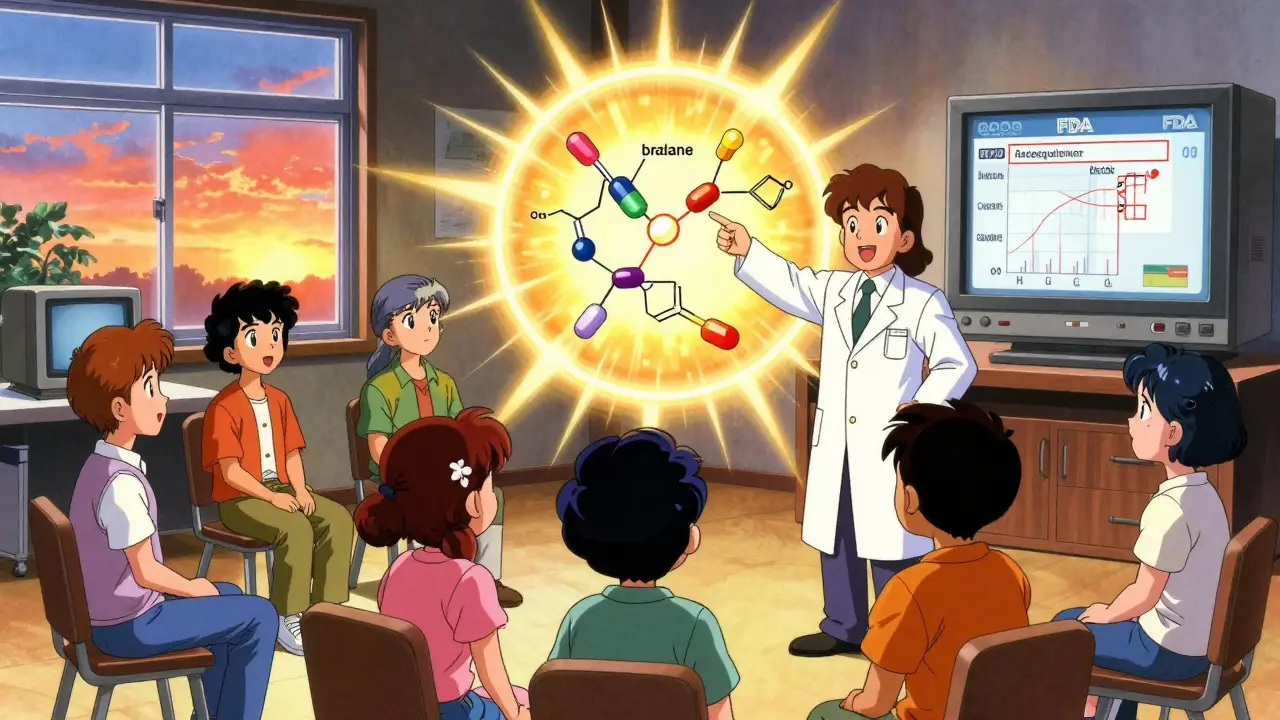
Most people don’t realize that generic drugs are the same as brand-name medicines in every way that matters-except the price. Yet, nearly half of Americans still think generics are weaker, less safe, or don’t work as well. This isn’t just a myth. It’s a barrier to better health, especially for people on tight budgets. Community health presentations are stepping in to fix that gap-with clear, simple, science-backed facts.
Why Generic Drugs Are Just as Good
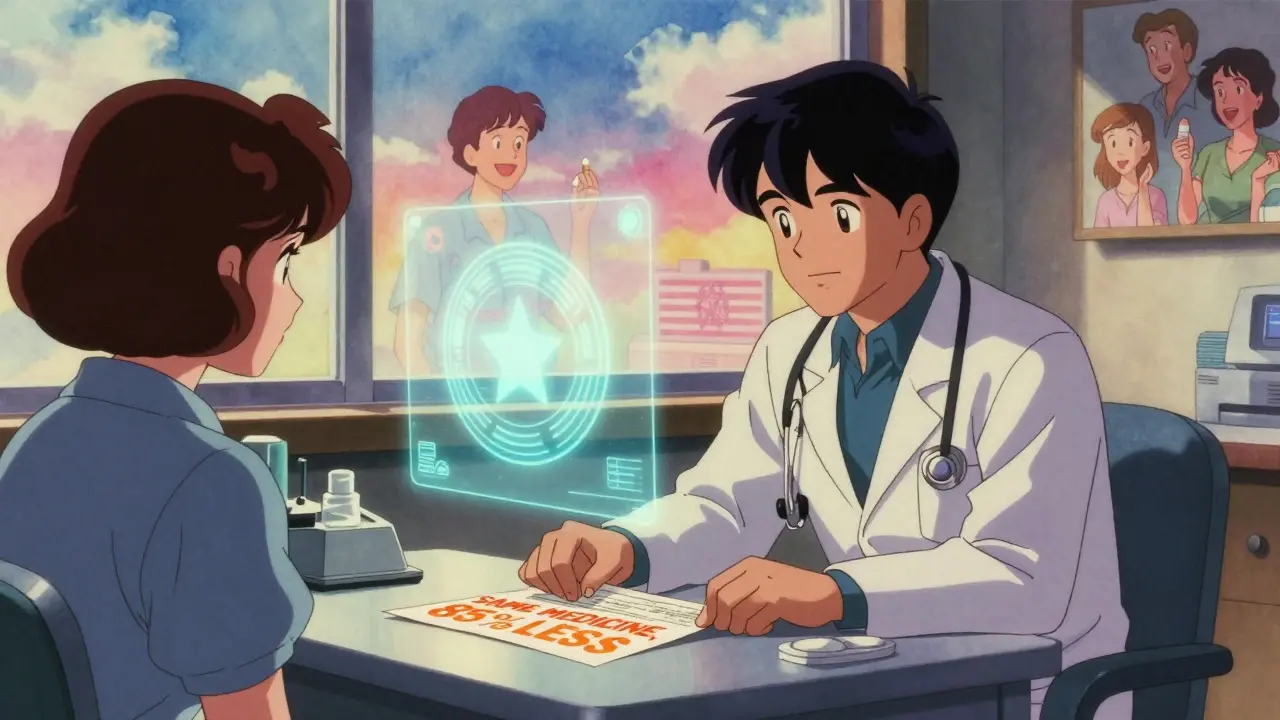
The U.S. Food and Drug Administration (FDA) doesn’t approve a generic drug unless it matches the brand-name version exactly in active ingredient, strength, dosage form, and how it’s taken. That means if you’re taking metformin for diabetes, the generic version has the same chemical compound, works the same way in your body, and is absorbed at the same rate. The FDA requires generics to prove they’re bioequivalent-meaning they deliver 80% to 125% of the active ingredient compared to the brand-name drug. That’s not a guess. It’s tested in clinical trials with real people.And it’s not just the FDA saying this. The American Medical Association, the Academy of Managed Care Pharmacy, and the European Medicines Agency all agree: generics are safe and effective. In fact, 97% of pharmacists say they’d take a generic themselves. The difference isn’t in quality-it’s in cost. Generics cost 80% to 85% less. That’s why they make up 90.8% of all prescriptions filled in the U.S. today.
What People Get Wrong About Generics
The biggest misunderstanding? Appearance. Generic pills often look different-different color, shape, or size. That’s because the inactive ingredients (like dyes or fillers) can change. But those don’t affect how the medicine works. Still, 23% of patients in one University of Michigan survey said they questioned whether their medication was right just because it looked different.Another myth? Side effects. Some people report more side effects when they switch to a generic. But studies show this isn’t because the drug is different-it’s because they expect it to be. This is called the nocebo effect. A 2021 study in the Annals of Internal Medicine found that patients who were told they were getting a generic stopped taking their medicine 18.7% more often than those who didn’t know. Simply knowing the word “generic” made them feel worse-even when the pill was identical.
How Community Health Workers Are Making a Difference
In places like Burlington, Vermont, community health centers started using the FDA’s Generic Drug Stakeholder Toolkit in 2021. They trained staff to use the “Teach-Back” method: instead of just handing out a brochure, they ask patients to explain back what they heard. “Tell me in your own words why this generic is safe,” a pharmacist might say. Within six months, patient acceptance of generics jumped 37%.These presentations don’t rely on jargon. They use plain language: “The FDA makes sure the generic has the same active ingredient, same strength, same way of working as the brand name. The only difference is the price.” They show real examples: “Your brand-name lisinopril costs $120 a month. The generic? $12.”
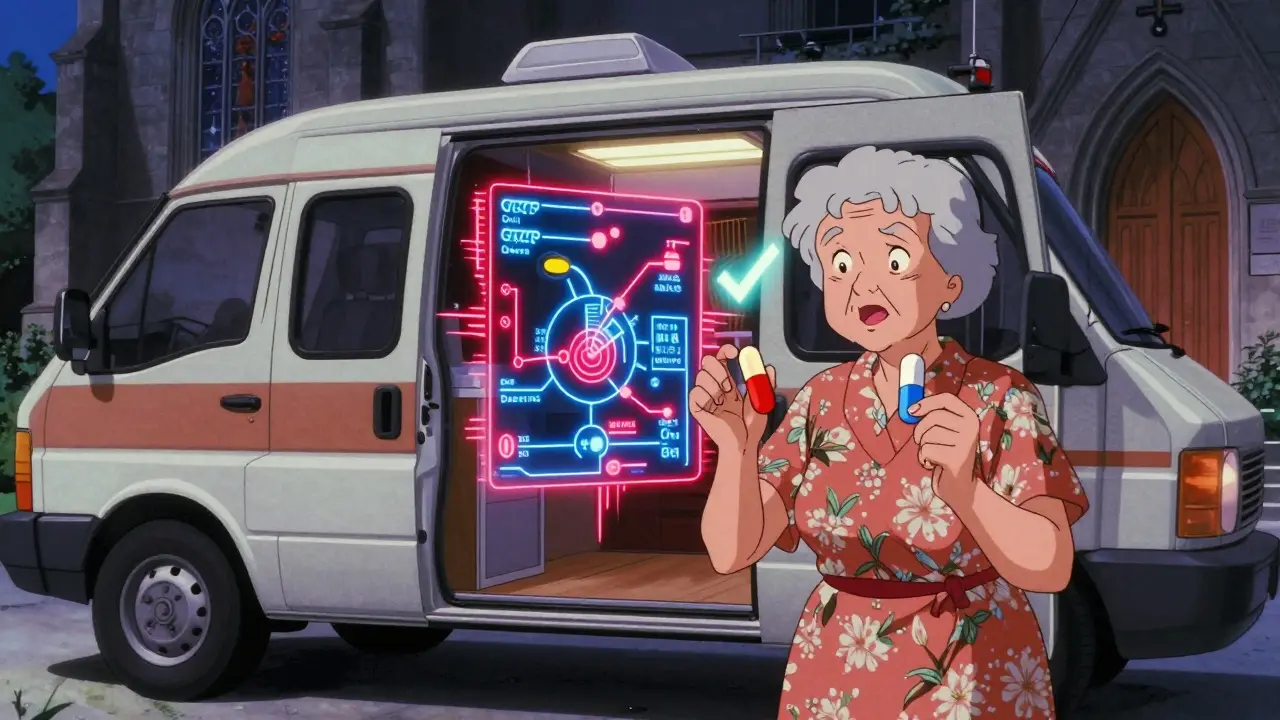
They also address cultural and language barriers. The FDA’s resources are available in both English and Spanish, and community groups tailor them for local needs. In rural areas, where generic use is lower, mobile health teams bring presentations to churches, senior centers, and food banks.
When Generics Aren’t the Easy Choice
There’s one area where switching gets tricky: epilepsy. A 2023 study in Epilepsy & Behavior found a slightly higher chance of seizures when patients switched from brand to generic antiepileptic drugs. But the American Academy of Neurology says this is rare-and likely due to small differences in how the body absorbs the drug in sensitive cases, not because the generic is unsafe. For most people, even with epilepsy, generics work just fine.The bigger issue? Prescriber influence. A 2022 JAMA study showed that when doctors explicitly said, “This generic is just as good,” patient acceptance jumped from 52% to 89%. But if the doctor says nothing, or says, “I prefer the brand,” patients assume there’s a reason. That’s why community presentations now include talking points for doctors too-because their words carry weight.
Why This Matters for Everyone
The savings aren’t just personal-they’re systemic. Generics saved the U.S. healthcare system $377 billion in 2022 alone. That money helps cover other treatments, keeps insurance premiums lower, and lets more people afford their meds. For low-income families, switching to generics improves medication adherence by 22%, according to a 2021 study in Health Affairs.And it’s only getting more important. Between 2023 and 2028, 287 brand-name drugs will lose their patents. That means more generics will hit the market. But if people don’t understand them, they’ll refuse them-and pay more, or skip doses.
What You Can Do
If you’re taking a generic, know this: you’re not getting second-best. You’re getting the same medicine, at a fraction of the cost. If you’re unsure, ask your pharmacist or doctor: “Is this generic the same as the brand? Can you explain how you know?”If you’re part of a community group, consider hosting a presentation. Use the FDA’s free toolkit-videos, fact sheets, even printable posters. You don’t need to be a doctor. You just need to say the truth: Generics are not cheaper because they’re worse. They’re cheaper because they don’t need to pay for ads or patents.
And if you’re a patient who’s been told to switch-don’t panic. Ask questions. Get clear answers. And remember: the science is solid. The FDA doesn’t approve a generic unless it works exactly like the brand. It’s not a gamble. It’s a guarantee.
What’s Changing in 2025
Starting January 1, 2025, all Medicare Part D plans will be required to give standardized generic drug education materials to every beneficiary. The FDA’s new “Generics 101” video series-made for older adults-is already showing results: viewers aged 65+ improved their knowledge retention by 31%.Community health centers across the country are now required to include generic education in all patient counseling sessions. That’s because the link between affordability and adherence is too strong to ignore. When people can afford their meds, they take them. When they take them, they stay healthier. And when they stay healthier, the whole system works better.

11 Comments
Ryan Pagan
Jan 29 2026Let me tell you something - generics aren’t just ‘good enough,’ they’re the unsung heroes of modern medicine. I used to be skeptical too, until my grandma switched from brand-name Lipitor to the generic and saved $90 a month. Same pill. Same results. No drama. The only thing different? Her wallet stopped crying.
Laia Freeman
Jan 31 2026OMG YES!!! I just switched to generic metformin and thought I was gonna die 😭 but like… I’m still alive?? And my bank account is actually smiling?? 🙌
Megan Brooks
Jan 31 2026It’s fascinating how deeply ingrained the stigma around generics is - not because of science, but because of marketing. We’ve been conditioned to equate price with value, even when biology tells us otherwise. The fact that 97% of pharmacists would take generics themselves speaks volumes. Trust the science, not the packaging.
rajaneesh s rajan
Feb 2 2026India’s been using generics for decades - and our life expectancy? Higher than yours. Funny how the same pills that save lives here are called ‘cheap knockoffs’ over there. The real tragedy isn’t the pill - it’s the profit-driven fear.
Paul Adler
Feb 3 2026I appreciate the nuance in this post. The nocebo effect is real, and it’s something we rarely talk about in healthcare. People aren’t irrational - they’re responding to cues they’ve been given, often unintentionally, by doctors, ads, or even the shape of the pill. Awareness is the first step to dismantling these myths.
Andy Steenberge
Feb 3 2026One thing missing from this conversation: the role of insurance formularies. Many patients don’t even get a choice - their plan forces generics, and they assume it’s because the drug is inferior. If insurers paired mandatory generics with clear patient education, adherence would skyrocket. It’s not about control - it’s about clarity.
Kristie Horst
Feb 3 2026Oh, so now we’re supposed to be grateful that Big Pharma lets us have the *same* medicine for $12 instead of $120? How generous. Let’s all clap for the corporate altruism that only kicks in when patents expire. 🙄
Robin Keith
Feb 4 2026But… what if the excipients? The fillers? The binders? Are they not bioactive? Are they not metabolized? Are they not influencing the gut-brain axis, the microbiome, the epigenetic expression of drug receptors? I mean… statistically, yes, the active ingredient is identical - but the *context* of delivery… the *philosophical* implications of synthetic dyes and lactose monohydrate… do we not owe it to the patient to question the entire paradigm? I’m not anti-generic - I’m pro-consciousness.
Doug Gray
Feb 6 2026Yeah, but the bioequivalence range is 80–125%… so technically, the generic could be 20% weaker or 25% stronger? That’s not a guarantee - that’s a gamble. And I’m not risking my health on a statistical outlier. 🤷♂️
paul walker
Feb 6 2026My doc just said ‘this is fine’ and I switched - no problems. But I’m still scared every time the pill looks different. Like… what if they swapped it for something else? 😅
Ryan Pagan
Feb 7 2026Bro, that’s the nocebo effect in action. The pill didn’t change - your brain did. Try holding it in your hand and saying ‘this is the same chemical as before’ - it helps. I do it every time. Also, your pharmacist can show you the FDA approval letter. It’s literally a piece of paper that says ‘this is legit.’