Serotonin Syndrome Risk Calculator
This calculator helps you assess your risk of serotonin syndrome when taking antiemetics with serotonergic medications. Based on the FDA's data and clinical guidelines, it provides a personalized risk assessment.
Your Medications
Current Antiemetic
Additional Risk Factors
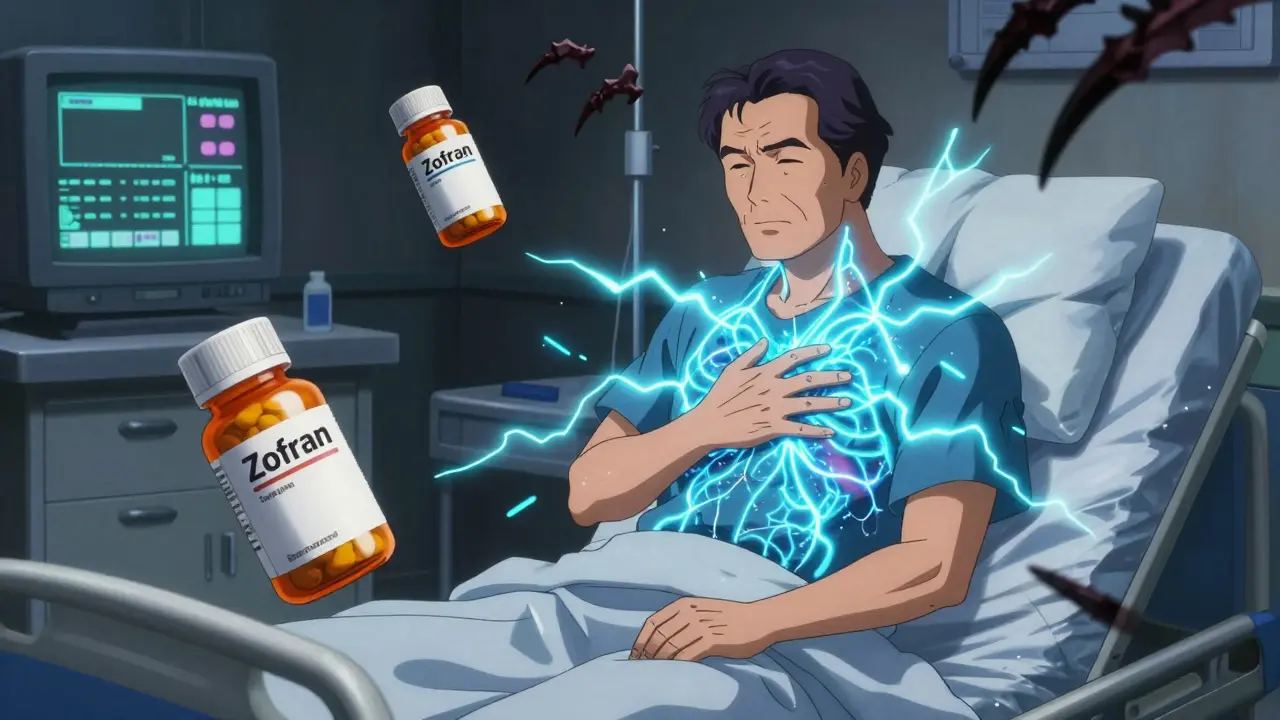
When you take an antiemetic like ondansetron (Zofran) for nausea after chemotherapy or surgery, you expect relief-not a dangerous reaction. But if you’re also taking an SSRI like sertraline or fluoxetine, something subtle and dangerous might be happening in your body. Serotonin syndrome isn’t rare. It’s not just a theoretical risk. It’s a real, sometimes deadly condition that can happen when two commonly prescribed drugs mix. And one of the most overlooked triggers? Antiemetics.
What Exactly Is Serotonin Syndrome?
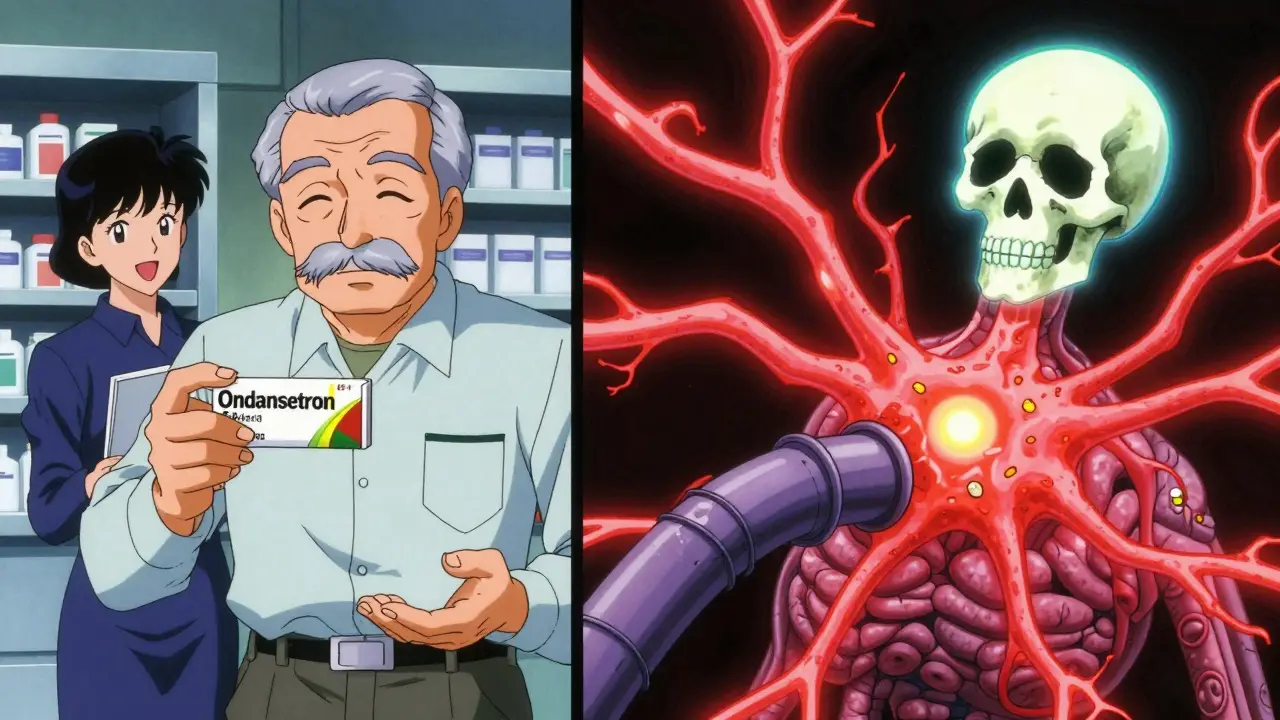
Serotonin syndrome is a toxic reaction caused by too much serotonin activity in your brain and nervous system. It doesn’t happen because you ate too many bananas or took too many supplements. It happens because of drug interactions. Your body normally keeps serotonin levels in check using transporters and enzymes. But when certain medications interfere with that balance, serotonin builds up like a backed-up drain.
The symptoms come on fast-sometimes within hours. You might notice shivering, tremors, or muscle stiffness. Your reflexes become overactive. You feel confused, agitated, or dizzy. In severe cases, your body temperature spikes, your heart races, and you lose consciousness. Without quick action, it can be fatal. The Hunter Serotonin Toxicity Criteria, used by emergency rooms, identifies cases with 84% accuracy based on three key signs: spontaneous clonus, inducible clonus with agitation or diaphoresis, or ocular clonus with agitation or diaphoresis.
Why Antiemetics Are a Hidden Risk
Most people think of antiemetics as safe, targeted drugs. Ondansetron, granisetron, and dolasetron block 5-HT3 receptors in the gut to stop vomiting. Sounds harmless, right? But serotonin doesn’t just live in your stomach. It’s everywhere-in your brain, spinal cord, and peripheral nerves. And while these drugs are designed to block one type of receptor, research shows they might have unintended effects elsewhere.
A 2017 case report in the Journal of Medical Toxicology described a 62-year-old man who developed serotonin syndrome after taking ondansetron with citalopram. No MAOIs. No other major triggers. Just those two drugs. That case wasn’t unique. Between 2004 and 2022, the FDA received hundreds of reports linking ondansetron to serotonin syndrome, especially when paired with SSRIs. The CDC and ProPublica analysis found that patients over 65 were more than twice as likely to be hospitalized for this reaction, even though they made up less than 20% of users.
Not All Antiemetics Are Created Equal
There are different classes of antiemetics, and their risk profiles vary wildly.
- 5-HT3 Antagonists (ondansetron, granisetron): These are the most commonly prescribed. They’re effective, but they carry a quiet risk. A 2023 study in the Journal of Clinical Psychopharmacology showed that switching from ondansetron to palonosetron cut serotonin syndrome risk by over 60% in patients on SSRIs. Why? Palonosetron has different binding patterns and less off-target activity.
- Dopamine Antagonists (metoclopramide, prochlorperazine): These aren’t primarily serotonergic, but metoclopramide has weak serotonin reuptake inhibition. Between 2004 and 2018, the FDA confirmed 17 cases of serotonin syndrome linked to metoclopramide combined with SSRIs.
- NK1 Antagonists (aprepitant): These block a different pathway entirely. But they inhibit CYP3A4, a liver enzyme that breaks down many SSRIs. This can cause SSRI levels to spike-like pouring more fuel into a fire.
Even dexamethasone, a steroid sometimes used for nausea, is safer in this context because it doesn’t touch serotonin pathways at all.
The Role of Genetics and Age
Not everyone who takes ondansetron with an SSRI gets serotonin syndrome. Why? Genetics. About 7-10% of people of European descent are “poor metabolizers” of CYP2D6, the enzyme that breaks down ondansetron. In these people, the drug sticks around longer, building up in the bloodstream. A 2020 Mayo Clinic study found that poor metabolizers had 2.3 times higher ondansetron levels than normal users. Combine that with an SSRI, and the risk jumps.
Age matters too. Older adults have slower liver and kidney function. Their nervous systems are more sensitive. The American Geriatrics Society’s 2023 Beers Criteria now advises avoiding ondansetron in patients over 65 who are on MAOIs and using it with extreme caution if they’re on SSRIs.

What Should You Do?
If you’re on an SSRI, SNRI, or MAOI, and you’re prescribed an antiemetic, ask these questions:
- Is there a non-serotonergic alternative? Dexamethasone or metoclopramide (if not contraindicated) might be safer.
- Have you been tested for CYP2D6 metabolism? Genotyping isn’t routine yet, but if you’ve had side effects before, it’s worth discussing.
- Are you on a high dose of your antidepressant? Higher doses of SSRIs increase risk. A 2022 ASHP guideline recommends reducing ondansetron by 50% if you’re on a strong CYP2D6 inhibitor like fluoxetine or paroxetine.
- Are you over 65? If yes, ask your doctor if this is truly the best choice.
If you’re already on multiple serotonergic drugs and you start feeling shaky, confused, or unusually hot-get help immediately. Don’t wait. Stop all serotonergic drugs. Call 911. The antidote is cyproheptadine, an antihistamine that blocks serotonin receptors. It works fast. Dexmedetomidine is also showing promise in ICU settings for calming the overactive nervous system.
The Bigger Picture
Over 22 million ondansetron prescriptions were filled in the U.S. in 2022. Nearly 40% of those went to people already taking an SSRI or similar drug. That’s millions of potential interactions. The FDA says the benefits outweigh the risks-and they’re right for most people. But for a small group, the risk is real and preventable.
Pharmaceutical companies are updating labels. Hospitals are creating risk-assessment tools. The Clinical Pharmacogenetics Implementation Consortium now recommends testing CYP2D6 status before combining ondansetron with serotonergic drugs in high-risk patients. This isn’t about fear. It’s about awareness. We have the tools to prevent these reactions. We just need to use them.
Can ondansetron cause serotonin syndrome by itself?
No, ondansetron alone is extremely unlikely to cause serotonin syndrome. It blocks 5-HT3 receptors rather than increasing serotonin. All documented cases involve other serotonergic drugs like SSRIs, SNRIs, or MAOIs. The risk comes from combinations, not single use.
What are the early warning signs of serotonin syndrome?
Early signs include tremors, muscle twitching, excessive sweating, restlessness, rapid heartbeat, and mild confusion. These often appear within hours of taking a new drug or increasing a dose. If you notice these while on an SSRI and an antiemetic, stop both and seek medical help immediately.
Is serotonin syndrome common with antiemetics?
It’s rare overall-about 4.2 cases per 100,000 antiemetic prescriptions. But among people taking both an SSRI and an antiemetic, the risk increases significantly. The FDA reports a 29% rise in emergency visits involving antiemetics and serotonin syndrome between 2018 and 2022. It’s uncommon, but serious enough to warrant caution.
Should I stop taking my SSRI if I need ondansetron?
Never stop an SSRI without talking to your doctor. Abruptly stopping antidepressants can cause withdrawal symptoms. Instead, ask if a non-serotonergic antiemetic like dexamethasone is an option. If ondansetron is necessary, your doctor may adjust the dose or monitor you closely.
Are there safer antiemetics for people on SSRIs?
Yes. Dexamethasone is a steroid with no serotonergic activity and is often used in cancer patients. Metoclopramide is an option if you don’t have a history of movement disorders. Palonosetron, a newer 5-HT3 blocker, has shown lower risk in studies than ondansetron. Always discuss alternatives with your provider.





8 Comments
Matthew Brooker
Feb 21 2026This is the kind of info every patient needs to hear before they get prescribed Zofran. I've seen too many people get scared off by scary terms like 'serotonin syndrome' without understanding what actually triggers it. The real issue isn't the drug-it's the lack of communication between doctors. If your prescriber doesn't ask about your antidepressants, they're not doing their job. We need better screening tools built into EHRs. Not just for this, but for all these hidden interactions. It's not paranoia, it's prevention.
Emily Wolff
Feb 22 2026Ondansetron with SSRIs? Please. This is why medicine is broken. Patients are treated like data points, not people. If you're on an SSRI, you shouldn't even be near a 5-HT3 antagonist unless you're in ICU. And don't get me started on how lazy prescribers are about checking interactions. It's not rocket science.
Jacob Carthy
Feb 24 2026Yall act like this is some new conspiracy but its been known for years. We got a system that prioritizes profit over safety. Pharma companies don't wanna warn people because it scares folks off their meds. Meanwhile, grandma's in the ER because her oncologist didn't check her med list. This ain't about science, its about who's paying for the ad space.
William James
Feb 26 2026I think we're missing the bigger picture here. It's not just about drug interactions-it's about how we define safety in medicine. We've turned everything into a checklist instead of a conversation. The fact that 7-10% of people are poor metabolizers means biology isn't one-size-fits-all. Why aren't we doing routine CYP2D6 testing before prescribing? It's cheaper than an ER visit. And honestly, isn't that what we're trying to avoid? Not just death-but fear, confusion, and helplessness. We can do better than reactive medicine.
David McKie
Feb 26 2026I read this entire post and I'm just… devastated. Not because of the science-it's clear. But because of how many people have suffered silently. I know a woman who lost her husband after he got ondansetron post-surgery while on fluoxetine. They told her it was 'just anxiety.' He was 58. No one connected the dots. This isn't rare. It's ignored. And that's the real tragedy. We have the data. We have the warnings. We have the tools. But we don't have the will. And that's the part that breaks me.
Southern Indiana Paleontology Institute
Feb 28 2026my aunt got zofran after chemo and got real shaky and sweaty. doc said its just side effects. she almost died. now she takes dexamethasone. its way safer. why dont more docs know this? its not hard. its just they dont care. also i think palonosetron is way better. i read it on a forum and it made sense. dont trust big pharma. trust real people.
Anil bhardwaj
Feb 28 2026Interesting. I'm on sertraline and just got prescribed ondansetron last week. Didn't think twice. Now I'm gonna call my doctor tomorrow. Thanks for the heads up. I appreciate the clarity. No drama, just facts. That's how it should be.
lela izzani
Mar 2 2026I'm a pharmacist and I see this exact scenario every week. The worst part? Patients don't always tell their doctors about their antidepressants because they don't think it's relevant. We need better patient education materials. Simple. Visual. One-pagers. I've started handing out printed guides with red flags and alternatives. Small thing. Huge difference. If you're on an SSRI, ask for dexamethasone first. It works. And it's safe. No guesswork.