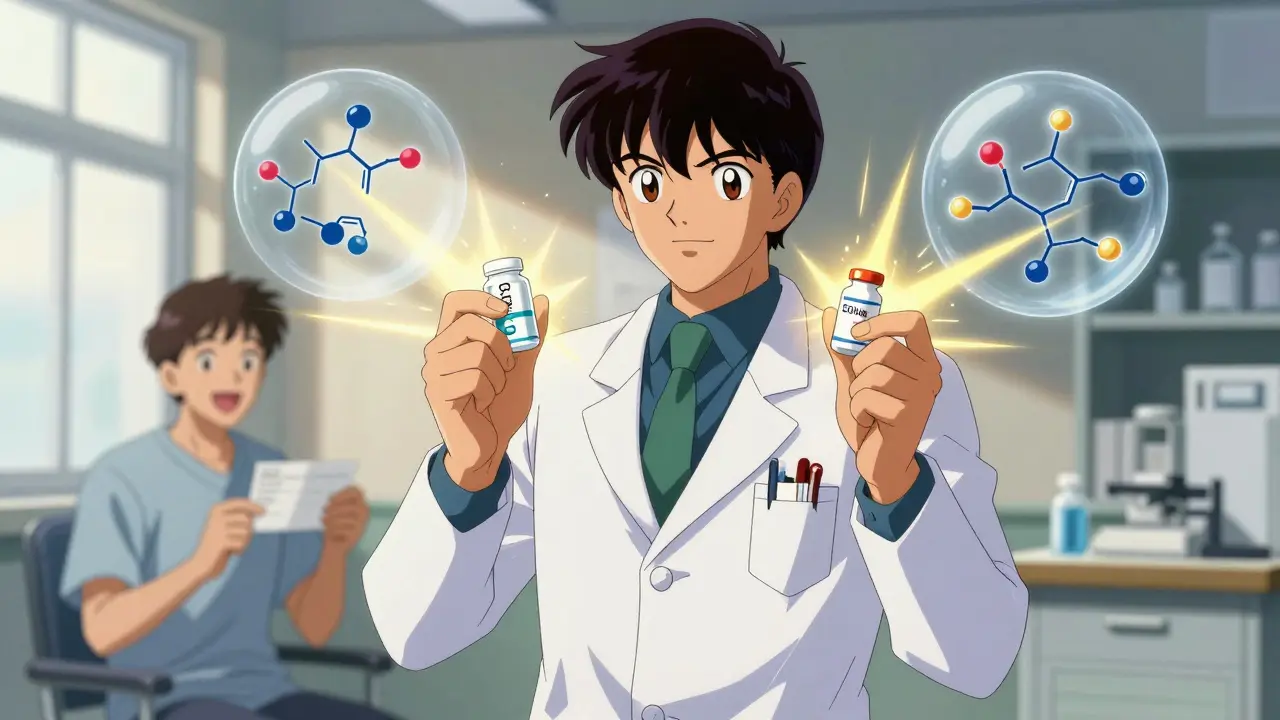
Generic drugs are used in 90% of all prescriptions in the U.S., yet many clinicians still hesitate to prescribe them. Why? Because they’re unsure if generics really work the same way as brand-name drugs. This isn’t just a knowledge gap-it’s a barrier to better care and lower costs. When doctors don’t fully understand generic medications, patients pay more, skip doses, or stop treatment altogether. The solution isn’t complicated: better education for providers. And it’s working.
What Generic Drugs Really Are (And What They’re Not)
A generic drug isn’t a cheaper copy. It’s the exact same medicine, with the same active ingredient, strength, and how it’s taken. The FDA requires generics to meet the same strict standards as brand-name drugs. The only differences? The shape, color, or inactive ingredients-like fillers or dyes-that don’t affect how the drug works. These differences are why some patients notice a change in appearance, but not in effect.
Here’s the key: for a generic to be approved, it must deliver the same amount of drug into the bloodstream as the brand-name version. That’s called bioequivalence. The FDA tests this using two measurements: AUC (how much drug is absorbed over time) and Cmax (how high the drug peaks in the blood). The results must fall within 80% to 125% of the brand-name drug’s numbers. That’s not a wide range-it’s tight. It means the generic works just as reliably.
Still, many prescribers think generics are made to lower standards. A 2020 survey found 45% of clinicians wrongly believed generics must have identical inactive ingredients. Another 38% thought manufacturing quality was lower. Neither is true. The same factories often make both brand and generic versions. The FDA inspects them all the same way.
Why Clinicians Still Prefer Brand Names
Even with clear rules, doctors keep reaching for brand names. A 2019 study showed 62% of physicians mostly prescribed using brand names, even when generics were available. Why? Habit. Training. Misinformation.
Medical school teaches students generic names first. But in practice, many attending physicians say "Lopressor" instead of "metoprolol," or "Lipitor" instead of "atorvastatin." Residents get confused. One third-year med student on Reddit wrote: "I nearly prescribed two doses of metoprolol because my attending said 'Lopressor twice daily'-I didn’t realize they were the same."
That’s not just a slip-up. It’s a systemic issue. When providers don’t use generic names, patients don’t learn them either. And when patients see a different-looking pill, they assume it’s weaker. That’s the nocebo effect-where expecting side effects makes them more likely to happen. Harvard research found that when clinicians clearly say, "This generic works exactly like the brand," patient-reported side effects dropped by 18%.
The Real Cost of Not Using Generics
Generics saved the U.S. healthcare system $2.2 trillion over the past decade. That’s not a guess. That’s from the Generic Pharmaceutical Association. For patients, it’s personal. A 2020 ASPE report found people are 35% more likely to start a new medication if it’s generic. If they can’t afford it, they skip doses. Or worse-they skip treatment entirely.
Think about chronic conditions: high blood pressure, diabetes, thyroid disease. These aren’t one-time fixes. They need daily pills for years. If a patient can’t afford their medication, their condition worsens. That leads to hospital visits, emergency care, and higher long-term costs. A 2021 study in JAMA Internal Medicine showed that when clinicians received interactive training on generics, they prescribed them 29% more often. And patients stayed on therapy longer.
Where Education Makes the Biggest Difference
Not all specialties are the same. Psychiatry stands out. Patients on antidepressants or antipsychotics often feel stigmatized. If they’re told, "This is just a generic," they might think it’s inferior. But when a provider says, "This is the same drug, proven to work just as well," adherence improves dramatically. One program at UCSF cut brand-name statin prescriptions by 37% after training providers to talk confidently about generics.
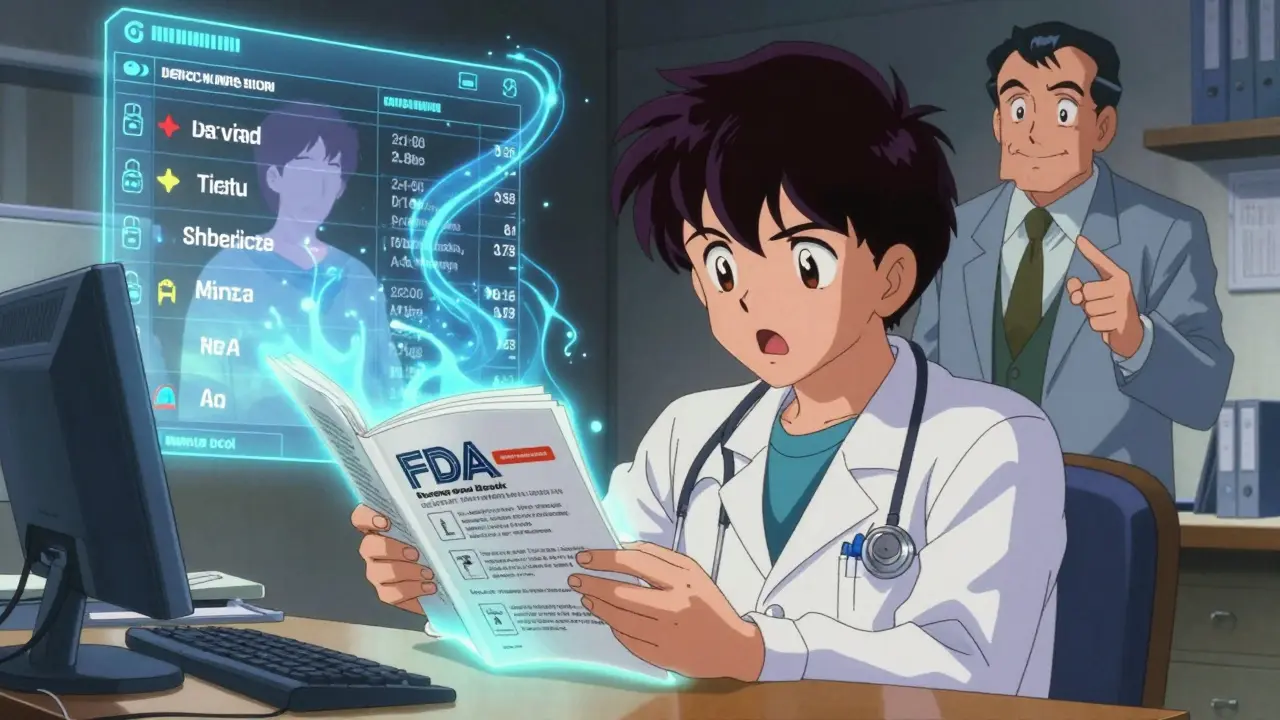
Cardiology and neurology lag behind. A 2022 survey found 82% of cardiologists and 79% of neurologists hesitated to switch patients to generics. Why? Fear. Fear of seizures returning. Fear of blood pressure spikes. Fear of something going wrong. But the data doesn’t back that up. The FDA’s Orange Book lists thousands of generic drugs with an "A" rating-meaning they’re therapeutically equivalent. Still, many doctors don’t know how to read it.
What Clinicians Need to Know
Good education doesn’t mean one webinar. It means repeated, practical learning. A 2022 study found clinicians who had four 90-minute sessions over six months remembered 52% more than those who got a single lecture. Spaced repetition works. So does hands-on training.
Here’s what every prescriber should know:
- Generics must have the same active ingredient, strength, dosage form, and route of administration as the brand.
- Bioequivalence is proven with a 90% confidence interval of 80-125% for AUC and Cmax.
- The FDA’s Orange Book uses "A" ratings for equivalent drugs and "B" for those that aren’t.
- Inactive ingredients can differ-no impact on safety or effectiveness.
- 34 states allow pharmacists to substitute generics without asking the doctor.
- 16 states require "dispense as written" on the prescription to prevent substitution.
And here’s the most important part: how to talk to patients. Don’t say, "I’m switching you to a generic." Say, "This is the same medicine, just less expensive. It’s been used safely by millions."
Barriers and How to Overcome Them
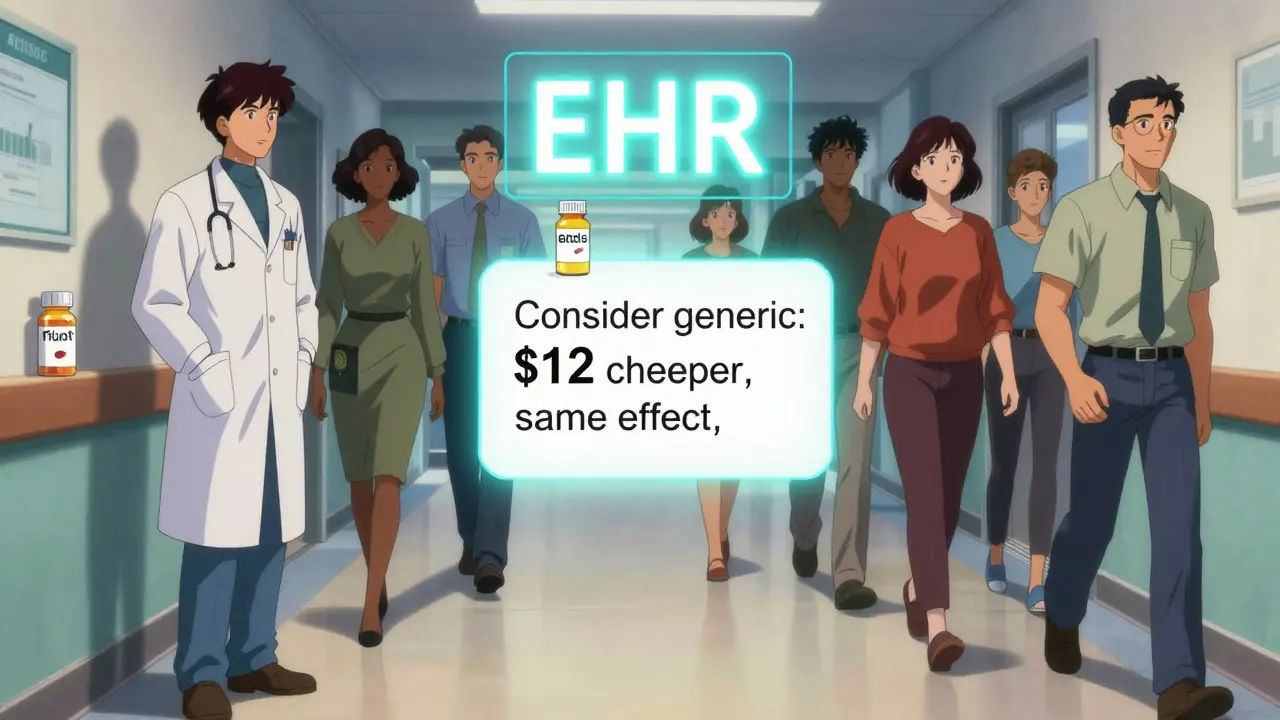
Time is the biggest barrier. A 2021 AMA survey found 89% of physicians said they don’t have time to discuss generics during appointments. But you don’t need a long talk. A 30-second endorsement during prescribing makes a difference. Some clinics now embed quick prompts in their electronic health records. When a doctor selects a brand-name drug, a pop-up says: "Consider generic: $12 cheaper, same effect." That simple nudge increased generic use by 24% in a 2023 pilot.
Another problem? Awareness. Only 22% of providers knew about the FDA’s free educational materials. The Generic Drug Facts Handout, the Therapeutic Equivalence Guide, even the VR training modules launched in 2023-all free. Yet most doctors never see them.
Success stories exist. The University of California San Francisco program didn’t just hand out pamphlets. They trained residents, added real-time feedback in EHRs, and tracked prescribing patterns. Within a year, brand-name use dropped by a third. Tennessee’s $1.2 million education campaign failed because it didn’t connect with the EHR. The tools were there. The integration wasn’t.
What’s Next for Provider Education
The future is personalization. UnitedHealthcare’s 2024 pilot uses AI to watch how doctors prescribe. If someone rarely uses generics, the system sends them targeted content-case studies, patient stories, quick videos. The result? A 28% increase in generic prescribing. That’s not luck. That’s smart design.
By 2025, Medicare’s Merit-based Incentive Payment System (MIPS) will include generic prescribing rates as a quality metric. Doctors who prescribe more generics will get better scores. More money. Fewer penalties. That’s how systems change behavior.
But the real win isn’t savings. It’s adherence. When patients take their meds, they live longer. They avoid hospital stays. They stay out of the ER. That’s the goal. And it starts with a clinician who knows the truth about generics-and isn’t afraid to say it.
Are generic drugs really as effective as brand-name drugs?
Yes. The FDA requires generics to have the same active ingredient, strength, dosage form, and route of administration as the brand-name drug. They must also prove bioequivalence-meaning they deliver the same amount of drug into the bloodstream within a tight range (80-125% of the brand). Over 90% of prescriptions in the U.S. are generics, and they’ve been used safely for decades.
Why do some patients think generics don’t work as well?
It’s often the nocebo effect. When patients see a different-looking pill, or hear phrases like "this is the cheap version," they expect side effects or reduced effectiveness. Studies show that when clinicians clearly say, "This is the same medicine," patient-reported side effects drop by 18%. The issue isn’t the drug-it’s the message.
Can pharmacists substitute generics without the doctor’s permission?
In 34 states, yes. Pharmacists can substitute a generic for a brand-name drug unless the prescription says "dispense as written" or the drug has a "B" rating in the FDA’s Orange Book (meaning it’s not considered equivalent). In 16 states, the prescriber must explicitly prevent substitution. Always check your state’s laws.
Is there a difference between generics and biosimilars?
Yes. Generics are exact copies of small-molecule drugs (like metformin or lisinopril). Biosimilars are highly similar versions of complex biologic drugs (like Humira or Enbrel). They’re not identical because biologics are made from living cells, not chemicals. Only 31% of providers could correctly explain this difference in a 2023 FDA survey. That’s why education on biosimilars is now part of newer training programs.
How much time does it take to get educated on generics?
Effective education takes 6-8 hours total, but not all at once. Studies show the best results come from spaced sessions-four 90-minute modules over six months. This boosts knowledge retention by over 50% compared to a single lecture. Many free resources, like the FDA’s toolkit and GPhA modules, can be completed in short chunks.
What resources are available for clinicians to learn about generics?
The FDA offers free tools: the Generic Drug Facts Handout, the Orange Book, and a prescriber toolkit with talking points. The Generic Pharmaceutical Association (GPhA) has online modules. Academic detailing programs, like those from ICER, provide one-on-one education. New tools include VR simulations that let providers practice patient conversations about generics. All are free and accessible online.



12 Comments
Philip Blankenship
Feb 17 2026Man, I’ve seen this play out so many times in clinic. A patient comes in with a script for Lipitor, gets the generic, and panics because the pill’s a different color. They think it’s fake or weak. Then you sit down and say, ‘This is the exact same molecule, just cheaper-same factory, same FDA oversight.’ And boom, their whole attitude flips. I had one guy who’d been skipping doses for six months because he thought the generic was ‘junk.’ After a five-minute chat? He filled it the next day. No drama. Just clarity. That’s all it takes.
Liam Earney
Feb 18 2026It’s absolutely staggering-no, *outrageous*-that we’re still having this conversation in 2025. The FDA’s standards are rigorous, transparent, and publicly available. Yet we have physicians-trained, licensed, paid-to cling to brand names like they’re relics of some sacred ritual. And why? Because they were taught by attendings who never updated their knowledge since 1998? This isn’t ignorance-it’s negligence. And it’s costing lives. People die because they can’t afford their meds. And we’re letting ego, habit, and outdated training get in the way. The data is there. The evidence is overwhelming. So why do we still hesitate? I’m not asking rhetorically-I’m demanding an answer.
Adam Short
Feb 19 2026Let’s be blunt: America’s healthcare system is broken, but this? This is a British-style solution. We’ve got the science, the regulations, the data. We just need to stop letting doctors act like they’re choosing between a Ferrari and a bicycle. The generic isn’t a ‘budget option’-it’s the same damn car, same engine, same safety rating. If we can’t fix this, how are we supposed to fix anything else? I’m not even mad anymore. I’m just… tired.
Sam Pearlman
Feb 19 2026Okay but have y’all seen the VR training modules? I tried one last week-it’s wild. You’re in a virtual clinic, patient says, ‘Is this gonna work like my old pill?’ and you gotta respond. You mess up? The system tells you why. You get it right? You unlock a badge. I got ‘Generic Guru Level 3.’ I’m not even kidding. It’s like a game, but it actually works. My prescribing rates went up 30% in two weeks. And I didn’t even have to read a single PDF.
Steph Carr
Feb 21 2026So let me get this straight: we’ve got a system where doctors are trained to say ‘Lopressor’ instead of ‘metoprolol,’ patients are scared of pills that look different, and we’re surprised when adherence drops? Oh, and we wonder why healthcare costs are insane? Honey, this isn’t a knowledge gap-it’s a cultural one. We’ve turned medication into a status symbol. ‘I take the expensive one’ sounds like a flex. Meanwhile, someone’s skipping their blood pressure meds because they can’t afford the ‘premium’ version. It’s not about the drug. It’s about the story we tell. And we’ve been telling the wrong one for decades.
Brenda K. Wolfgram Moore
Feb 22 2026I’ve been a pharmacist for 22 years. I’ve seen patients cry because they couldn’t afford their meds. I’ve watched them stare at a generic pill like it’s a trap. And I’ve also seen them breathe easier when you say, ‘This is the same thing. I’ve given this to 300 people this year. No one got worse.’ It’s not magic. It’s just honesty. The real breakthrough? When providers stop saying ‘I’m switching you’ and start saying ‘This is your medicine.’ Simple. Powerful. And it works every time.
Linda Franchock
Feb 23 2026My favorite part? When a patient says, ‘I don’t trust generics.’ And I say, ‘Okay, let’s check the FDA’s Orange Book together.’ We pull it up on my phone. I show them the ‘A’ rating. I show them the bioequivalence numbers. I show them the same manufacturing plant. And then I say, ‘So why don’t you trust it?’ They pause. Then they laugh. Because they realize-they were never scared of the drug. They were scared of being lied to. And we’re the ones who lied to them. By not talking.
Prateek Nalwaya
Feb 23 2026Here’s a thought: maybe the problem isn’t that doctors don’t know generics work-it’s that they’ve never seen them fail. Not really. I’m from India. We’ve been using generics for generations. My grandmother took the same generic antihypertensive for 18 years. My uncle took generic insulin for 12. No hospitalizations. No drama. Just steady control. Back home, we don’t have the luxury of brand loyalty. We have survival. And guess what? We’ve got better adherence than most of the U.S. Maybe the lesson isn’t just about science. Maybe it’s about culture. When you don’t have a choice, you learn to trust the science. And it works.
Agnes Miller
Feb 25 2026Just wanted to say I read this whole thing. Took me two days. I’m a nurse. I’ve seen patients skip meds because they thought the generic was ‘fake.’ I didn’t even know about the Orange Book until last month. I’m still learning. But now I tell every new grad: ‘If you don’t know it, look it up. Don’t guess.’ And if you’re scared to talk to a patient? Just say, ‘Let’s figure this out together.’ It’s not perfect. But it’s a start.
Geoff Forbes
Feb 25 2026Let’s be real: the reason doctors don’t use generics is because they’re lazy. They don’t want to learn. They don’t want to explain. They’d rather just write the brand name and call it a day. And patients? They’re just as bad. They think ‘brand name’ equals ‘better.’ It’s not science. It’s superstition. And we’re all just going along with it. Wake up. The FDA doesn’t care about your brand loyalty. Your patient doesn’t care about the color of the pill. Only you care. And that’s the problem.
Jonathan Ruth
Feb 26 2026Generics save billions. But here’s the truth: most doctors don’t care about savings. They care about control. They want to feel like they’re making the ‘right’ call. And generics? They feel like a compromise. Like giving in. But here’s the kicker: prescribing generics isn’t giving in. It’s being smart. It’s being responsible. It’s being a doctor who puts the patient first. Not the brand. Not the profit. Not the habit. The patient. If you can’t do that, maybe you’re in the wrong field.
Oliver Calvert
Feb 27 2026One sentence: If you’re still prescribing brand-name statins in 2025 because you’re scared of generics, you need to stop. Now. Go read the Orange Book. Do it. I’ll wait.