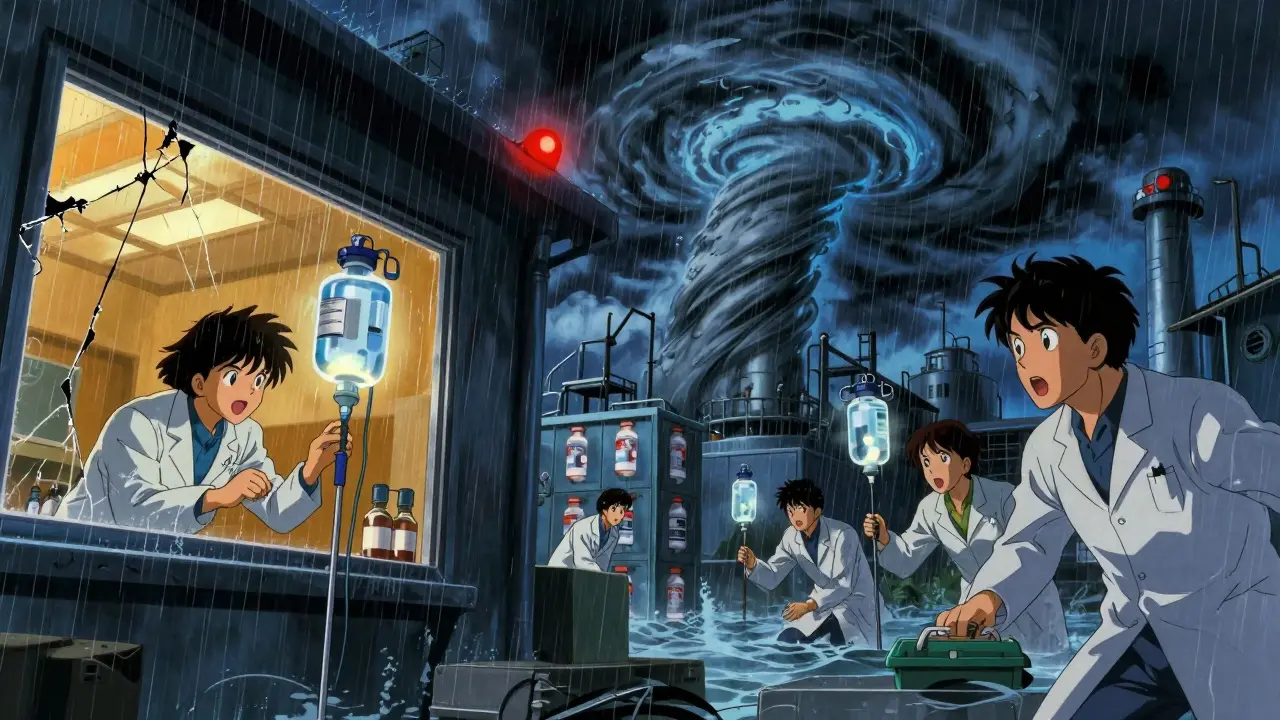
When Hurricane Helene hit North Carolina in September 2024, hospitals didn’t just lose power-they lost life-saving medicine. Within 72 hours, intravenous fluids, the backbone of emergency care, vanished from shelves. Cancer patients delayed treatments. Newborns in NICUs went without sterile saline. Surgeons postponed operations. This wasn’t an accident. It was a predictable collapse of a system built on fragile assumptions.
Why Your Medicine Vanishes When the Weather Gets Bad
Most people assume drug shortages happen because of cost, demand, or corporate greed. But the real story is simpler: climate disasters are now the top cause of medicine shortages in the U.S. Between 2017 and 2024, nearly one-third of all drug shortages were directly tied to hurricanes, floods, and wildfires. The FDA now tracks these events as a primary threat. The problem isn’t just that storms damage factories. It’s where those factories are. Over 65% of U.S. pharmaceutical manufacturing facilities sit in counties that have declared a weather disaster since 2018. Puerto Rico alone used to produce 10% of all FDA-approved drugs and 40% of sterile injectables. After Hurricane Maria in 2017, insulin supplies dropped by 80% and took 18 months to recover. Why? Because the island’s power grid took 11 months to fully restore-and without electricity, you can’t make medicine.The Hidden Geography of Medicine
You might not realize it, but your IV fluids, antibiotics, and even insulin come from a handful of places. Baxter International’s plant in North Cove, North Carolina, makes 60% of the country’s IV bags. If that one facility goes down, the whole country feels it. That’s not redundancy-that’s risk. Even more alarming: 78% of sterile injectable drugs in the U.S. have only one or two manufacturing sites. No backups. No alternatives. When a tornado hit Pfizer’s facility in Rocky Mount, North Carolina, in 2023, 27 different medicines disappeared overnight. Hospitals scrambled. Patients waited. Some died. And it’s not just the U.S. The same pattern exists globally. In 2018, a 7.3-magnitude earthquake in Iran killed 700 people and injured 10,000. But unlike the U.S., Iran’s drug production was spread out. No single facility held more than 5% of the country’s supply. The result? No nationwide shortage. The U.S. system, by contrast, is built like a house of cards.Why Hurricanes Are the Worst
Not all disasters are equal. Hurricanes cause the most damage to drug supplies. They account for 47% of all climate-related disruptions, far ahead of wildfires (28%) and floods (19%). Why? Hurricanes don’t just break windows-they destroy power grids, flood warehouses, and shut down ports for weeks. After Hurricane Maria, saline solution shortages lasted 14 months. Hospitals rationed it. They gave it only to patients in critical condition. Kids with dehydration? Delayed. Elderly patients with infections? Left without antibiotics. The timeline is brutal. It takes 6 to 12 months to build a new pharmaceutical facility. Two to three years to install the specialized equipment needed to make sterile injectables. By the time you recover, the next storm is already on the horizon.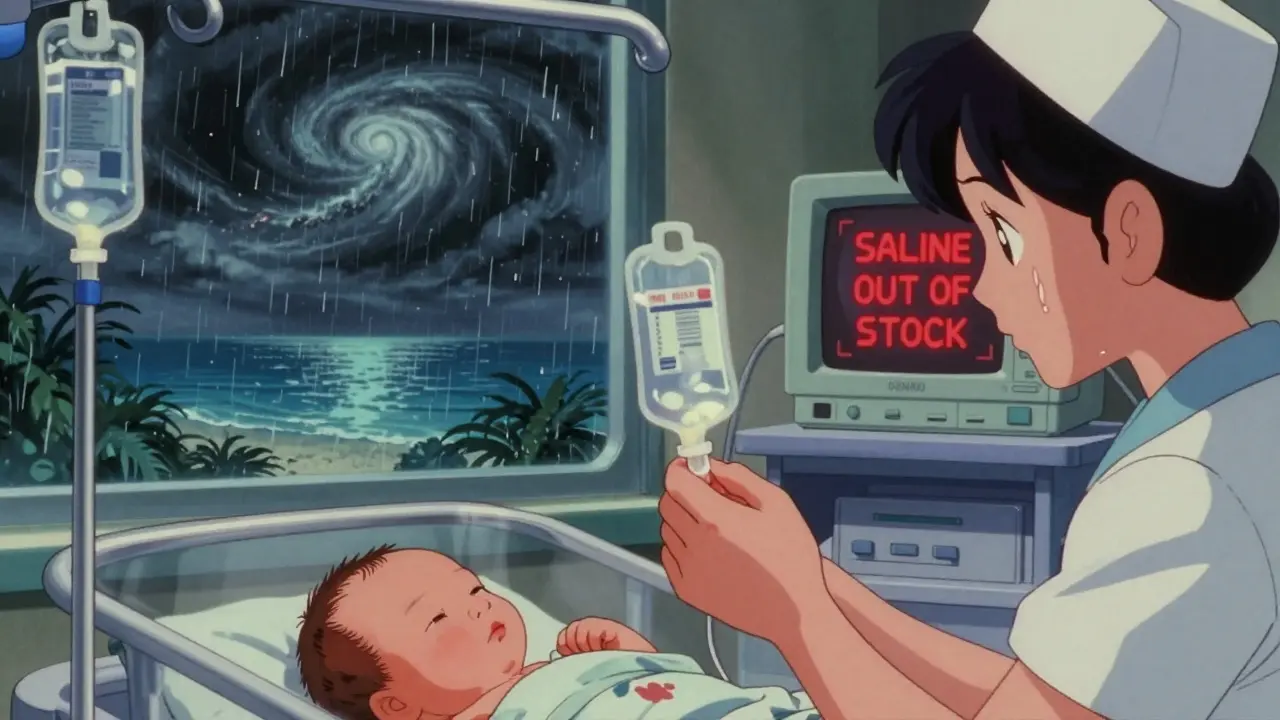
What’s Being Done-And Why It’s Not Enough
Some progress is being made. After Hurricane Maria, the FDA created an Emergency Declaration pathway to import drugs from overseas. But it took 28 days to get saline from Europe. In a crisis, that’s too slow. Now, companies like Sensos are using AI to predict storms before they hit. One system flagged Hurricane Helene’s threat to IV fluid supply 14 days in advance. A few hospitals used that warning to stockpile emergency supplies. They avoided rationing. Others didn’t. The difference? Preparation. The Strategic National Stockpile is testing pilot programs to store critical injectables in hurricane-prone regions. Early results show a 40% reduction in shortage duration. That’s promising. But only 31% of major pharmaceutical companies have actually implemented any meaningful climate resilience plan.The Cost of Inaction
The financial cost is rising. The market for pharmaceutical supply chain resilience is projected to hit $9.7 billion by 2029. But money won’t fix this unless we change how we think about medicine. Right now, the industry runs on “just-in-time” inventory. That means factories make exactly what’s needed, when it’s needed. No extra stock. No backups. It works fine in normal times. But when a storm knocks out a single plant, the whole system collapses. The FDA is pushing a new rule: manufacturers of critical drugs must keep a 90-day emergency inventory. That’s a start. It could prevent 60% of climate-related shortages. But it’ll add 4-7% to production costs. Some companies will push back. Patients will pay more. And here’s the uncomfortable truth: the people who suffer most are the ones who need medicine the most. Cancer patients. Diabetics. Newborns. Elderly patients on dialysis. Hospitals with fewer than 500 beds are 3.2 times less likely to map their supply chains than big systems. That means rural clinics, community hospitals, and safety-net providers are the last to know-and the first to run out.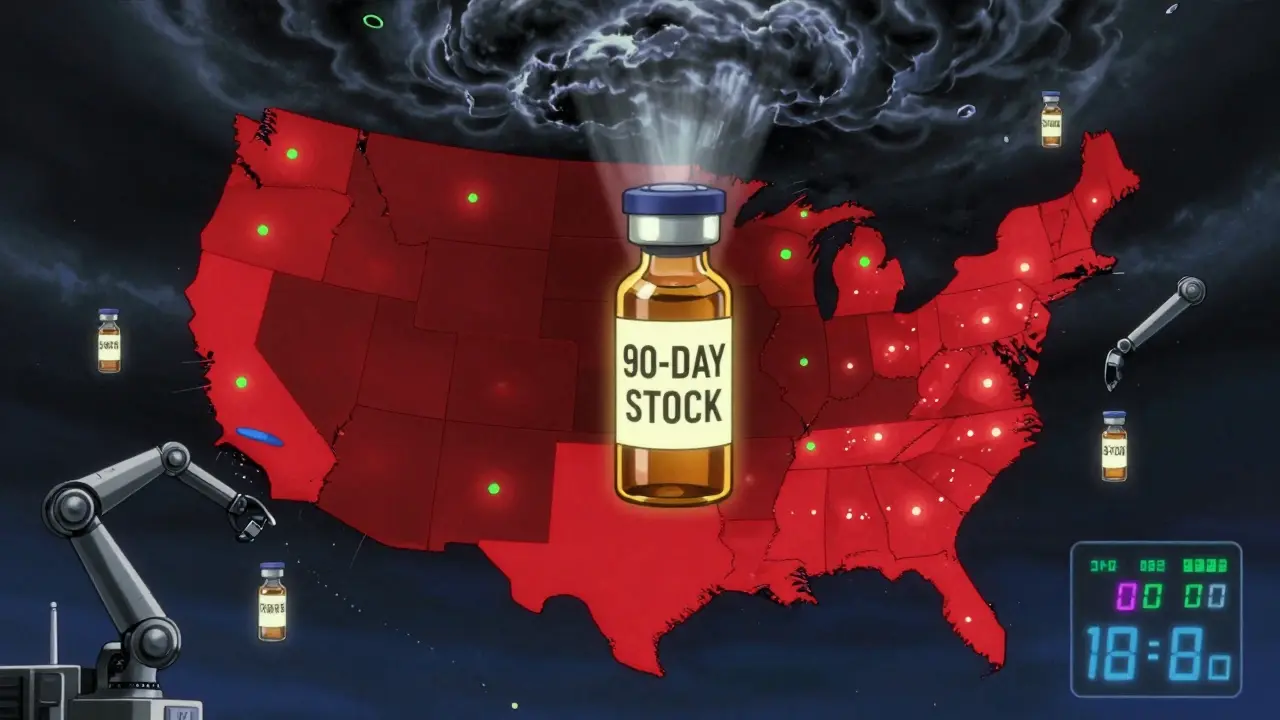



8 Comments
Laura B
Feb 19 2026It's wild how we treat medicine like it's just another commodity. We don't think about the infrastructure behind it until it's gone. That IV fluid shortage after Helene? I had a cousin in a rural NC hospital who got her chemo delayed for three weeks. She’s fine now, but the fear? That sticks with you.
We need to stop acting like disasters are surprises. They’re predictable. And we’re still not building resilience like our lives depend on it-because they do.
Robin bremer
Feb 20 2026bro why is this even a thing?? like we got a whole country full of people who need insulin and some factory in NC gets flooded and suddenly we’re playing russian roulette with people’s lives?? 😭
Nina Catherine
Feb 22 2026OMG I didn’t even know Puerto Rico made 40% of our sterile injectables!! That’s insane. And after Maria, they still didn’t fix the grid?? How is that even possible??
I work in a small clinic and we just got a new alert system for drug shortages-thank god. But we’re still scrambling. We need WAY more backup stock, like, yesterday. Can we just mandate 90-day reserves? Please?? 😅
Robert Shiu
Feb 23 2026There’s a quiet heroism in the pharmacists and nurses who keep showing up when the shelves are empty. I’ve seen it firsthand. They call every hospital in a 3-state radius, beg for swaps, reroute shipments, hold hands while explaining why we can’t give Mom her insulin today.
This isn’t just a supply chain issue. It’s a moral one. We treat medicine like a spreadsheet. But it’s people. Real people. With names. With kids. With fears.
We can fix this. But we have to stop pretending it’s someone else’s problem.
Scott Dunne
Feb 25 2026It is unfortunate that the United States has allowed its pharmaceutical infrastructure to become so centralized and vulnerable. This is a direct consequence of deregulation and the pursuit of profit over public health. Ireland, by contrast, maintains multiple regional manufacturing hubs with redundant systems. We do not wait for disaster to strike before acting.
The American model is not sustainable. It is not intelligent. It is not ethical.
Oana Iordachescu
Feb 26 2026Let’s be honest-this isn’t about climate. It’s about the government and Big Pharma colluding to keep prices high. They *want* shortages so they can jack up prices. The ‘hurricane’ is just a convenient excuse. Look at the stock prices of Baxter and Pfizer after each event-they always spike.
Who profits? Who benefits? Ask yourself. The FDA’s ‘emergency import’ system? A smokescreen. They’ve been doing this for years. The real solution? Nationalize production. Period.
James Roberts
Feb 26 2026So let me get this straight: we have a system where 78% of life-saving injectables come from one or two factories… and we’re surprised when a hurricane breaks it?
It’s like building a house with one nail, then crying when the wind blows it over. And yet, we’re shocked when the system fails?
Also, ‘just-in-time’ inventory? In medicine? That’s not efficiency. That’s gambling with lives. And now we’re surprised the casino burned down? 🤦♂️
Meanwhile, the FDA’s 90-day stockpile rule? Finally. Took long enough. But let’s be real-it’ll take 5 years to implement because bureaucracy hates common sense.
madison winter
Feb 27 2026It’s ironic. We spend billions on space exploration and AI chatbots that pretend to care about us, but when a hospital loses saline because a storm flooded a warehouse, we say ‘oh well, it’s just supply chain.’
Maybe we’re not ready for climate change because we’re not ready to admit that medicine isn’t magic. It’s physics. It’s electricity. It’s pipes and power lines and people who show up for their shift.
And we’ve forgotten that.