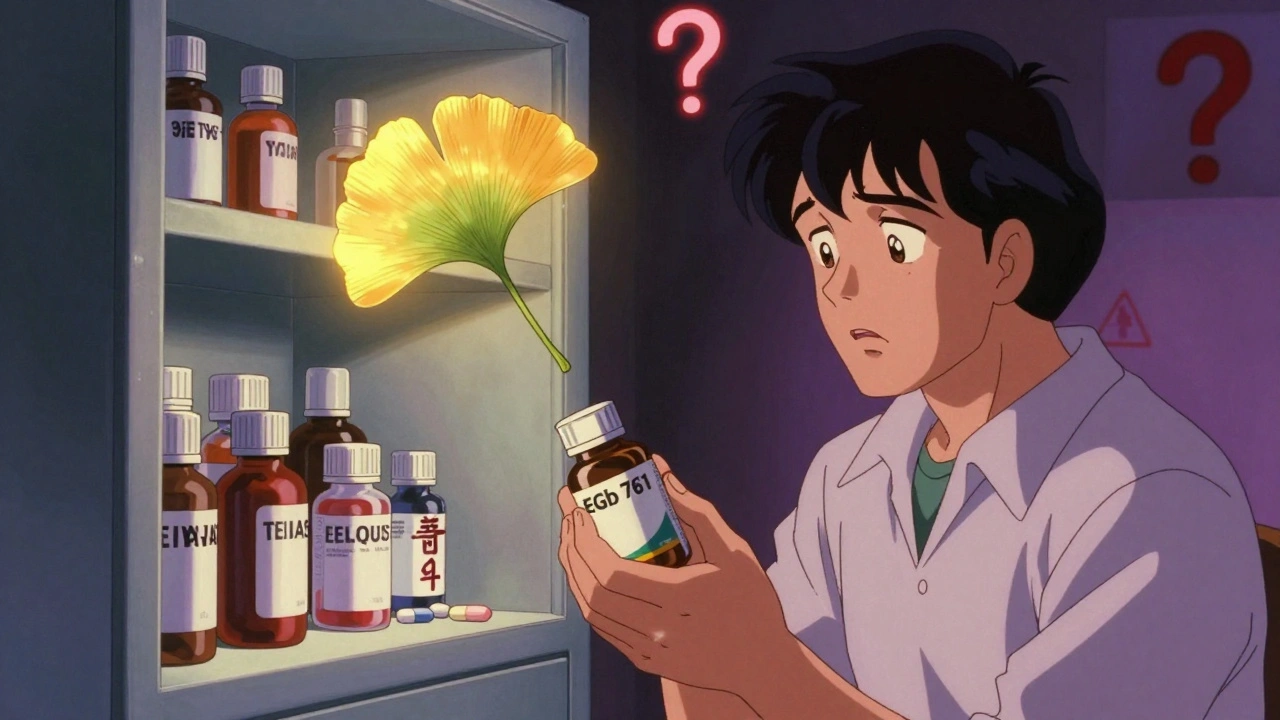
Millions of people take Ginkgo biloba to support memory, focus, or circulation. But if you’re on a blood thinner-whether it’s warfarin, aspirin, clopidogrel, or a newer DOAC like apixaban-there’s a real question you need to answer: Is it safe to take Ginkgo biloba with your medication?
What Exactly Is Ginkgo Biloba?
Ginkgo biloba comes from the leaves of the Ginkgo tree, one of the oldest species on Earth, unchanged for over 270 million years. It’s been used in traditional Chinese medicine for centuries. Today, most supplements use a standardized extract called EGb 761, which contains specific amounts of flavonoids and terpenes-compounds thought to improve blood flow and protect nerve cells.
About 12 million Americans take Ginkgo supplements each year. It’s sold in capsules, tablets, and teas. But here’s the catch: not all Ginkgo products are the same. Many over-the-counter brands don’t follow the same quality standards as EGb 761. That matters because most of the research on safety and interactions uses this specific extract. If your bottle doesn’t say "EGb 761" or "standardized to 24% flavonoids and 6% terpenes," you’re not getting the same thing studied in clinical trials.
How Blood Thinners Work
Blood thinners don’t actually thin your blood. They stop clots from forming too easily. There are two main types:
- Antiplatelets like aspirin and clopidogrel (Plavix) stop platelets from sticking together.
- Anticoagulants like warfarin, rivaroxaban (Xarelto), and apixaban (Eliquis) slow down the proteins your body uses to form clots.
These drugs save lives-especially after strokes, heart attacks, or for people with atrial fibrillation. But they also increase your risk of bleeding. Even a small cut can take longer to stop bleeding. That’s why doctors are cautious when anything else is added to the mix.
The Big Question: Does Ginkgo Increase Bleeding Risk?
This is where things get messy. Some sources say yes. Others say no. And both are citing science.
On one side, you have case reports-real stories of people who bled badly after taking Ginkgo with blood thinners. There are documented cases of brain bleeds, nosebleeds that wouldn’t stop, and internal bleeding after minor injuries. The FDA received 18 such reports between 2008 and 2020. While they couldn’t prove Ginkgo caused them, the timing was suspicious.
On the other side, controlled studies don’t show the same risk. A 2008 review of 11 clinical trials found no increase in bleeding when people took EGb 761 with aspirin or warfarin. Another study in 2012 gave Ginkgo to healthy volunteers on aspirin and saw no change in clotting time. So why the disconnect?
The answer might be in the product. Most case reports involve non-standardized Ginkgo-products with unknown strength, contaminants, or inconsistent ingredients. The EGb 761 extract used in research is tightly controlled. If your supplement doesn’t match that, you can’t assume it’s safe.
What the Experts Say
Major health organizations don’t agree. That’s why patients are confused.
- Mayo Clinic says Ginkgo "may raise your risk of bleeding" with blood thinners and lists warfarin, aspirin, and clopidogrel as high-risk combinations.
- GoodRx calls warfarin a "high-risk" interaction and says to avoid Ginkgo entirely with it. For aspirin and clopidogrel, they say "moderate risk"-talk to your doctor first.
- Cleveland Clinic lists blood thinners as a clear contraindication for Ginkgo use.
- PubMed reviews and the American Society of Health-System Pharmacists say the evidence of harm is weak and mostly based on poor-quality case reports. They call the risk "theoretical."
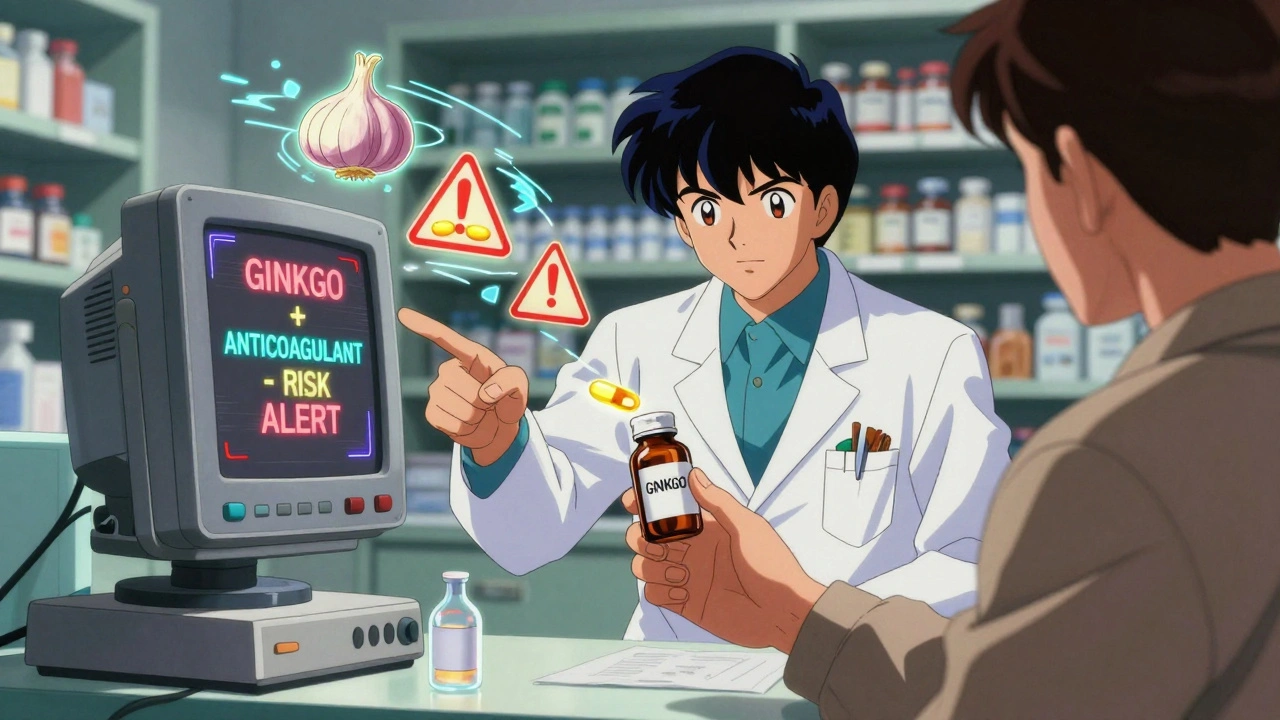
Here’s the practical reality: most pharmacists (78%, according to a 2022 survey) routinely warn patients about this combo. Hospitals and clinics now have electronic alerts in their systems for Ginkgo and blood thinners. Epic’s system flags warfarin combinations. Cerner flags all anticoagulants. That means your doctor or pharmacist will likely see it on your chart-even if you didn’t mention it.
What Should You Do?
Don’t stop your blood thinner. Don’t quit Ginkgo without talking to someone. Here’s what actually works:
- Check your supplement label. Does it say "EGb 761"? If not, you don’t know what you’re taking. Switch to a trusted brand or stop.
- Tell your doctor and pharmacist. Don’t assume they’ll know you’re taking it. Many people think herbal supplements are "safe" and don’t mention them. They’re not part of your official medication list unless you say so.
- Don’t start or stop Ginkgo suddenly. If you’ve been taking it for months and want to quit, don’t just stop. Talk to your provider. If you’re planning surgery, most guidelines recommend stopping Ginkgo at least 2 weeks before.
- Watch for signs of bleeding. Unusual bruising, nosebleeds that last more than 10 minutes, blood in urine or stool, or headaches that feel different than normal could be warning signs.
If you’re on warfarin, your doctor checks your INR regularly. If you start or stop Ginkgo, your INR could change. That’s why your doctor needs to know-so they can monitor you.

Other Supplements That Act Like Ginkgo
You’re not alone if you’re taking more than one supplement. Many others also affect bleeding risk:
- Garlic
- Danshen (Salvia miltiorrhiza)
- Evening primrose oil
- Omega-3 fish oil (in high doses)
- Curcumin (turmeric)
- Green tea extract (in concentrated form)
If you’re on a blood thinner, you need to treat all of these the same way: disclose them. Don’t assume one is "safe" just because it’s natural. Natural doesn’t mean harmless.
The Bottom Line
There’s no clear-cut answer. Science hasn’t proven that Ginkgo biloba causes dangerous bleeding with blood thinners-but it hasn’t proven it’s completely safe either. The safest approach? Assume risk exists until you’ve talked to your doctor.
If you’re taking a blood thinner and thinking about starting Ginkgo biloba, don’t guess. Don’t rely on internet forums. Don’t assume your supplement is "pure" or "standardized" unless it says so on the label. Your health isn’t worth the risk of a preventable bleed.
Take the time to have a conversation. Bring your bottle to your next appointment. Ask: "Should I be taking this with my blood thinner?" That simple step could prevent a hospital visit-or worse.
Can I take Ginkgo biloba with aspirin?
Some sources say yes, others say no. Controlled studies haven’t shown a significant increase in bleeding when Ginkgo and aspirin are taken together-but case reports exist. If you’re on low-dose aspirin for heart protection, talk to your doctor before adding Ginkgo. Don’t assume it’s safe just because aspirin is "over-the-counter."
Is Ginkgo biloba dangerous with warfarin?
Many experts consider this a high-risk combination. Warfarin has a narrow safety window, and even small changes in how it’s processed can lead to dangerous bleeding. While research doesn’t consistently prove harm, the potential consequences are serious enough that most doctors recommend avoiding Ginkgo entirely if you’re on warfarin.
Should I stop Ginkgo before surgery?
Yes. Most guidelines, including those from the American Society of Anesthesiologists, recommend stopping Ginkgo biloba at least 2 weeks before any surgical procedure-even minor ones. This gives your body time to clear it and reduces the risk of unexpected bleeding during or after surgery.
Are all Ginkgo supplements the same?
No. Only a few brands use the standardized extract EGb 761, which is what most clinical studies used. Many store brands or online products vary in strength and purity. Some even contain toxic parts of the plant or fillers. Always look for "EGb 761" or "standardized to 24% flavonoids and 6% terpenes" on the label.
What if I’ve been taking Ginkgo for years with my blood thinner?
Don’t panic, but do talk to your doctor. If you haven’t had any bleeding issues so far, that’s good. But that doesn’t mean you’re immune. Your body changes over time. Medication doses change. Other supplements get added. A check-in with your provider can help assess whether you need to make a change now, even if you’ve been fine in the past.
Can I take Ginkgo if I’m on a DOAC like Eliquis or Xarelto?
There’s less data on DOACs than warfarin, but the risk is still considered real. A 2020 study found that 18% of patients taking DOACs who also used Ginkgo were at risk for interaction. Since DOACs don’t require regular blood tests, you won’t know if something’s off until it’s too late. Most experts recommend avoiding the combination unless your doctor specifically approves it.





15 Comments
Bonnie Youn
Dec 2 2025Ginkgo’s been in my medicine cabinet for years and I’ve never had a problem - but I always check the label for EGb 761. If your supplement doesn’t say it, you’re playing roulette with your blood. Don’t be that guy.
Debbie Naquin
Dec 3 2025The dichotomy between case reports and RCTs isn’t a contradiction - it’s epistemological noise. Anecdotal hemorrhages reflect real-world heterogeneity: unstandardized extracts, polypharmacy, CYP450 polymorphisms. The controlled trials? Clean. But clinical reality? Messy. We need pharmacovigilance, not dogma.
Kelly Essenpreis
Dec 4 2025Why are we even talking about this? Ginkgo is a tree leaf. Warfarin is a rat poison. If you can’t handle your meds then don’t take them. Stop being scared of plants. This is why America’s falling apart.
Margaret Stearns
Dec 5 2025I take warfarin and ginkgo for 5 years. No bleeds. But I told my dr. I didn't assume. Always tell your dr. Even if you think it's 'just herbal.'
amit kuamr
Dec 6 2025India uses ginkgo for memory since centuries. No one dies. But western doctors panic over everything. Maybe your system is broken not the herb.
Amber-Lynn Quinata
Dec 7 2025PLEASE STOP TAKING GINKGO IF YOU’RE ON BLOOD THINNERS 😭 I KNOW YOU THINK IT’S "NATURAL" BUT NATURAL DOESN’T MEAN SAFE I HAD A COUSIN WHO HAD A STROKE BECAUSE OF THIS 💔
Edward Hyde
Dec 8 2025So let me get this straight - we’re terrified of a 270-million-year-old tree leaf but we’ll down a bottle of pills made in a lab that no one fully understands? What a joke. Big Pharma’s got you all scared of your own roots.
Kenny Leow
Dec 8 2025As someone who grew up in Singapore where herbal medicine is part of daily life - I respect the science here. But I also respect tradition. The key isn’t fear. It’s transparency. Tell your doctor. Know your label. That’s all.
Erin Nemo
Dec 9 2025Just tell your doc. Seriously. That’s it. No drama. No panic. Just say "hey I’m taking ginkgo" and let them decide.
ariel nicholas
Dec 9 2025Wait… so if a 270-million-year-old tree can’t be trusted, but a 5-year-old synthetic molecule made in a Chinese factory can? That’s not science - that’s corporate worship. The FDA’s been compromised. They don’t want you to know the truth about herbal synergy.
Rachel Stanton
Dec 11 2025For those asking about DOACs: yes, data is limited - but the mechanism is plausible. Ginkgo inhibits platelet aggregation via thromboxane suppression. DOACs target thrombin/factor Xa. No direct interaction? Maybe. But additive effect? Absolutely. Don’t gamble with your cerebral circulation.
Lauryn Smith
Dec 13 2025I started ginkgo after my dad had a mini-stroke. I asked my pharmacist. She said "if it’s EGb 761 and you’re on aspirin, it’s probably fine - but tell your cardiologist anyway." That’s the right way to do it.
Mary Ngo
Dec 14 2025Have you ever wondered why the FDA only "received 18 reports"? Because they’re not tracking it properly. Big Pharma owns the reporting system. The real number is in the thousands - buried in death certificates labeled "spontaneous hemorrhage." They don’t want you to connect the dots.
Scotia Corley
Dec 16 2025The literature is clear: the risk is theoretical. The case reports are confounded by polypharmacy, poor product quality, and lack of standardized dosing. To suggest a blanket contraindication is not evidence-based - it’s institutional overcaution masquerading as clinical wisdom. Patients deserve nuance, not fearmongering.
James Allen
Dec 16 2025I’m just saying - if your doctor says no, and you still take it… then you’re not just risking your health. You’re risking your entire family’s peace of mind. I’ve seen it. One bleed. One hospital. One funeral. All because someone thought they knew better. Don’t be that person.