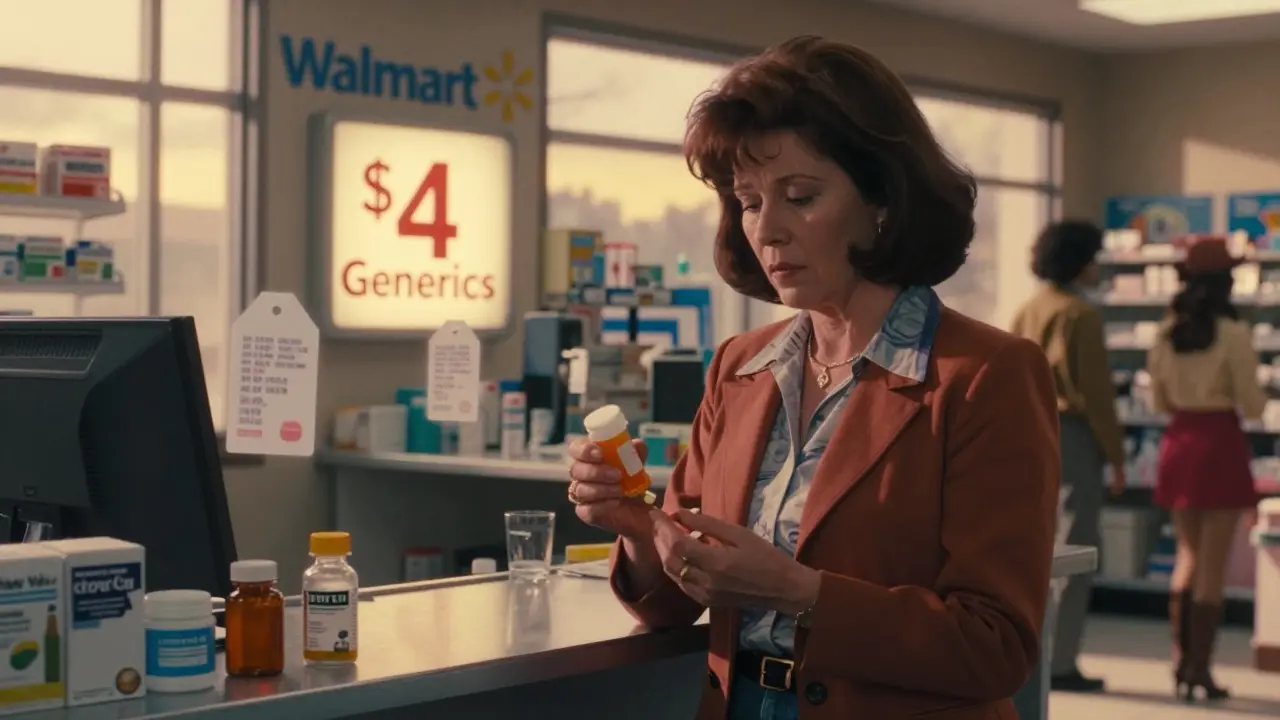
For millions of Americans, taking a daily pill for high blood pressure, diabetes, or thyroid issues shouldn’t mean choosing between medicine and groceries. But even though generic drugs cost 80-85% less than brand-name versions, many people still struggle to pay their copays. In 2024, nearly 1 in 4 adults said they skipped or cut back on prescriptions because of cost. And while generics are cheaper, they don’t come with the same kind of financial help that brand-name drugs do. No manufacturer coupons. No $0 copay cards. Just a small charge at the pharmacy counter - and for some, that’s still too much.
Why Generics Don’t Come With Copay Cards
Brand-name drug companies spend billions on marketing and research. To keep patients from switching to cheaper options, they offer copay cards that can reduce your out-of-pocket cost to $5 or even $0. These cards work like vouchers - you show them at the pharmacy, and the drugmaker covers the rest. Generic manufacturers don’t do this. Why? Because they’re already selling pills for pennies. A 30-day supply of generic metformin might cost $4 at Walmart. The profit margin is so thin that offering a coupon would mean losing money. So instead of helping patients directly, the system relies on three other sources: government programs, pharmacy discount lists, and nonprofit aid.Medicare’s Extra Help: The Best Option for Seniors
If you’re on Medicare and have a low income, you may qualify for Extra Help - officially called the Low-Income Subsidy. This program cuts your generic drug costs to just $4.90 per prescription in 2025. That’s not a discount. That’s a fixed price. And it applies to over 150 common generics, including lisinopril, levothyroxine, and atorvastatin. You automatically qualify if you get Medicaid, Supplemental Security Income (SSI), or a Medicare Savings Program. If you don’t, you can still apply. Your income must be below $22,590 for a single person or $30,660 for a couple in 2025. You’ll need your tax return, bank statements, and proof of assets. The process takes 45 to 90 days, but once approved, it’s automatic for the rest of the year. Many seniors don’t apply because they think they make “too much.” But the income limits are higher than most expect. A retired nurse making $2,000 a month from Social Security and part-time work might still qualify. The Medicare Rights Center says 40% of people who call about generic costs don’t know Extra Help exists.Pharmacy Discount Programs: No Application Needed
You don’t need insurance to use these. Walk into Walmart, Kroger, Target, or Costco and ask for their generic drug list. At Walmart, 150 common generics cost $4 for a 30-day supply or $10 for 90 days. Kroger’s program covers about 100 drugs at $15 for 30 days. These prices are often lower than what you’d pay with insurance - especially if your plan has a $10 copay and a $50 deductible. The catch? You can’t combine these with insurance. If you’re on Medicare or private insurance, you have to choose: use your plan’s copay, or pay cash with the discount. Most people assume their insurance is always cheaper. It’s not. A 2024 study by the American Pharmacists Association found that 62% of patients never ask about discount programs - and end up paying more. Pro tip: Always ask the pharmacist. Say, “Is this drug on your $4 list?” They’re trained to know. Don’t assume the computer will show you the best price.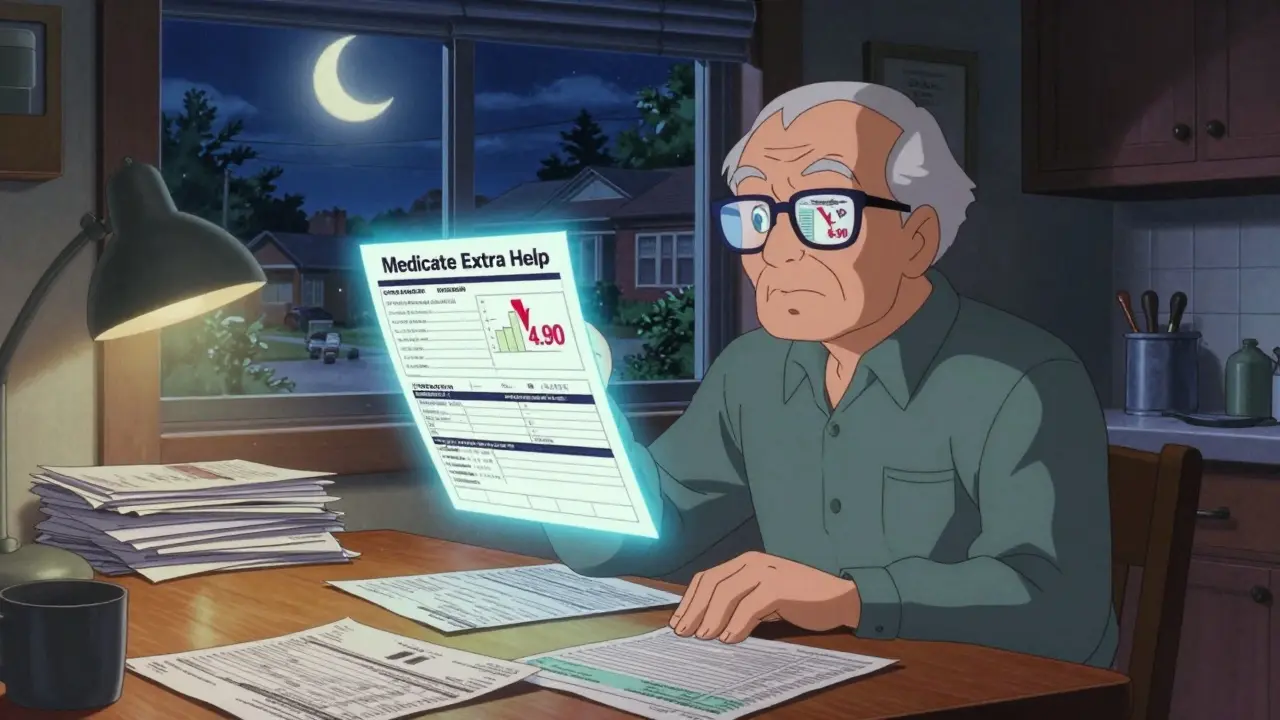
Nonprofit Help: PAN Foundation and NeedyMeds
If you’re not on Medicare and can’t afford your generics, nonprofits like the PAN Foundation and NeedyMeds can help. But there’s a big catch: most of these programs only cover drugs used for serious conditions - cancer, rheumatoid arthritis, hepatitis C. If you’re taking generic pills for high cholesterol or mild depression, you’re often out of luck. In 2023, only 17 of PAN’s 72 programs covered conditions treated mostly with generics. NeedyMeds approved 78% of applicants who made under 250% of the federal poverty level ($37,150 for one person). But if you made $40,000 a year - just $300 above the cutoff - your chances dropped to 12%. This is the “assistance gap.” You make too much for Medicaid, too little to afford your meds without help. Apply early. Processing takes 3 weeks. You’ll need a doctor’s note confirming your diagnosis and a copy of your most recent tax return. Don’t wait until you run out of pills.The Big Change Coming in 2025
Starting January 1, 2025, the Inflation Reduction Act changes everything for Medicare beneficiaries. The annual out-of-pocket cap for Part D drops from $8,300 to just $2,000. That means if you take 10 generics a month at $5 each, you’ll hit that cap in just 33 months - and after that, your drugs are free for the rest of the year. Also gone: the deductible for Extra Help recipients. And insulin - even generic insulin - will cost no more than $2 a month. These changes will cut generic drug spending for Medicare users by 57%, according to CMS projections. But here’s the catch: if you’re under 65 and on private insurance, none of this applies. Your insurer might still use a “copay accumulator” - a policy that doesn’t count manufacturer coupons toward your deductible. That doesn’t matter for generics, because there are no coupons. But it does mean you’re stuck with whatever your plan charges.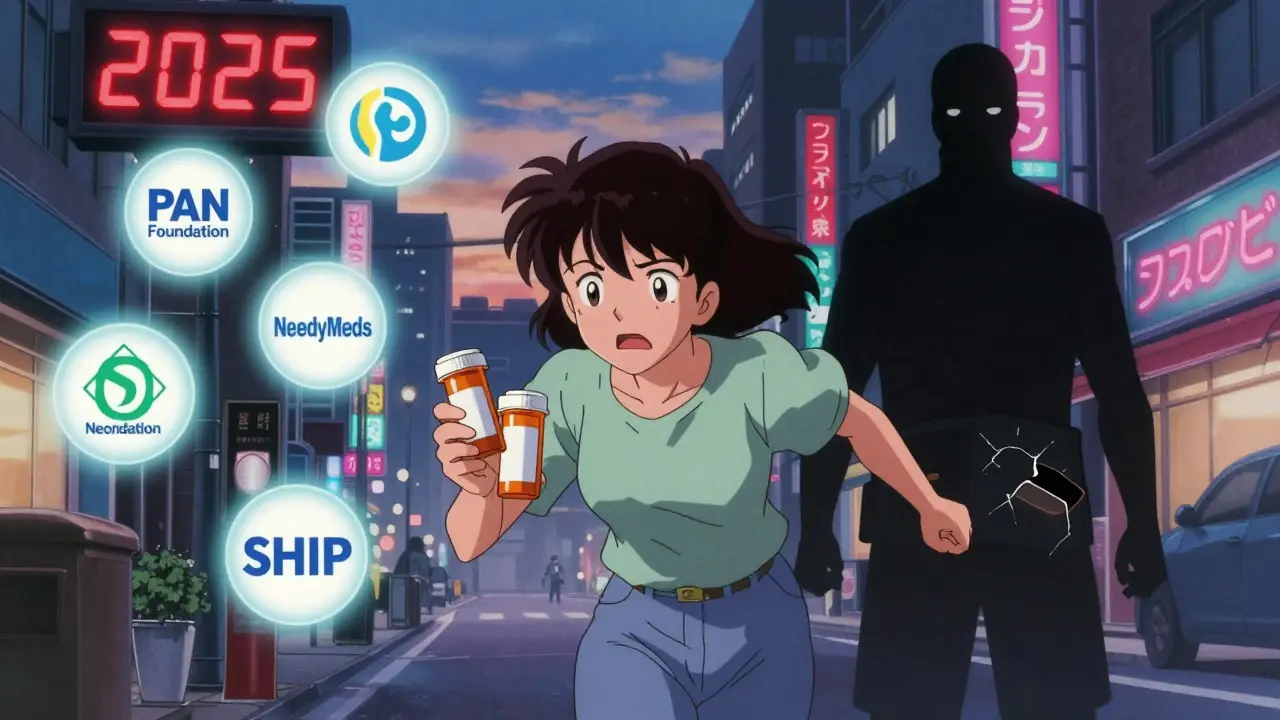
What to Do Right Now
If you’re struggling to pay for your generic meds, here’s what to do in order:- Check if you qualify for Medicare Extra Help - even if you think your income is too high. Apply at SSA.gov or call 1-800-772-1213.
- Ask your pharmacy for their $4/$10 generic list - and compare the cash price to your insurance copay. Pay cash if it’s cheaper.
- Visit NeedyMeds.org - search your drug by name. If a nonprofit program exists, it will show you how to apply.
- Call your State Health Insurance Assistance Program (SHIP) - they offer free, local counseling. Find yours at shiptacenter.org.
- Don’t skip doses - a 2023 study in the Annals of Internal Medicine found that 38% of people who couldn’t afford their generics stopped taking them. That leads to hospital visits, which cost far more.


12 Comments
Kristen Russell
Jan 1 2026This is the kind of info that saves lives. I told my mom about the Walmart $4 list last month-she’s been on lisinopril for 12 years and finally stopped skipping doses. No more panic every time the pill bottle runs out.
Thank you for writing this.
Sally Denham-Vaughan
Jan 2 2026OMG I had no idea about Extra Help-I thought Medicare only covered brand names. My aunt just turned 65 and is on $18 copays for metformin. I’m helping her apply this week. Also-asking the pharmacist? Genius. I always just assume the computer knows best. Not anymore.
So many people are silently suffering. This needs to be everywhere.
Bill Medley
Jan 4 2026The structural inequity in generic drug pricing is a policy failure of significant magnitude. While cost transparency initiatives have improved retail pricing, the absence of manufacturer subsidies for generics creates a regressive burden on low- and middle-income populations. The Inflation Reduction Act’s provisions are commendable but insufficient without broader legislative reform.
Richard Thomas
Jan 6 2026It’s strange, isn’t it? We live in a world where a single pill can cost $400 because of a patent, but the exact same molecule-identical in every chemical way-costs $4 because the patent expired. The system doesn’t reward health. It rewards monopoly. The drugmakers aren’t evil-they’re just responding to incentives. The real villain is the market structure that lets them charge $12 for a pill that costs 12 cents to make.
And yet, we blame patients for not knowing about NeedyMeds. We blame pharmacists for not shouting from the rooftops. But who designed this labyrinth? Who decided that the most vulnerable should be the ones expected to navigate it alone?
I’ve seen people cry in pharmacy lines because their copay went up $3. They’re not lazy. They’re not uneducated. They’re just out of options. And the system doesn’t care until someone ends up in the ER. Then suddenly, it’s a crisis.
Maybe the real question isn’t how to find help-but why help has to be found at all.
Paul Ong
Jan 6 2026Just ask the pharmacist and pay cash if it’s cheaper
Extra Help is easier than you think
Don’t skip your meds
That’s it really
You got this
Andy Heinlein
Jan 6 2026So I just found out my insurance copay for my generic thyroid med is $15 but Walmart has it for $4?? I’ve been paying $15 for 3 years 😭 I’m gonna go right now and switch. Also I told my sister and she’s gonna apply for Extra Help even though she thinks she makes too much. You’re right, it’s way higher than people think. Thanks for this post!!
Ann Romine
Jan 8 2026As someone who grew up in a household where medication was rationed, this hits hard. I remember my mom splitting pills in half because the $8 copay meant no groceries that week. It’s not just about money-it’s about dignity. The fact that we still have to hunt for help like it’s a secret treasure map is heartbreaking.
I’m from a rural town. No one talks about this. But if we can make it common knowledge, we can change things. I’m sharing this with my church group tomorrow.
Todd Nickel
Jan 10 2026There’s a critical oversight in the current narrative: the assumption that cash prices at retail pharmacies are universally accessible. While Walmart and Kroger offer low prices, many rural communities lack these chains. In parts of Appalachia and the Deep South, the nearest pharmacy may be 40 miles away, and the only option is a local independent pharmacy that doesn’t participate in discount programs. Even if you know about the $4 list, geography renders it useless.
Furthermore, many elderly patients lack reliable transportation or digital literacy to apply for Extra Help online. The application process, while streamlined, still requires a computer, internet access, and the ability to interpret tax documents-barriers not addressed in this otherwise excellent overview.
The real solution requires mobile outreach, community health worker integration, and mandatory pharmacy signage-not just individual empowerment. Knowledge is power, but power without access is just another kind of neglect.
Bobby Collins
Jan 11 2026Wait… so you’re telling me the government is letting Big Pharma get away with this? But what if the $4 pills are secretly laced with something? Like… a tracking chip? Or maybe the real cost is hidden in your insurance premiums? I’ve heard the CDC is in on it. They don’t want you to know how much they’re saving by making you suffer a little.
Also-why is no one talking about the fact that generic metformin is linked to that new cancer scare? They just don’t tell you because they’re too busy pushing coupons for the expensive ones.
Layla Anna
Jan 13 2026thank you for this 🙏 i just applied for extra help yesterday and i was so scared i’d be denied but now i feel hopeful
also i told my best friend who’s a nurse and she’s going to start asking her patients about the $4 list at the pharmacy
you’re doing god’s work
❤️
Heather Josey
Jan 13 2026This is an exceptionally well-researched and compassionate breakdown of a systemic issue that is too often ignored. The actionable steps provided are clear, practical, and grounded in real-world data. The inclusion of specific programs, income thresholds, and policy changes demonstrates a deep understanding of the landscape. I urge all healthcare providers to distribute this resource to patients who may be struggling with medication adherence due to cost. Thank you for your dedication to equity in access.
Donna Peplinskie
Jan 14 2026This is so important-thank you for writing it. I’m from Canada, and while our system isn’t perfect, we don’t have this kind of crisis with generics. It’s heartbreaking to see how much stress people are under just to get basic meds. I’ve shared this with my friends in the U.S.-I wish I could wave a magic wand and fix it for you.
Also, I just checked NeedyMeds for my mom’s blood pressure med (she’s American, lives in Ohio)-and guess what? There’s a program! She didn’t even know to look. I’m helping her apply tonight.
Small steps, but they matter.